
Profound implications for neurological disorders from autism to Alzheimer’s to multiple sclerosis
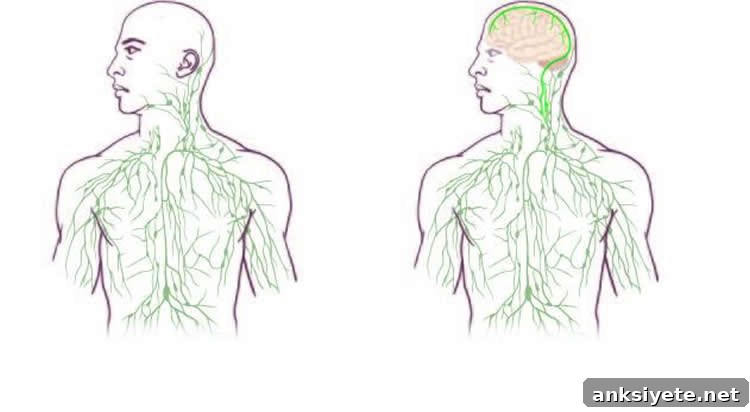
Researchers at the University of Virginia School of Medicine have made a breakthrough that challenges long-standing textbook assertions: the brain is directly connected to the peripheral immune system through lymphatic vessels that were previously thought not to exist. The discovery is surprising because the lymphatic system has been extensively mapped throughout the body, yet these vessels remained undetected. More important than the novelty is the potential impact on our understanding and treatment of neurological conditions that involve the immune system, including Alzheimer’s disease, multiple sclerosis and even aspects of autism.
“Instead of asking, ‘How can we study the immune response in the brain?’ or ‘Why do patients with multiple sclerosis experience immune attacks?’ we can now address these questions mechanistically,” said Jonathan Kipnis, PhD, professor in UVA’s Department of Neuroscience and director of the Center for Brain Immunology and Glia (BIG). “The brain appears to be like every other tissue: it is connected to the peripheral immune system through meningeal lymphatic vessels. This changes how we view neuro-immune interactions and allows concrete, testable investigations.”
“We believe that for any neurological disease with an immune component, these vessels may play a significant role,” Kipnis added. “It’s difficult to imagine that these structures would not be involved in diseases driven or influenced by immune processes.”
Discovery that will reshape biology textbooks
Kevin Lee, PhD, chair of the UVA Department of Neuroscience, summarized his reaction: “When I first saw the data, I told them one sentence: ‘They’ll have to change the textbooks.’ Until now, there was no recognized lymphatic system for the central nervous system. The initial observation — since supported by multiple follow-up experiments — fundamentally alters how we understand the relationship between the central nervous system and the immune system.”
Kipnis noted his own initial skepticism. “I didn’t expect there to be structures in the body that we were unaware of. I assumed the major discoveries about anatomy had been completed decades ago. This shows we still have things to learn.”
How the vessels were found
The key steps were taken by Antoine Louveau, PhD, a postdoctoral fellow in Kipnis’ laboratory. Louveau developed a technique to mount mouse meninges — the membranes that surround the brain — on a single slide so the entire meningeal sheet could be examined intact. “The crucial trick was fixing the meninges while they were still inside the skullcap so the tissue remained in its natural configuration,” Louveau explained. “If we had removed the tissue first and then tried to fix it, we wouldn’t have seen what we saw.”
When immune cells revealed vessel-like distribution patterns on those preparations, the team tested for lymphatic markers and found them. “I called Jony to the microscope and said, ‘I think we have something,’” Louveau recalled.
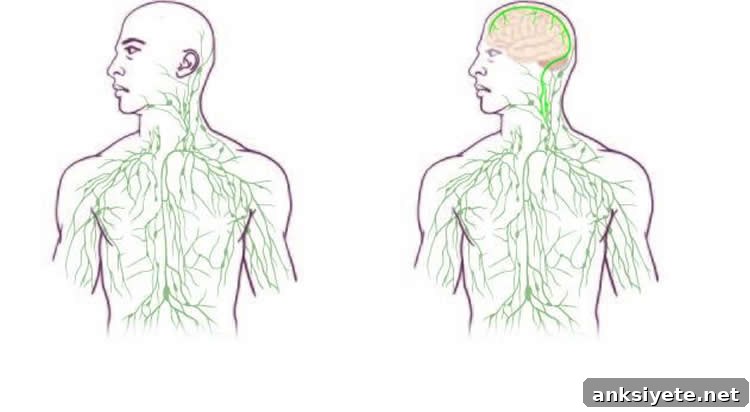
Kipnis explained why the vessels were overlooked for so long: they are “very well hidden,” running alongside major blood vessels into the dural sinuses — areas that are challenging to image. “Their close proximity to blood vessels makes them easy to miss if you aren’t specifically looking for them.”
Live imaging was essential to demonstrate function, a capability made possible through collaboration with Tajie Harris, PhD, and the precise surgical technique of Igor Smirnov, a research associate whose skills were critical to the study’s imaging success.
Implications for Alzheimer’s, autism, MS and other conditions
The presence of functional lymphatic vessels in the meninges opens many new research directions. In Alzheimer’s disease, for example, large protein aggregates accumulate in the brain; the researchers suggest these proteins may build up because clearance via meningeal lymphatic vessels is inefficient. The vessels also appear to change with age, suggesting a possible link to age-related neurodegenerative processes. Beyond Alzheimer’s, the discovery prompts a reassessment of numerous neurological disorders with immune components — from multiple sclerosis to conditions involving neuroinflammation — and may inform new diagnostic and therapeutic strategies.
Publication and funding
The results were published online in the journal Nature and will appear in an upcoming print edition. The paper’s authors include Louveau, Smirnov, Timothy J. Keyes, Jacob D. Eccles, Sherin J. Rouhani, J. David Peske, Noel C. Derecki, David Castle, James W. Mandell, Kevin S. Lee, Tajie H. Harris and Jonathan Kipnis.
Funding: This research was supported by National Institutes of Health grants R01AG034113 and R01NS061973. Antoine Louveau was supported by a fellowship from the Fondation pour la Recherche Medicale.
Source: Debra Kain — University of Virginia Health System
Image source: University of Virginia Health System
Original research: Structural and functional features of central nervous system lymphatic vessels (Louveau et al., Nature, published online June 1, 2015).
Abstract
Structural and functional features of central nervous system lymphatic vessels
Historically, the central nervous system (CNS) has been considered to lack a classical lymphatic drainage system. Although ongoing immune surveillance in the meningeal compartment is now well recognized, the mechanisms that govern immune cell entry into and exit from the CNS have been poorly understood. While searching for pathways for T-cell trafficking through the meninges, the authors identified functional lymphatic vessels lining the dural sinuses. These structures display the molecular markers of lymphatic endothelial cells, can transport both fluid and immune cells from the cerebrospinal fluid, and connect to the deep cervical lymph nodes. Their unique anatomical location likely contributed to their prior omission from maps of lymphatic vasculature. The identification of CNS lymphatic vessels invites a reassessment of basic assumptions in neuroimmunology and provides new perspectives on the causes of neuroinflammatory and neurodegenerative diseases associated with immune dysfunction.
“Structural and functional features of central nervous system lymphatic vessels” by Antoine Louveau et al., Nature, published online June 1, 2015. doi:10.1038/nature14432