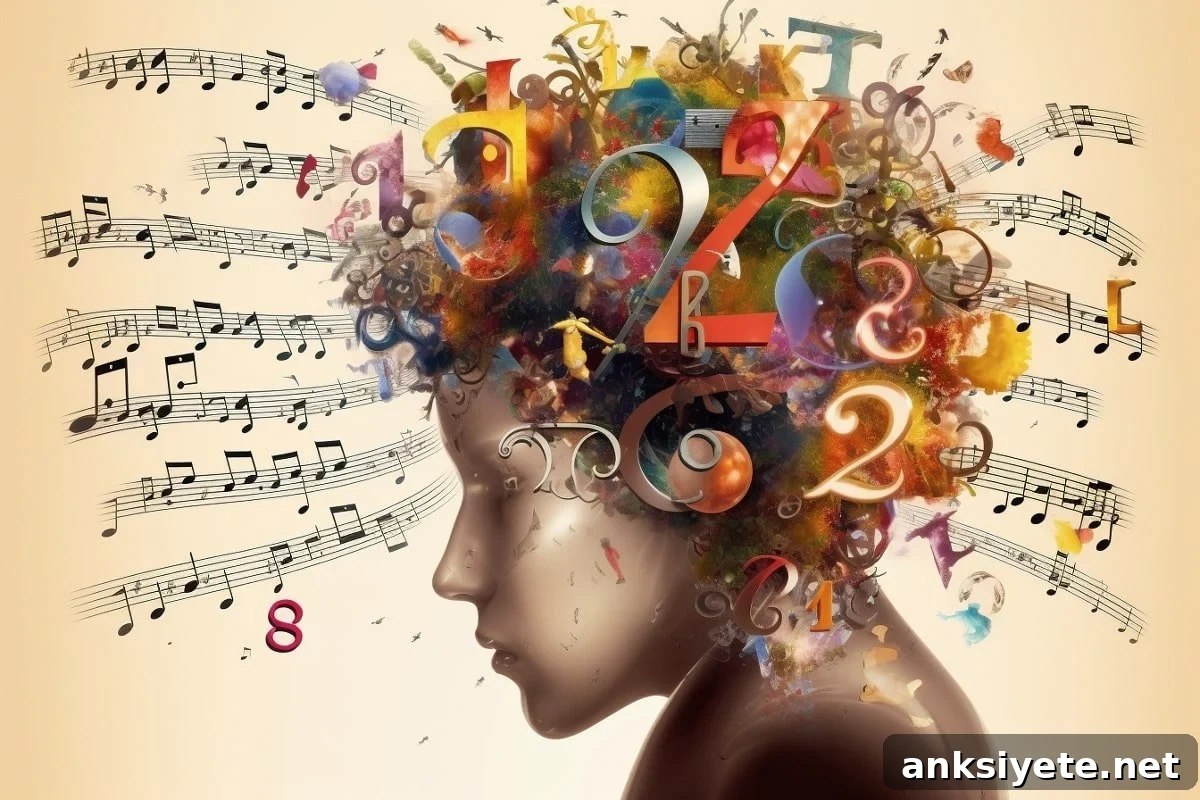
Summary: Researchers have found that when mathematicians view mathematical formulas they consider beautiful, the same brain region that responds to beauty in art and music becomes active. This finding points to a neurobiological basis for the experience of beauty across sensory and intellectual domains.
A study used functional magnetic resonance imaging (fMRI) to scan the brains of fifteen professional mathematicians as they evaluated mathematical expressions they had previously rated as beautiful, neutral, or ugly. The experience of mathematical beauty was reliably associated with increased activity in the medial orbitofrontal cortex (mOFC), a brain region long linked to the emotional experience of aesthetic appreciation, including responses to visual art and music.
These results support the idea that aesthetic experience has measurable neural correlates. Whether elicited by a landscape, a symphony, or an elegant equation, the subjective sense of beauty appears to engage common emotional circuitry in the brain.
Key Facts:
- The research applied functional magnetic resonance imaging (fMRI) to track neural activity while participants assessed the aesthetic value of mathematical formulae, demonstrating an innovative application of neuroimaging in the study of aesthetics and cognition.
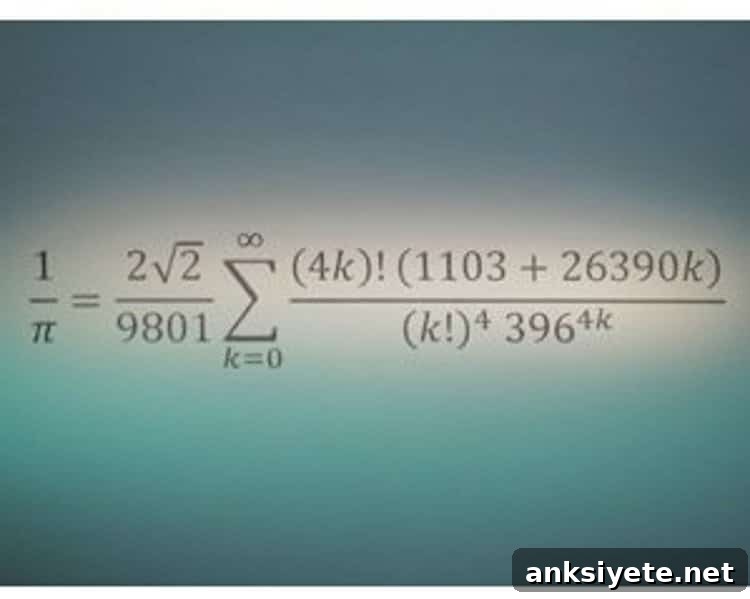
- The fifteen mathematicians in the study rated a wide variety of formulae. Classical results such as Euler’s identity, the Pythagorean identity, and the Cauchy–Riemann equations were among those most frequently judged beautiful, while some other expressions, including Ramanujan’s infinite series and Riemann’s functional equation, were rated less favorably by this group.
- The study reinforces interdisciplinary links between neuroscience and mathematics by showing that the same emotional brain structures activated by works of art and music are also engaged when mathematicians perceive beauty in highly abstract, intellectual objects.
Source: UCL
People who perceive mathematical beauty activate the same part of the brain when they view elegant formulae as other people do when they experience beauty in art or music, providing evidence for a shared neurobiological basis of aesthetic experience.
Beauty can arise from many sources. Some are clearly sensory—a handsome face, a dramatic vista, or an evocative musical passage. Other sources are more intellectual and abstract. Mathematicians frequently describe certain equations in emotive terms, comparing the experience of discovering or contemplating a remarkable mathematical identity to the emotional response inspired by great art.
In a paper published in the open-access journal Frontiers in Human Neuroscience, researchers imaged the brains of fifteen mathematicians using fMRI while the participants viewed mathematical formulae they had previously rated for aesthetic value. Each participant first rated 60 formulae on a scale from −5 (ugly) to +5 (beautiful). Two weeks later, the participants re-evaluated the same set of formulae while undergoing fMRI scanning.
The imaging revealed that the intensity of the reported aesthetic experience correlated with activity in the medial orbitofrontal cortex, an area implicated in reward and emotional valuation. In other words, the stronger the mathematicians’ declared sense of beauty, the greater the activation in this particular region of the emotional brain—mirroring patterns seen in studies of visual and musical aesthetics.
Professor Semir Zeki, lead author from the Wellcome Laboratory of Neurobiology at UCL, commented: “To many of us mathematical formulae appear dry and inaccessible, but to a mathematician an equation can embody the quintessence of beauty. The beauty of a formula may result from simplicity, symmetry, elegance or the expression of an immutable truth. For Plato, the abstract quality of mathematics expressed the ultimate pinnacle of beauty.”
He added that this similarity between aesthetic responses to perceptual art and to abstract mathematics raises a long-standing philosophical question: whether aesthetic experiences can be measured and related to specific neural activity. The study’s findings suggest they can, at least in a robust and reproducible way for participants who share expertise in the domain.
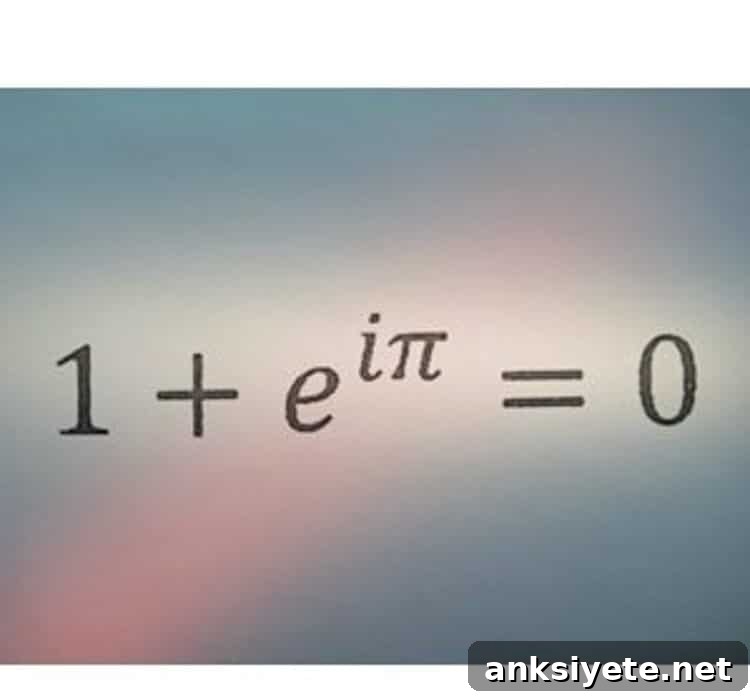
Among the formulae consistently rated as most beautiful were Leonhard Euler’s identity, the Pythagorean identity, and the Cauchy–Riemann equations. Euler’s identity, celebrated for its concise linking of fundamental constants and operations, is often cited for its elegance. In contrast, some complex analytic expressions received lower aesthetic ratings from the participants in this study.
The authors note that while their sample was small and limited to professional mathematicians, the results offer a compelling bridge between subjective aesthetic judgment and objective neural measures. These findings encourage further research across disciplines to better understand how the brain assigns aesthetic value to both sensory and intellectual stimuli.
Note: This article was updated to include a concise summary and images.
Notes about this neuroimaging and neuroscience research
Contact: David Weston – UCL
Source: UCL press release
Image Source: The images are adapted from the UCL press release.
Original Research: Full open access research titled “The experience of mathematical beauty and its neural correlates” by Semir Zeki, John Paul Romaya, Dionigi M. T. Benincasa and Michael F. Atiyah in Frontiers in Human Neuroscience. Published online February 13, 2014. DOI: 10.3389/fnhum.2014.00068
#neuroscience, #openaccess, #openscience