
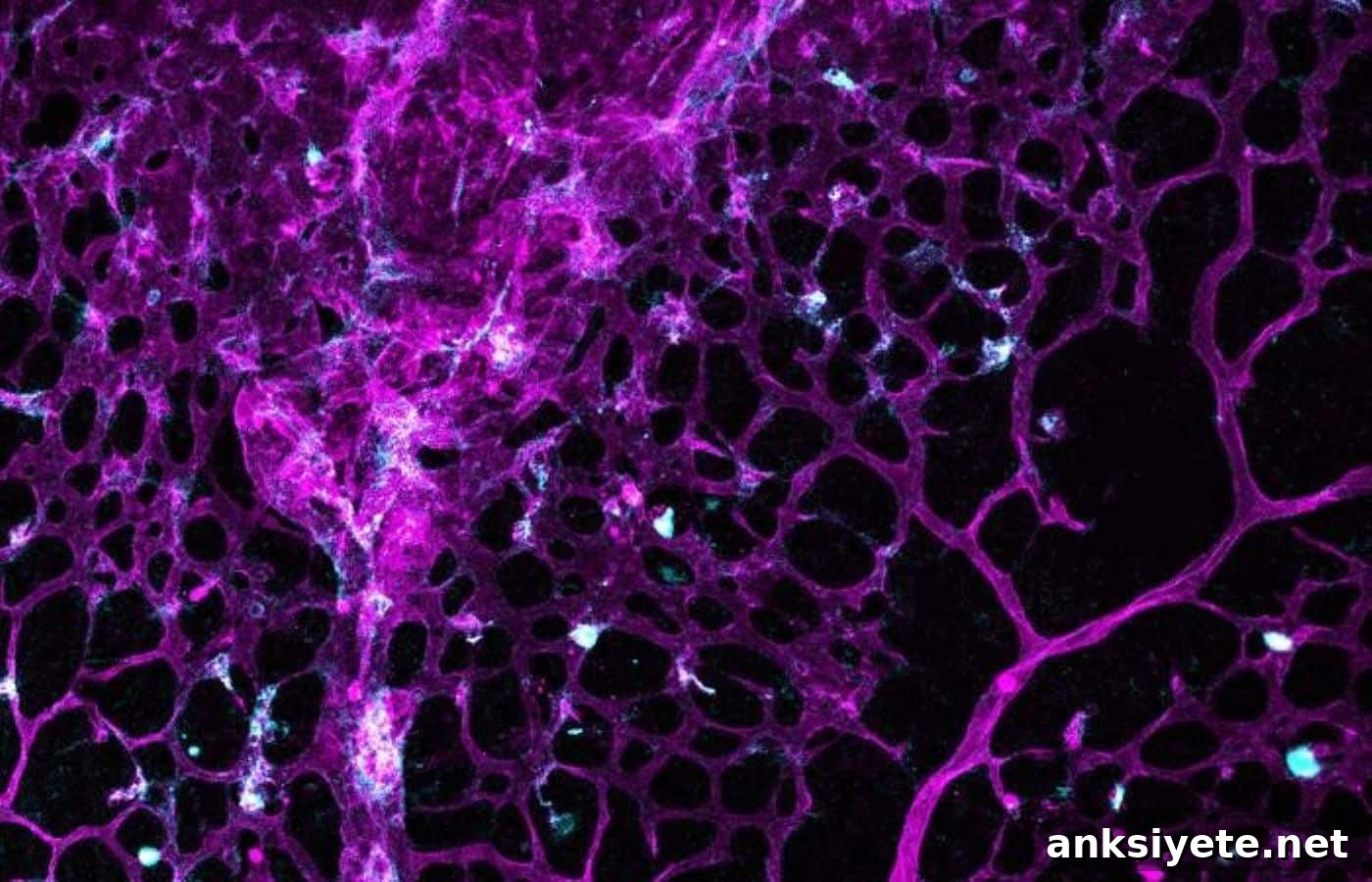
Summary:
Researchers have found that dabrafenib, an FDA- and EMA-approved BRAF inhibitor already used to treat certain pediatric brain tumors, dramatically reduces both the size and number of vascular malformations associated with Cerebral Cavernous Malformation (CCM). Screening more than 5,000 bioactive compounds, the team identified dabrafenib as a drug that suppresses vessel leakage, restores normal vascular architecture, and prevents hemorrhagic progression in multiple preclinical CCM models. These results point to a promising drug-based alternative to invasive brain surgery for many patients.
Key Facts:
- Drug repurposing breakthrough: A high-throughput screen of over 5,000 compounds singled out dabrafenib—already used to treat pediatric low-grade glioma—as an effective candidate against CCM.
- Dual-pathway action: Dabrafenib was found to act on two distinct pathological signalling pathways involved in cavernoma growth, reducing lesion formation and shrinking established vascular malformations in vivo.
- Vascular stabilization and reduced leakage: In addition to decreasing lesion burden, dabrafenib restored endothelial barrier function, limited cerebral microhemorrhages, and corrected abnormal vascular remodeling in the retina.
Source: Uppsala University / SciLifeLab
Cerebral Cavernous Malformation (CCM) is a serious vascular disorder marked by clusters of fragile, dilated capillaries in the central nervous system. These malformed vessels, which resemble small mulberries, lack robust vessel wall structure and tight endothelial junctions. As a result, they are prone to chronic micro-leakage and can rupture, causing intracranial hemorrhages that lead to neurological deficits, seizures, and hemorrhagic stroke.
Currently, there is no approved drug therapy for CCM. The primary clinical option remains neurosurgical resection, an invasive procedure that carries substantial risks and is often not feasible for patients with multiple or deep-seated lesions in critical brain areas such as the brainstem.
A collaborative research effort led by Uppsala University and SciLifeLab has now identified a non-surgical therapeutic candidate that shows strong preclinical evidence for treating CCM.
In their preclinical study, investigators demonstrated that dabrafenib—an established, targeted BRAF inhibitor approved for pediatric brain tumors—effectively halts cavernoma progression, stabilizes leaky vessels, and reduces pre-existing vascular malformations in animal models.
High-throughput screening finds a dual-action inhibitor
To discover molecules capable of reversing CCM pathology, researchers performed an unbiased high-throughput screen of more than 5,000 bioactive compounds using mouse endothelial cells deficient in CCM-related genes. The screen prioritized agents that restored a normal endothelial phenotype by reestablishing cell–cell junctions and improving barrier function.
The lead compound emerging from this systematic search was dabrafenib. After initial hits were validated in cultured human brain vascular cells, dabrafenib proceeded to in vivo testing in genetic mouse models of CCM.
According to first and co-corresponding author Maximiliano Arce, the most striking findings came from dabrafenib: it reversed the pathological endothelial phenotype in cell models and stopped cavernoma progression in animals. Importantly, dabrafenib targeted two pathological signalling cascades that drive CCM development and progression, producing a robust therapeutic effect.
Sealing the blood-brain barrier and shrinking lesions
After confirming activity in human brain microvascular endothelial cells, the research team tested dabrafenib in both acute and chronic CCM mouse models. Results showed meaningful therapeutic benefits across several key outcomes:
- Lesion regression: Oral dabrafenib treatment significantly reduced both the number and volume of brain cavernomas.
- Leakage suppression: The drug reinforced endothelial integrity, reducing vascular permeability and preventing micro-hemorrhages that contribute to clinical decline.
- Retinal rescue: Dabrafenib corrected abnormal vascular remodeling in the retina, a secondary manifestation seen in many CCM patients.
Accelerating clinical translation
Developing a novel drug from discovery through safety testing and regulatory approval typically takes many years. Repurposing an approved drug like dabrafenib offers a far faster route to clinical application for patients living with the risk of repeated brain bleeds.
Dabrafenib is already widely used in pediatric oncology to treat BRAF-mutated low-grade gliomas, and its pharmacokinetics, dosing strategies, and safety profile are well characterized in children and adults. This existing clinical experience makes dabrafenib an attractive candidate for rapid translation to CCM clinical trials.
Senior author Peetra Magnusson emphasizes that, because dabrafenib is approved by major regulatory agencies and has an established safety record, it is well positioned for expedited testing in patients with familial and sporadic CCM. The research team is collaborating with the SciLifeLab BioImage Informatics Unit to quantify vascular changes and is preparing to initiate clinical studies aimed at replacing or reducing the need for neurosurgery by using targeted pharmacotherapy.
Editorial Notes:
- This article was edited by a Neuroscience News editor.
- The journal paper was reviewed in full.
- Additional context was added by the editorial staff.
About this neurotech and schizophrenia Research:
- Media Contact: Sandra Gunnarsson
- Source: Uppsala University
- Image Credit: Image credited to Maximiliano Arce
- Original Research (Open Access): Science Translational Medicine (Oct 1, 2026). Title: “The kinase inhibitor dabrafenib halts progression of cerebral cavernous malformations in a BRAF-independent manner.” Authors: Maximiliano Arce, Hua Huang, Charlotte Rorsman, Iza Erzar, Joppe Oldenburg, Ying Sun, Ross Smith, Favour C. Onyeogaziri, Stefano Barbera, Frida C. Ahlstrand, Petter Ranefall, Anna Klemm, Mark Richards, Anna Dimberg, Lena Claesson-Welsh, and Peetra U. Magnusson.
- DOI: 10.1126/scitranslmed.adr0448
Abstract
The kinase inhibitor dabrafenib halts progression of cerebral cavernous malformations in a BRAF-independent manner
Cerebral cavernous malformations (CCMs) are the second most common intracranial vascular malformation and form when somatic or inherited loss-of-function mutations in CCM genes produce fragile, mulberry-like clusters of malformed vessels that are prone to leak and rupture. Surgical removal is currently the main treatment for solitary cavernomas, but many patients present with multiple lesions, creating a clear and urgent need for pharmacological therapies.
To address this need, the investigators screened 5,200 bioactive compounds in mouse endothelial cells lacking programmed cell death 10 (PDCD10 or CCM3), using automated imaging to identify molecules that restore cell–cell junctions and barrier function. Dabrafenib, a clinically approved BRAF inhibitor, emerged as a lead compound that normalized junctional integrity and barrier properties in CCM3-deficient endothelial cells.
In both acute and chronic CCM mouse models, dabrafenib reduced cerebral lesion burden and suppressed lesion permeability. It also rescued abnormal structural defects in the developing retinal vasculature in an acute model. Mechanistic studies showed that dabrafenib modulated ERK5–KLF2/4 signalling and reduced F-actin stress fibre formation in human brain endothelial cells—two central molecular processes implicated in CCM pathology.
Notably, silencing BRAF did not block dabrafenib’s ability to inhibit KLF2/4 or to restore endothelial junctions, indicating the therapeutic effects are independent of canonical BRAF pathway inhibition. These data suggest that dabrafenib, a low–molecular-weight kinase inhibitor, can suppress cavernoma formation and vascular leakage, supporting its potential use to treat CCM patients and reduce reliance on neurosurgery.