
Summary: A newly validated screening tool helps identify preschool children at risk for reading difficulties by assessing early literacy skills during routine clinic or preschool visits.
Source: Cincinnati Children’s Hospital
A study published in the journal Pediatrics provides expanded validation for an innovative screening tool that directly engages preschool-aged children to evaluate early literacy. Developed at Cincinnati Children’s Hospital Medical Center, this tool is designed to identify potential reading challenges as early as possible, guide targeted interventions, and equip families with practical strategies to support reading development at home.
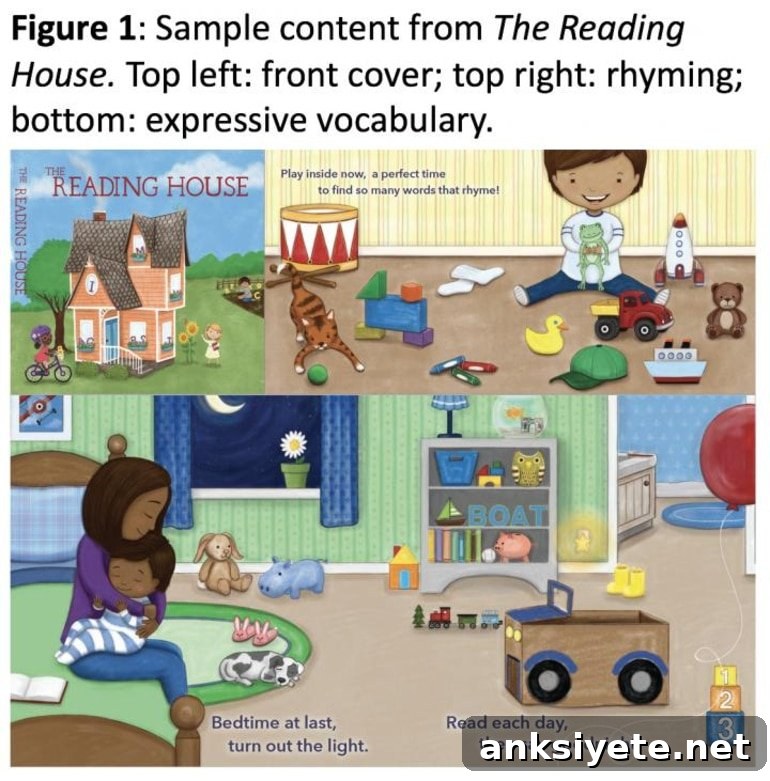
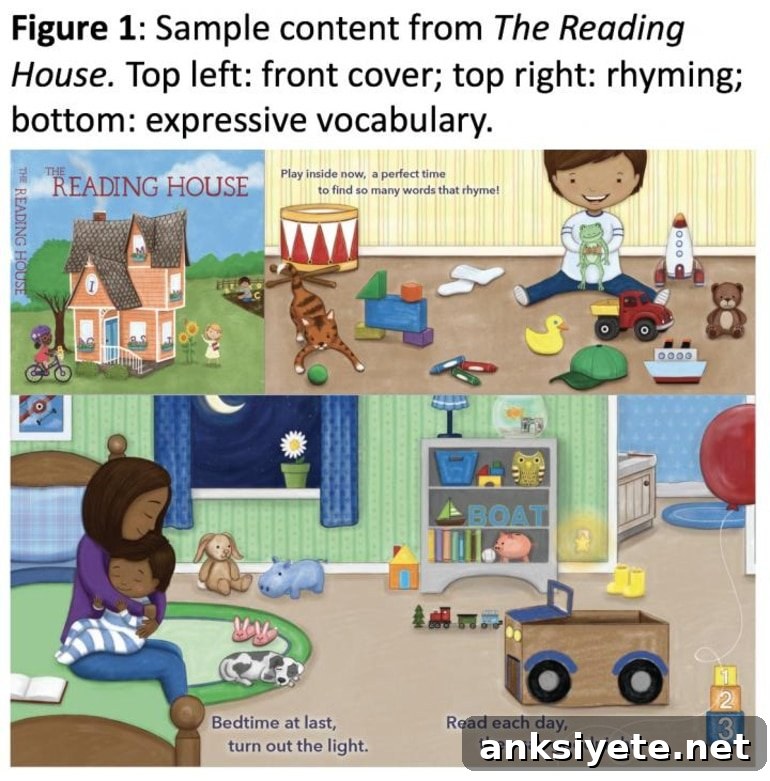
Called The Reading House (TRH), the screener is built around a purpose-designed children’s book and is intended for children ages 3 to 5. Created by John Hutton, MD, and colleagues at Cincinnati Children’s, TRH takes about five minutes to administer and produces performance measures appropriate for ages 3–4 and 4–5. By offering a quick, child-friendly assessment of early literacy, TRH fills an important gap in tools available to primary care and early education settings—especially for screening children from disadvantaged backgrounds who are at elevated risk of entering kindergarten unprepared to learn to read.
“Developmental screening is standard in pediatric care, but there has not been an established, quick approach to assess reading readiness and identify children at risk,” said Hutton, director of the Reading & Literacy Discovery Center. “A substantial number of children arrive at kindergarten without the foundational skills needed for learning to read—this is especially common among children from minority and economically disadvantaged households.”
TRH evaluates core emergent literacy skills that typically develop during the preschool years: vocabulary, rhyming, alphabet knowledge, and print concepts (how books and print work). These skills are strong predictors of later reading success and are commonly areas of difficulty for children who go on to struggle with reading.
After the screening, families receive the book to take home and read together. This immediate, actionable step answers a critical question many parents ask: “What should I do to help my child?” Recommended follow-up can include enrolling the child in preschool programs and establishing nurturing, routine home-reading practices.
The validation study included 70 healthy children (34 boys and 36 girls) between the ages of 3 and 5 from diverse socioeconomic backgrounds. Participants completed standardized assessments of key literacy skills, including composite measures, vocabulary, rhyming, and rapid automatized naming (a measure of how quickly a child can retrieve names for objects, letters, or words). Fifty-two of these children also completed magnetic resonance imaging (MRI) scans, which were used to measure cortical thickness—the thickness of the brain’s gray matter. Prior research links thicker cortex in left-hemisphere regions that support language and reading with stronger reading-related skills.
The study’s neurodevelopmental findings build on previous work from the Cincinnati Children’s team linking early brain structure and reading-related skills in preschoolers. Children with higher TRH scores showed significantly greater cortical thickness in left-lateralized brain areas involved in language and visual processing—patterns similar to those observed in older children and adults with stronger reading skills. Hutton noted that these results provide an important neurobiological correlate of the emergent literacy skills TRH screens for at a formative age of rapid brain development.
TRH scores correlated strongly with established measures of vocabulary, rhyming, and rapid naming, supporting the tool’s validity as an emergent literacy screener. The study also revealed differences related to socioeconomic status: children from impoverished backgrounds showed a generally thinner cortex and a more bilateral or frontal pattern of cortical thickness associated with TRH scores—interpreted as a less mature cortical profile. Such differences may reflect the impacts of early adversity on brain development and readiness for school.
“Screening early—during pediatric well visits or in preschools, particularly those serving disadvantaged families—creates an opportunity to identify children who would benefit from timely interventions that support reading readiness,” Hutton said. “Tools like TRH can help target resources and encourage family-centered practices that strengthen early literacy and, ultimately, reading outcomes.”
Funding: The research was supported by a Procter Scholar Award from the Cincinnati Children’s Research Foundation. Conflicts of interest: Dr. John Hutton conceived and authored the children’s book used in this study. He is the founder of Blue Manatee Press, the publisher and distributor of The Reading House, and does not receive salary or other compensation for that role. The Reading House is intended as a low-cost screening tool distributed to clinical practices, preschools, and organizations, and it is not marketed for retail, library, or direct-to-consumer sale. Any royalties would be governed by Cincinnati Children’s Research Foundation intellectual property policies. The other authors report no relevant financial relationships.
About this literacy research news
Source: Cincinnati Children’s Hospital
Contact: Shannon Kettler – Cincinnati Children’s Hospital
Image: Image credited to Cincinnati Children’s
Original Research: Closed access. “Validation of The Reading House and Association With Cortical Thickness” by John S. Hutton, Jonathan Dudley, Guixia Huang, Tzipi Horowitz-Kraus, Thomas DeWitt, Richard F. Ittenbach, and Scott K. Holland. Pediatrics
Abstract
Validation of The Reading House and Association With Cortical Thickness
BACKGROUND AND OBJECTIVES: The American Academy of Pediatrics recommends promoting literacy and school readiness during well-child visits. The Reading House (TRH) is a children’s book–based screener designed to measure emergent literacy skills in preschool-aged children. Core early skills include vocabulary, rhyming, and rapid naming, and prior studies associate stronger reading abilities with greater cortical thickness in left-hemisphere regions. This study aimed to expand validation of TRH against established literacy measures and to examine its relationship with cortical thickness.
METHODS: Healthy preschool-aged children completed a T1-weighted anatomical MRI scan. Before imaging, researchers administered TRH along with standardized tests: rapid naming (Comprehensive Test of Phonological Processing, Second Edition), rhyming (Pre-Reading Inventory of Phonological Awareness), vocabulary (Expressive Vocabulary Test, Second Edition), and a general emergent literacy measure (Get Ready to Read!). Analyses used Spearman-ρ correlations adjusted for age, sex, and socioeconomic status (SES). MRI analyses assessed whole-brain cortical thickness in relation to TRH scores, controlling for covariates.
RESULTS: Seventy children completed behavioral assessments (36–63 months old; 36 female) and 52 completed MRI (37–63 months; 29 female). TRH scores correlated positively with the Comprehensive Test of Phonological Processing, Second Edition (rρ = 0.61), the Expressive Vocabulary Test, Second Edition (rρ = 0.54), Get Ready to Read! (rρ = 0.87), and the Pre-Reading Inventory of Phonological Awareness (rρ = 0.64), all with P < .001. These correlations remained significant after accounting for age, sex, and SES. Higher TRH scores were associated with greater cortical thickness in left-sided language and visual regions (family-wise error corrected P < .05). Patterns differed by SES: higher-SES children showed similar left-lateralized associations, while lower-SES children showed more bilateral and frontal patterns consistent with a less mature cortical profile (family-wise error corrected P < .10).
CONCLUSIONS: These results strengthen validation evidence for TRH as a brief, practical screening tool for emergent literacy in preschool children and demonstrate associations with both established literacy measures and cortical thickness. The findings also highlight important SES-related differences in brain structure linked to early literacy skills.