
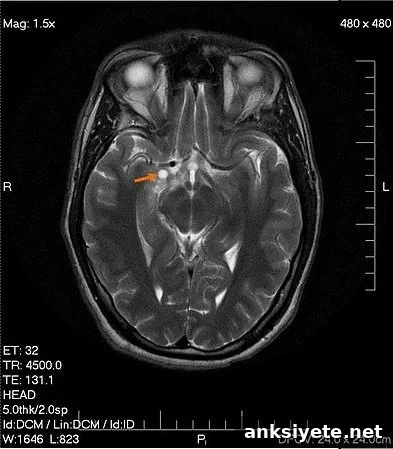
Working with mice, researchers at Johns Hopkins found that weeks of treatment with a repurposed, FDA-approved drug stopped growth and ultimately eliminated detectable human brain tumor cells implanted from adult patients.
The team targeted a specific mutation in the IDH1 gene first identified in glioma brain tumors by Johns Hopkins researchers in 2008. This single-letter change in the gene occurs in 70 to 80 percent of lower-grade and progressive gliomas. Instead of allowing the IDH1 enzyme to help convert glucose into energy, the mutation diverts its activity to produce an abnormal metabolite, 2-hydroxyglutarate. That molecule is linked to widespread changes in DNA methylation, a chemical modification that can alter gene expression and disrupt normal cell regulation, contributing to tumor development and maintenance.
Described online Sept. 16 in the open-access journal Oncotarget, the new findings prompted the researchers to pursue a clinical trial design to test whether the approach will translate to people with IDH1-mutant gliomas. Despite growing molecular understanding of IDH1-mutant gliomas, effective targeted therapies have been difficult to develop.
“In the lab we usually celebrate when a drug slows tumor growth,” said Alexandra Borodovsky, a graduate student in the Cellular and Molecular Medicine Program at Johns Hopkins who conducted the experiments. “Tumor regression is rare in these models, but that is exactly what we observed.”
Gregory J. Riggins, M.D., Ph.D., professor of neurosurgery and oncology at Johns Hopkins and the study leader, emphasized the potential: “This therapy performed remarkably well in mice. We have begun discussions with neurosurgeons about designing a clinical trial to test this approach after surgery in our patients.” The team also cautioned that many treatments effective in mice do not always show the same benefit in humans.
The IDH1 gene encodes an enzyme that plays a role in cellular metabolism. When mutated, the enzyme makes excess 2-hydroxyglutarate, which promotes abnormal methylation of DNA. While methylation is a normal regulatory mechanism, excessive methylation can interfere with normal gene regulation and promote cancerous behavior in cells.
Borodovsky, Riggins and collaborators, including Timothy A. Chan, M.D., Ph.D., of Memorial Sloan Kettering Cancer Center, hypothesized that a drug capable of reducing abnormal DNA methylation could reverse the malignant behavior of IDH1-mutant tumors. They selected 5-azacytidine, an FDA-approved drug used to treat the blood disorder myelodysplastic syndrome and under investigation for several cancers, because of its DNA methylation–reducing properties.
Modeling IDH1-mutant glioma in the laboratory presented challenges. IDH1-mutant cell lines are difficult to culture, so the team obtained tumor cells from glioma patients likely to harbor the IDH1 mutation and implanted them under the skin of mice. After months of effort, these patient-derived cells grew into tumors suitable for testing.
The mice received 5-azacytidine for 14 weeks. The investigators observed a dramatic reduction in tumor growth and, in many cases, apparent complete regression. Treatment was then stopped, and tumors remained undetectable seven weeks after therapy withdrawal. The researchers noted they continue to monitor the mice and expect that tumors may recur over time, underscoring the need for further study.
The tumors studied eventually progress in some patients to a subtype of glioblastoma multiforme known as secondary or progressive glioblastoma. These cancers often begin as lower-grade gliomas and are initially treated with surgery; over time they may transform into the more aggressive glioblastoma. Secondary glioblastomas tend to occur in younger patients and have different molecular characteristics than primary glioblastomas, including a higher likelihood of hosting IDH1 mutations, which may make them more amenable to targeted strategies.
In parallel work, Chan’s team at Memorial Sloan Kettering published complementary results in Oncotarget showing similar effects in a different animal model using a related DNA methylation–targeting drug. Together, these independent findings strengthen the rationale for pursuing clinical testing of methylation-reducing therapies in IDH1-mutant gliomas.
Notes about this brain cancer research
Other Johns Hopkins researchers on the Borodovsky paper include Charles G. Eberhart, M.D., Ph.D.; Jon D. Weingart, M.D.; Gary L. Gallia, M.D., Ph.D.; and Stephen B. Baylin, M.D.
The work was supported by the Conrad N. Hilton Foundation; the Virginia and D.K. Ludwig Fund for Cancer Research; Margaret H. Riggins; the Irving J. Sherman Research Professorship in Neurosurgery; and grants from the National Institutes of Health’s National Cancer Institute and the National Center for Research Resources.
Contact: Stephanie Desmon – Johns Hopkins Medicine
Source: Johns Hopkins Medicine press release
Image Source: MRI glioma image credited to Blondis, public domain.
Original Research: Borodovsky et al., “5-azacytidine reduces methylation, promotes differentiation and induces tumor regression in a patient-derived IDH1 mutant glioma xenograft,” Oncotarget, published online September 16, 2013. Also: Turcan et al., “Efficient Induction of Differentiation and Growth Inhibition in IDH1 Mutant Glioma Cells by the DNMT Inhibitor Decitabine,” Oncotarget, published online September 16, 2013.