
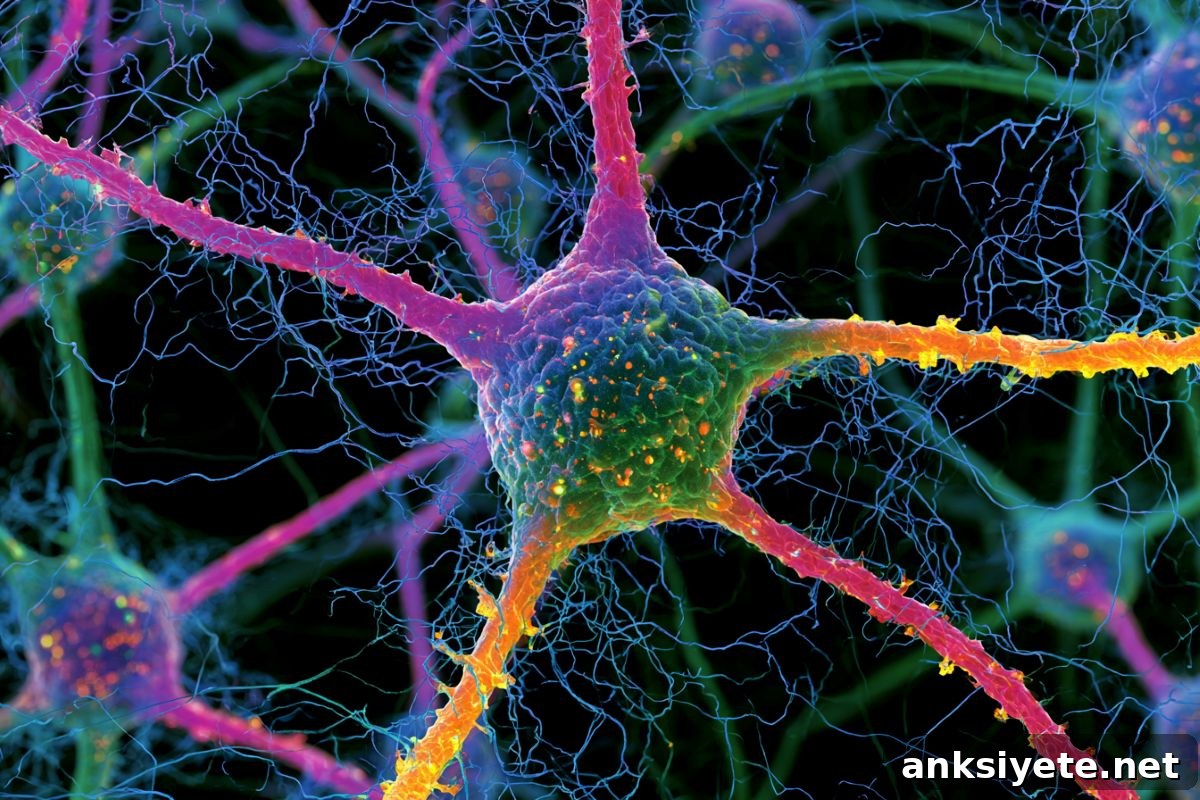
Summary: A large-scale analysis of International Brain Laboratory recordings spanning 43 mouse cortical regions finds that multi-purpose “generalist” neurons are the dominant organizational principle in mammalian cortex. While primary sensory regions retain specialist cells, higher-order cortical areas predominantly use high-dimensional population codes in which individual neurons jointly represent many task-relevant variables without simple, redundant tuning.
This multi-tasking, population-level architecture explains cognitive flexibility and implies that neural computations must be interpreted at the level of coordinated neural populations rather than by decoding single neurons in isolation.
Key Facts
- More than 11,000 preprint downloads: The manuscript attracted exceptional attention before formal publication, with over 11,000 downloads of preprint copies by researchers worldwide prior to its appearance in Nature.
- Generalists prevail: The analysis shows that highly specialized, single-purpose neurons are uncommon. Primary sensory areas (for example, early visual cortex) contain more clearly tuned specialists, but much of the cortex is dominated by versatile generalist neurons.
- High-dimensional representations: Generalist neurons encode mixtures of variables—such as color, shape, orientation, and behavioral value—so that populations form rich, high-dimensional representations. The same neural population can be reused for many different computational goals.
- Limitations of single-neuron analysis: Because single neurons blend multiple signals, attempting to interpret cognition from individual cells creates a “blindspot.” Accurate decoding requires observing population activity and the geometric relationships among neurons.
- Unique, non-redundant contributions: Although neurons are multi-purpose, they are not clones of one another; each cell contributes a distinct combination of features, maximizing computational capacity without wasted redundancy.
- “Voter map” analogy: As Dr. Lorenzo Posani explains, neural modules show broad regional tendencies—like political maps—but at fine scale individual responses are highly mixed, requiring population-level inspection to reveal functional organization.
- Translation to humans: Teams led by Stefano Fusi and collaborators are extending the approach to human neurosurgical recordings to test whether the human cortex follows the same high-dimensional, generalist architecture.
Source: Zuckerman Institute
What findings drew such intense pre-publication interest? The study addresses a foundational question in neuroscience: are neurons largely specialists tuned to one function, or generalists that participate in many computations? By analyzing a harmonized dataset of single-neuron recordings from mice performing the same task across many cortical regions, the research team provides a large-scale, consistent answer.
Using activity recorded by the International Brain Laboratory across 43 cortical areas—over 14,000 single units—the investigators show that specialization is concentrated in primary sensory areas, while associative and higher-order regions display diverse, mixed neuronal responses. In short, generalist neurons are the norm across most of cortex.
“We must abandon the picture of the brain as a machine of labeled gears, each with a single fixed function,” said Stefano Fusi, co-senior author and principal investigator at Columbia’s Zuckerman Institute. “Most neurons show a wide variety of responses, and that diversity helps the brain solve many different tasks.”
These findings offer a framework for understanding how complex, flexible behavior emerges from cortical circuits and may illuminate mechanisms underlying dysfunction and recovery in brain disorders.
The study’s design reduced methodological variability that previously produced conflicting results. By restricting analysis to the same species and the same task while covering many cortical regions simultaneously, the researchers could compare neural coding across the cortical hierarchy on an even footing.
Although regional modules remain identifiable—neurons’ response patterns can reliably predict which cortical module they belong to—within-region diversity is high. “You can see regional clusters from afar, but up close the responses are mixed,” Dr. Posani said.
Co-lead author Shuqi Wang notes that individual neurons rarely duplicate one another’s response profiles. Each neuron carries a unique mixture of encoded features, supporting flexibility and efficient representation across tasks.
High-dimensional population codes enable linear readouts to separate many different task conditions, meaning that the same population can be repurposed rapidly. Crucially, the information encoded by individual neurons is ambiguous on its own; only population-level geometry reveals the specific variables being represented.
The team is collaborating with Ueli Rutishauser’s laboratory to examine whether human cortical recordings show the same principles. They are also investigating how task demands might shift neurons along a specialist–generalist continuum.
The paper, “Rarely categorical and highly separable: how neural representations change along the cortical hierarchy,” was published in Nature on July 15, 2026. Authors include Lorenzo Posani, Shuqi Wang, Samuel P. Muscinelli, Liam Paninski, and Stefano Fusi.
Funding: Supported by grants from the National Institutes of Health (RF1AG080818, U19NS123716), the Simons Foundation, the Kavli Foundation, the Gatsby Foundation (GAT3708), the Swartz Foundation, the National Science Foundation, and the DoD Office of the Under Secretary of Defense (R&E) under Cooperative Agreement PHY-2229929 (NSF AI Institute for Artificial and Natural Intelligence). Dr. Posani was supported by NIH grant 1K99MH135166-01. The authors report no conflicts of interest.
Key Questions Answered
A: The paper resolves a long-running, contentious question by using a standardized, large-scale dataset that tracks single-neuron activity across 43 cortical regions during the same task. This methodological consistency removed many sources of prior disagreement and delivered robust, generalizable evidence.
A: A high-dimensional representation means a neural population jointly encodes multiple variables (for example, color, shape, motion, and value) so that various combinations of features occupy distinct positions in a high-dimensional activity space. This enables the same population to be reused across many tasks and allows simple linear decoders to separate many different conditions.
A: The findings show that single-cell analyses can miss meaningful computation because individual neurons mix multiple signals. Researchers should prioritize population-level analyses and geometric or dimensionality-based approaches to decode how information is structured across many neurons simultaneously.
Editorial Notes
- This article was edited by a Neuroscience News editor.
- The journal paper was reviewed in full by editorial staff.
- Additional explanatory context was added by the reporting team.
About this neuroscience research news
Author: Charles Choi (Zuckerman Institute)
Source: Zuckerman Institute, Columbia University
Contact: Charles Choi – Zuckerman Institute
Image: Image credited to Neuroscience News
Original Research: Open access. “Rarely categorical, highly separable representations along the cortical hierarchy” by Lorenzo Posani, Shuqi Wang, Samuel P. Muscinelli, Liam Paninski & Stefano Fusi. Nature. DOI: 10.1038/s41586-026-10668-4
Abstract
Rarely categorical, highly separable representations along the cortical hierarchy
A long-standing debate concerns whether individual neurons form distinct, categorical populations that encode information differently, and what that implies for computation. We systematically analyzed how cortical neurons encode cognitive, sensory, and movement variables across 43 cortical regions during a complex task (over 14,000 units from the International Brain Laboratory Brainwide Map dataset) and examined how these properties change across the sensory–cognitive cortical hierarchy.
At the whole-cortex scale, selectivity appears categorical and organized across regions in ways that reflect anatomical connectivity. Within individual regions, however, categorical representations are rare and mainly limited to primary sensory areas; neuronal responses are instead highly diverse.
Using theoretical arguments and empirical data, we show that diverse responses enable high-dimensional representations and consequently high separability, allowing linear readouts to distinguish many experimental conditions. When accounting for information encoded in each area, all cortical regions exhibit maximal separability.
These results indicate cortical circuits favor diversity over strict categorical structure, supporting a computational regime built on high-dimensional, highly separable neural representations.