
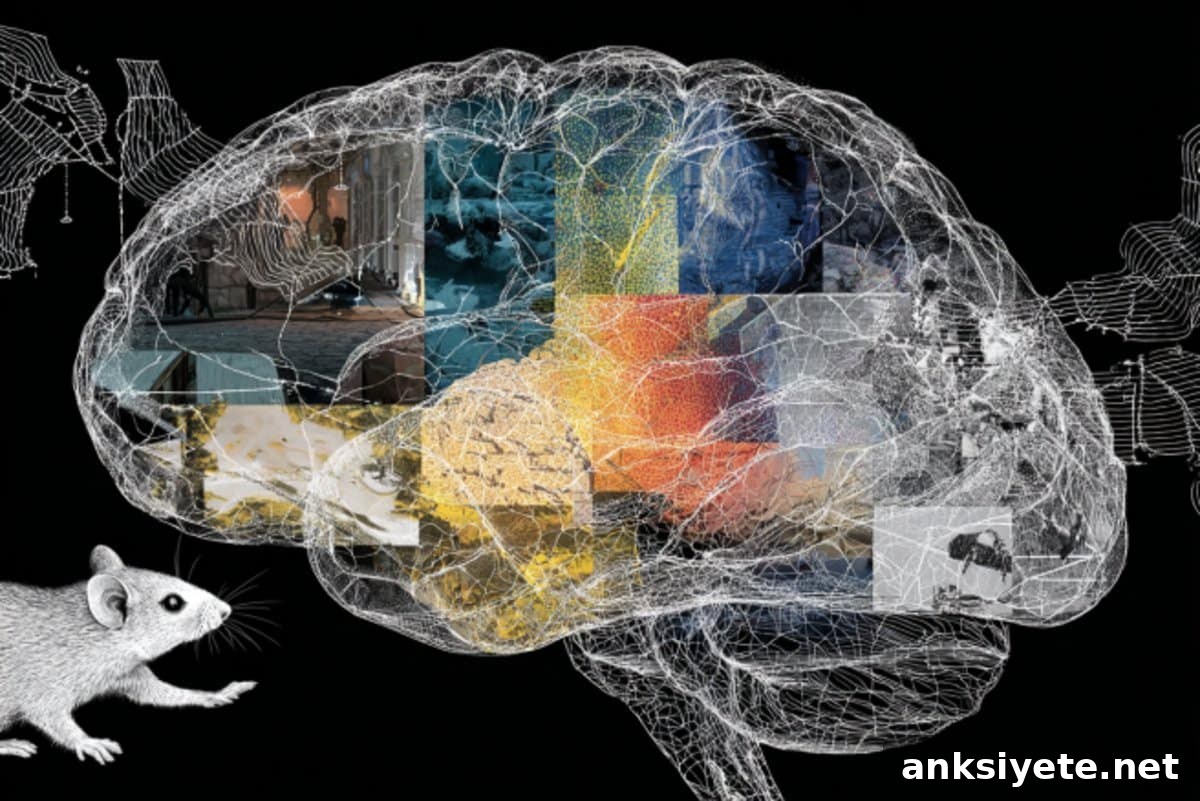
Summary: New research shows the brain continues learning during unstructured, aimless exploration. By recording activity from tens of thousands of neurons, scientists discovered that the visual cortex builds internal models of the environment during passive exposure, priming the brain for faster learning when goals or tasks appear.
This form of unsupervised learning—occurring without instruction or explicit reward—helps animals acquire task-relevant skills more quickly later on. The study demonstrates that unsupervised and supervised learning operate in parallel in the brain, reshaping how we think about perception, memory, and behavioral learning.
Key Facts:
- Unsupervised learning: The visual cortex encodes features of the environment even without task demands, creating a representational model that supports future learning.
- Distinct cortical roles: Different visual cortical regions appear specialized for exploration-driven (unsupervised) and task-driven (supervised) learning signals.
- Faster task acquisition: Mice exposed to unstructured visual environments learned reward-related associations more quickly than mice trained only on the task.
Source: HHMI
Exploring with no obvious purpose can still change the brain
Wandering around a new neighborhood or browsing a mall may feel aimless, but research from HHMI’s Janelia Research Campus indicates that such exploration can actively shape the brain. Using large-scale neural recordings, a team led by Marius Pachitariu and collaborators found that animals’ brains form internal visual models while they freely explore, even when no explicit task or reward is present.
The study recorded activity in tens of thousands of neurons simultaneously and shows that visual cortical areas learn to represent features of the environment during passive exposure. Those unsupervised representations later accelerate learning when animals must associate visual cues with rewards or make task-based decisions.
“Even when you think you’re zoning out—just walking or not concentrating—your brain is likely organizing spatial and visual information,” says Janelia Group Leader Marius Pachitariu. “That organization helps you perform better later when you need to pay attention or act.”
How the experiments worked
Postdoctoral researcher Lin Zhong designed a set of experiments in which mice navigated linear virtual-reality corridors lined with different visual textures. Some textures were paired with rewards in task sessions, while other sessions provided unrewarded, passive exposure to the same visual patterns. After training mice on tasks, the researchers introduced subtle changes to textures and reward contingencies to probe neural plasticity.
Over weeks of experiments, the team observed striking changes in neural activity across the visual cortex. Initially it was unclear whether these changes stemmed from task learning or from the animals’ own exploration. Targeted tests showed that many of the cortical changes previously attributed to task training also appeared after unrewarded exposure—evidence that unsupervised learning during exploration is a major driver of plasticity.
The researchers mapped where in the visual cortex these changes occurred and found a division of labor: medial higher visual areas (HVAs) showed robust unsupervised plasticity linked to visual feature encoding, while anterior HVAs exhibited reward-prediction signals specifically during task performance, consistent with supervised learning components.
Importantly, mice that explored the visual corridor without rewards for several weeks later learned to link textures with rewards much faster than mice that had only task training. “You don’t always need a teacher,” Zhong says. “Unconscious exposure to the environment helps you build a model that prepares you for future tasks.”
Implications for neuroscience and machine learning
These results point to a brain that combines unsupervised and supervised algorithms: unsupervised processes extract and organize sensory features during free exploration, while supervised mechanisms assign task-specific meaning or value to those features when needed. This dual strategy suggests new directions for studying perceptual learning, neural plasticity, and the interaction between sensory representations and spatial maps in other brain regions.
Previous studies of the visual cortex emphasized task-driven learning. This work highlights that unsupervised pretraining is a powerful, biologically relevant mechanism that can accelerate subsequent goal-directed learning. The findings open a pathway for researchers to study internal, unsupervised learning algorithms in the brain and to compare them with instructed learning systems.
The team credits support from Janelia’s technical groups and a custom mesoscope that enabled simultaneous recordings from up to 90,000 neurons—an experimental scale that revealed patterns not easily observable with smaller datasets. “Running projects at this scale gave us the flexibility to explore unexpected questions,” Pachitariu says.
About this neuroscience research news
Author: Nanci Bompey
Source: HHMI
Contact: Nanci Bompey – HHMI
Image: Image credited to Neuroscience News
Original Research: Open access. “Unsupervised pretraining in biological neural networks” by Marius Pachitariu et al., published in Nature.
Abstract
Unsupervised pretraining in biological neural networks
Representation learning in neural systems can proceed via supervised or unsupervised algorithms, distinguished by the availability of instruction or reward. In sensory cortex, perceptual learning produces neural plasticity, but the relative contributions of supervised versus unsupervised mechanisms have been unclear.
Here, populations of up to 90,000 neurons were recorded simultaneously from primary visual cortex (V1) and higher visual areas (HVAs) while mice both learned multiple tasks and experienced unrewarded exposure to the same stimuli. Neural changes observed during task learning were largely replicated among mice given only unrewarded exposure, indicating that much of the observed plasticity arises from unsupervised learning.
Plasticity was strongest in medial HVAs and followed visual feature-based rules rather than purely spatial rules. In task-trained mice, anterior HVAs exhibited a ramping reward-prediction signal consistent with a supervised learning component. Behavioral tests confirmed the prediction that unsupervised pretraining accelerates subsequent task learning.