
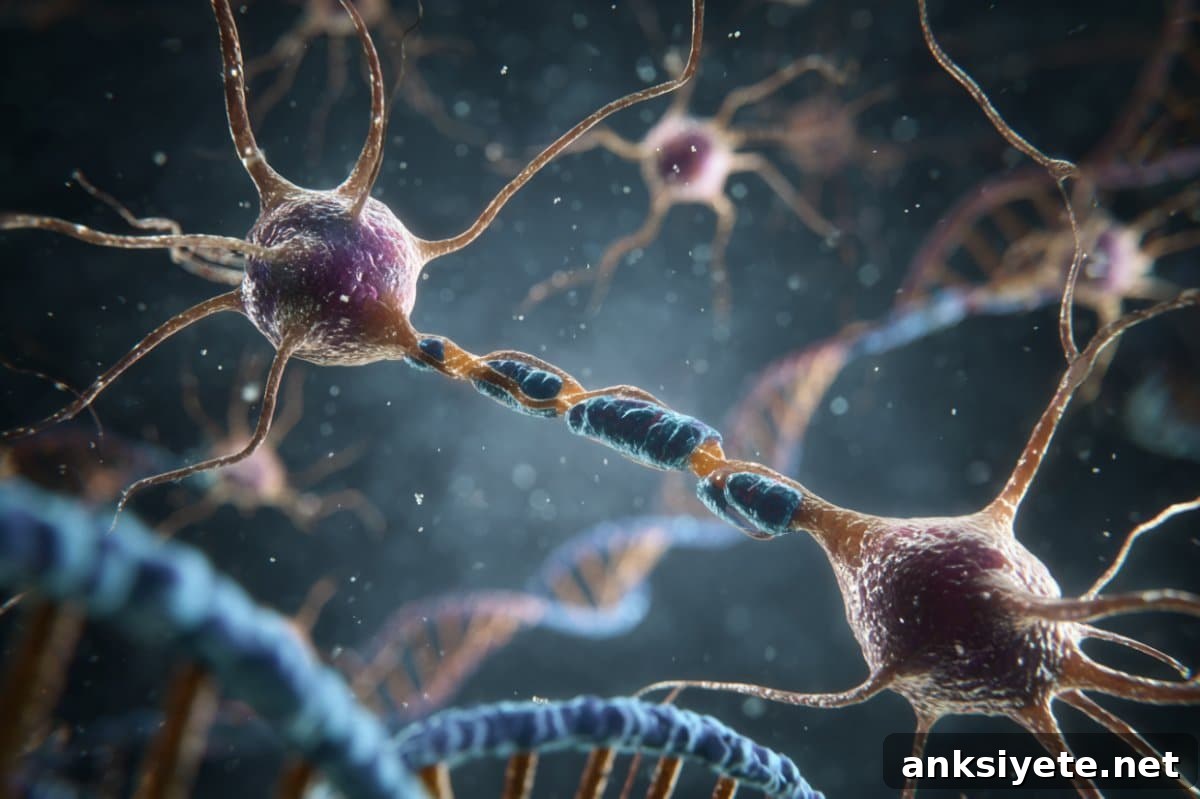
Summary: The brain relies on a precise balance between excitatory and inhibitory neurons to operate correctly. A new study from the Max Planck Institute shows that inhibitory neurons born later in development undergo faster maturation than early-born cells, enabling them to catch up and integrate evenly into neural circuits.
This accelerated maturation is guided by genetic programs that reorganize DNA accessibility in progenitor cells. The work offers insight into how disruptions in developmental timing might contribute to neurodevelopmental conditions such as autism spectrum disorders and epilepsy.
Key Facts:
- Developmental Timing: Inhibitory neurons generated later in development accelerate their maturation to maintain circuit balance.
- Genetic Control: Changes in chromatin accessibility and specific gene regulators control the pace of neuronal maturation.
- Clinical Relevance: Alterations in these timing mechanisms may contribute to neurodevelopmental disorders.
Source: Max Planck Institute
The human brain is composed of billions of neurons forming vast, interconnected networks.
To function reliably, these networks require a careful balance between excitation and inhibition. Excitatory neurons transmit and amplify signals, while inhibitory neurons temper activity and prevent runaway firing. Maintaining this balance is essential for stable information processing and overall brain health.
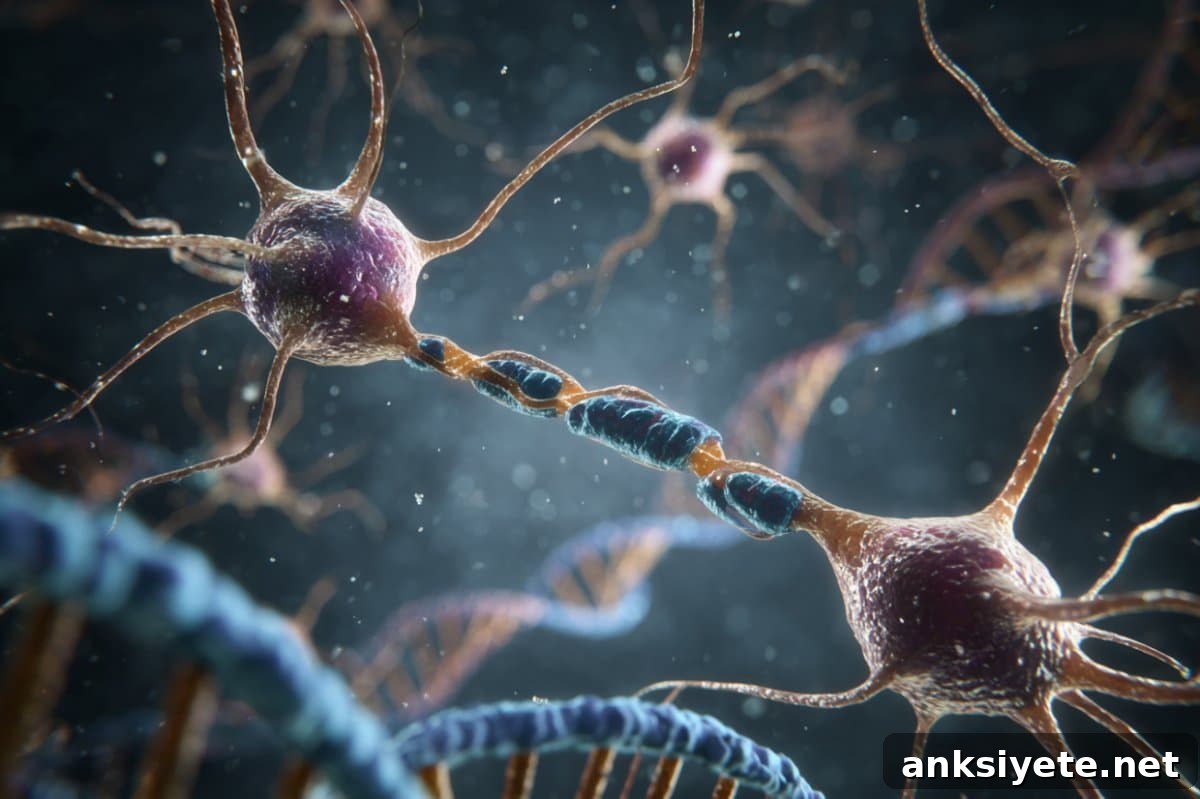
A balanced network prevents excessive synaptic connectivity on some cells and insufficient connectivity on others, preserving the fidelity of brain signaling.
Later-born inhibitory neurons mature more rapidly
Inhibitory neurons arise from dividing progenitor cells—immature precursors that are committed to becoming neurons. The Max Planck Institute team studied these progenitors in mice and discovered an unexpected pattern: inhibitory neurons born later in development progress toward maturity faster than those born earlier.
According to Christian Mayer, the research group leader, this faster maturation allows late-born cells to “catch up” so that, by the time neurons join functional networks, they reach comparable developmental stages. Without this acceleration, earlier-born neurons would have an advantage in forming synaptic connections, creating imbalances in network structure and function.
How genes and chromatin direct timing
The researchers probed the molecular mechanisms behind the difference in maturation rates. They identified gene modules and regulatory factors that change how cells access and read their DNA, effectively altering which developmental programs are available to progenitor cells at different times.
These changes occur through chromatin reorganization—a restructuring of how DNA is packaged in the nucleus that modifies the accessibility of specific genomic regions. When chromatin becomes more open at certain sites, genes that drive accelerated maturation can be activated, shifting the developmental potential of the progenitor and its descendants.
Because these processes depend on precise gene regulation, mutations or dysregulation in the involved genes or chromatin modifiers could misdirect developmental timing. Such disruptions in early embryonic brain development may contribute to conditions like autism spectrum disorder or epilepsy, where excitation–inhibition balance is often altered.
Implications across species and development
The study emphasizes that the timing of inhibitory neuron readiness is tightly regulated, independent of their birthdate. Developmental timing—the genetic and epigenetic control of when cells mature and integrate—varies across mammals. Human brain development unfolds over a much longer period than in many other species, which likely supports greater network complexity and an extended period for learning.
Understanding how the pace of inhibitory neuron maturation is controlled will help explain species differences in brain organization and may reveal why certain timing perturbations have more severe consequences in humans.
Future directions
These findings highlight the importance of both genetic programs and the temporal regulation of maturation for healthy brain development. The mechanisms uncovered offer new avenues for studying the origins of neurodevelopmental disorders and may, in the long term, inform therapeutic strategies aimed at restoring proper developmental timing or circuit balance.
About this neuroscience research news
Author: Christina Bielmeier
Source: Max Planck Institute
Contact: Christina Bielmeier – Max Planck Institute
Image: The image is credited to Neuroscience News
Original Research: Open access.
Title: Temporal control of progenitor competence shapes maturation in GABAergic neuron development in mice — Christian Mayer et al. (Nature Neuroscience)
Abstract
Temporal control of progenitor competence shapes maturation in GABAergic neuron development in mice
GABAergic projection neurons and interneurons of the telencephalon originate from progenitors in the ventral germinal zone known as the ganglionic eminence. Using a combination of single-cell transcriptomics, chromatin accessibility profiling, lineage tracing, birthdating, stage-to-stage transplantation, and perturbation sequencing in mouse embryos, the investigators examined how progenitor competence affects neuronal maturation and differentiation.
They found that the temporal progression of neurogenesis influences maturation competence in ganglionic eminence progenitors, shaping how their progeny advance toward mature states. In contrast, differentiation competence—the ability to generate diverse transcriptomic identities—remains largely preserved throughout neurogenesis.
Chromatin remodeling, together with a regulatory module that includes the transcription factor NFIB and its target genes, modulates maturation competence in late-born neurons. These results demonstrate how transcriptional programs and chromatin accessibility jointly govern neuronal maturation and the diversification of GABAergic neuron subtypes during development.