
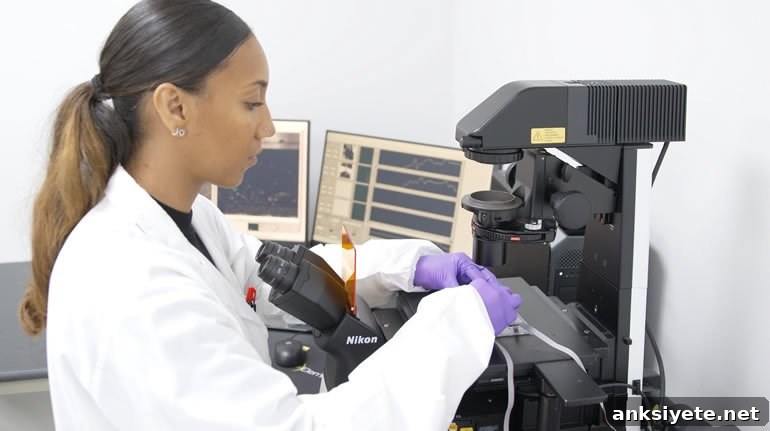
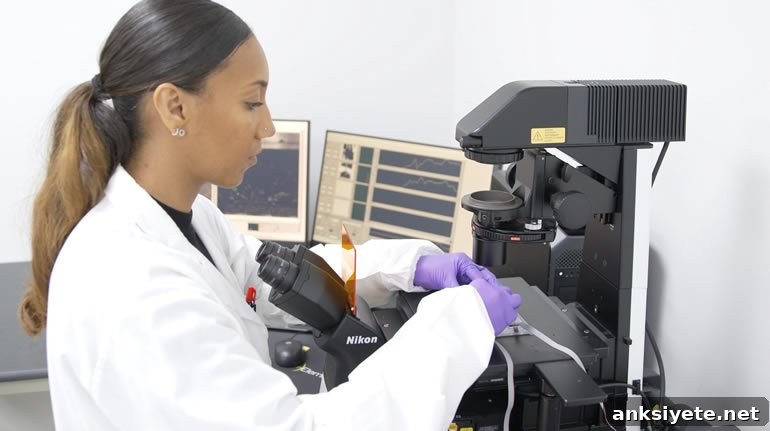
Summary: Human-on-a-Chip technology offers a clinically relevant, human-based model that may improve ALS modeling and drug screening.
Source: University of Central Florida
Researchers report that a Human-on-a-Chip platform developed at the University of Central Florida produces a reliable, clinically relevant model of amyotrophic lateral sclerosis (ALS) and could speed discovery and screening of new therapies compared with traditional preclinical models.
The Human-on-a-Chip system was created by UCF Professor James J. Hickman in his Hybrid Systems Lab and has been licensed to Hesperos, Inc., a company co-founded by Hickman and Michael L. Shuler, Ph.D. The new study appears in the journal Advanced Therapeutics and is titled “A Human-Based Functional NMJ System for Personalized ALS Modeling and Drug Testing.”
“This study supports the ability of our Human-on-a-Chip system to more accurately and rapidly assess new treatments for ALS, and potentially accelerate the drug development process,” says Hickman, co-author of the paper. He adds that the work provides the first published demonstration of the Deanna protocol’s efficacy in a clinically relevant human assay system.
ALS, also called Lou Gehrig’s disease, is a progressive neurodegenerative disorder that progressively damages motor neurons, causing loss of muscle control and ultimately death. In the U.S., an estimated 12,000–15,000 people live with ALS, with roughly 5,000 new diagnoses each year, according to the Centers for Disease Control and Prevention. There is currently no cure.
The study describes a functional neuromuscular junction (NMJ) disease model that pairs motor neurons differentiated from induced pluripotent stem cells (iPSCs) collected from ALS patients with primary human muscle fibers in a compartmentalized chambered system. This setup enables researchers to replicate clinical assessments of neuromuscular function by stimulating motor neurons at increasing frequencies while recording muscle responses—reproducing measures of spasticity, reduced strength and accelerated fatigue used in patient exams.
Investigators used iPSCs from three distinct ALS patient lines: two carrying SOD1 mutations and one carrying an FUS mutation. Compared to healthy controls, motor neurons from each ALS line displayed mutation-specific pathological features of varying severity, including increased axonal varicosities, reduced axonal branching and extension, and heightened excitability.
When these ALS motor neurons were grown in the dual-chamber system with wild-type human muscle, functional NMJs formed as axons extended through microtunnels into the muscle compartment without widespread cell death. Despite this structural formation, the ALS-derived systems showed substantial impairments: fewer and less stable NMJs, reduced fidelity of electrical transmission, and greater muscle fatigue and “skips” in contraction when stimulated at higher frequencies. These functional and morphological deficits mirror those observed in ALS patients and support the model’s validity for studying disease mechanisms and therapeutic responses.
“To our knowledge, this is the first study to show that although different ALS mutations present distinct phenotypes, they share a common origin of dysfunction at the NMJ,” Hickman says. “This finding is relevant not only to familial ALS but may also apply to sporadic cases.”
The Deanna protocol is an over-the-counter regimen of nutritional supplements that targets multiple cellular pathways known to be disrupted in ALS. While anecdotal reports have suggested benefits in some patients, prior to this work no human functional model had demonstrated its effects on NMJ function.
In the reported experiments, treatment with the Deanna protocol reversed NMJ functional deficits across all tested ALS mutant lines. Treated cultures showed marked improvements in NMJ formation, restored electrical transmission fidelity, and stronger muscle contractions, even under higher-frequency stimulation conditions. These results suggest the protocol affects NMJ integrity and function in a measurable way within this human-based assay.
Michael L. Shuler, Ph.D., CEO of Hesperos, notes that the interconnected, multi-organ platform can be extended to reveal additional patient-specific phenotypes in ALS and applied to high-content screening of candidate therapeutics. The system’s ability to model both structural and functional deficits offers an adaptable platform for personalized and subtype-specific ALS studies.
About this ALS research article
Source:
University of Central Florida
Contacts:
Press Office – University of Central Florida
Image Source:
Image credited to Hesperos, Inc.
Original Research: Open access. “A Human‐Based Functional NMJ System for Personalized ALS Modeling and Drug Testing” by Xiufang Guo, Virginia Smith, Max Jackson, My Tran, Michael Thomas, Aakash Patel, Eric Lorusso, Siddharth Nimbalkar, Yunqing Cai, Christopher W. McAleer, Ying Wang, Christopher J. Long, and James J. Hickman. Published in Advanced Therapeutics.
Abstract
A Human‐Based Functional NMJ System for Personalized ALS Modeling and Drug Testing
Loss of the neuromuscular junction (NMJ) is an early and critical hallmark of all forms of amyotrophic lateral sclerosis (ALS). The authors developed a functional NMJ disease model by integrating motor neurons differentiated from multiple ALS patient-derived induced pluripotent stem cells (iPSCs) with primary human muscle in a chambered system. NMJ function was evaluated by recording myotube contractions during motor neuron stimulation and by defining clinically relevant parameters to characterize NMJ performance. Three ALS lines were analyzed—two with SOD1 mutations and one with an FUS mutation—and reproduced hallmark pathological features, including increased axonal varicosities, reduced axonal branching and extension, and elevated excitability. Although these motor neurons established functional NMJs with wild-type muscle, the system exhibited significant deficits in NMJ number, transmission fidelity, and fatigue resistance. Treatment with the Deanna protocol corrected NMJ deficits across all ALS mutant lines tested. Quantitative analysis also revealed mutation-specific variations inherent to each line. This functional NMJ platform enables study of both familial and sporadic ALS forms and can be adapted to subtype- or patient-specific models for etiological investigation, patient stratification, and drug testing.