
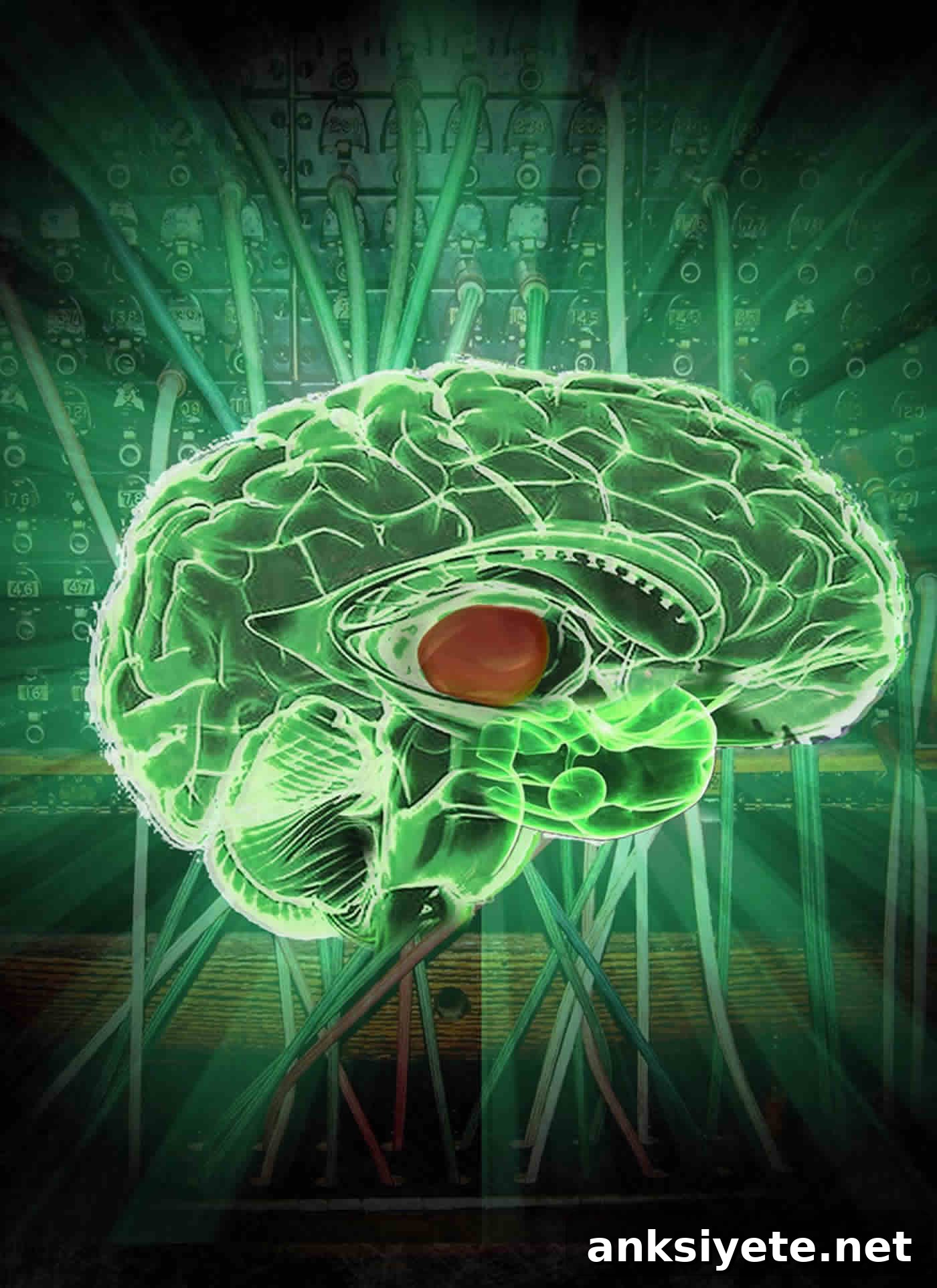
Findings clarify how the brain prioritizes important information and how neural circuits may malfunction in attention disorders.
Researchers at NYU Langone Medical Center report new evidence that a thin, shell-like structure deep in the mammalian brain—the thalamic reticular nucleus (TRN)—helps the brain focus and multitask by selectively gating sensory information. The team’s experiments in mice suggest individual TRN neurons act like a switchboard, dynamically filtering inputs so the brain can amplify one sense, such as vision, while suppressing competing senses like audition.
Published online in Nature, the study shows that when mice attend to a visual cue to obtain a milk reward, TRN neurons linked to vision reduce their firing. Conversely, when the animals attend to a sound and ignore the visual cue, those same TRN neurons increase activity to suppress visual signals and prioritize auditory information. Earlier work from this group indicated that distinct TRN neuron populations target specific sensory modalities, and the new findings extend that idea to explain how attention shifts between senses.
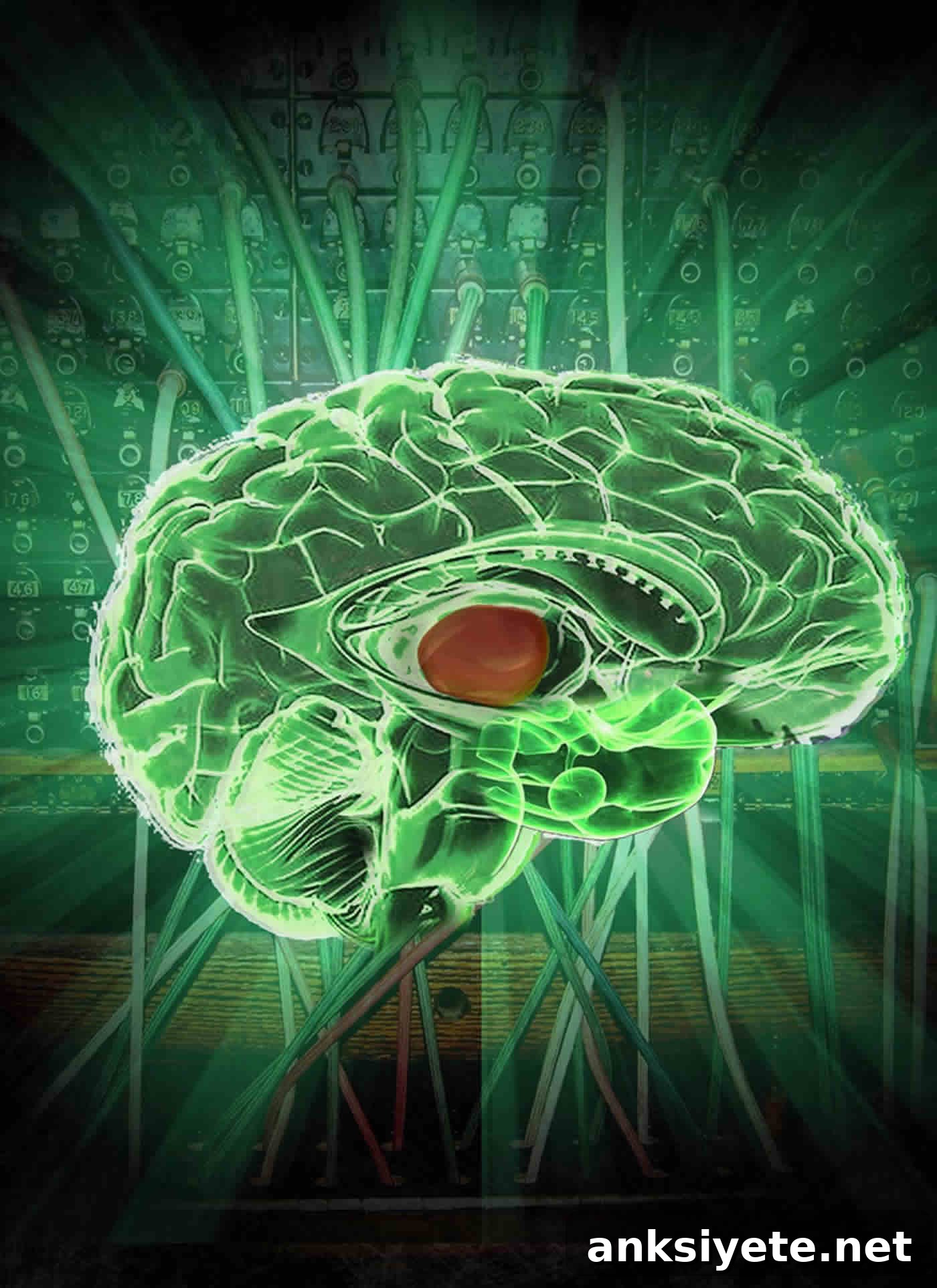
“Our results support a model in which the thalamic reticular nucleus functions as a switchboard that controls how much sensory information reaches the rest of the brain,” says senior investigator Michael Halassa, MD, PhD, assistant professor of neuroscience and psychiatry at NYU Langone and the Druckenmiller Neuroscience Institute. “Filtering out distracting or irrelevant information is essential for everyday behavior—whether driving, holding a conversation, or socializing.”
The study sheds light on the neural basis of attention and provides a framework for understanding disorders where attention is disrupted, such as ADHD, autism spectrum disorders, and schizophrenia. Halassa notes that while researchers have long suspected a role for the TRN in sensory gating—including a gate-like hypothesis proposed by Francis Crick in 1984—technical challenges made direct testing difficult. The TRN is a small structure tucked deep in the brain, and until now it has been hard to record from its neurons during behavior or to isolate its contribution to attention.
To address these challenges, the team created a cross-modal, divided-attention task in mice. The behavioral paradigm required animals to choose between competing cues—a brief flash of light or a tone—to earn a milk reward. By presenting distracting stimuli that conflicted with the expected cue, the researchers measured how well mice could select the appropriate sensory input under competing demands. Performance dropped from nearly 90 percent to about 70 percent when a distracting stimulus was introduced, and distraction effects sometimes persisted even after the distractor was removed.
While mice performed the task, the researchers recorded electrical activity from TRN neurons and manipulated brain circuits with targeted optogenetic inactivation. Temporarily inactivating the prefrontal cortex—a region involved in decision-making and executive control—disrupted TRN signaling and reduced mice to chance levels when they had to select between visual and auditory cues. Inactivating the TRN itself, while leaving the cortex intact, also impaired performance. These manipulations indicate that the prefrontal cortex guides the TRN to bias sensory selection and that TRN activity is necessary for effective filtering of competing inputs.
Using a combination of electrophysiology and optogenetics, the team demonstrated that visual TRN neurons (visTRN) show prefrontal cortex–dependent changes in firing rate that predict which sensory modality the animal will select. Further experiments revealed that visTRN exerts dynamic control over visual thalamic gain through feedforward inhibition—effectively turning down the volume on visual information when attention shifts away from sight.
Halassa and colleagues say the next steps will explore how much distracting information the TRN can suppress or permit and how this filtering mechanism breaks down in disease models such as autism. Understanding the limits and flexibility of TRN-mediated gating could reveal targets for interventions to restore balanced sensory selection in attention disorders.
Key contributors to the study included lead investigators Ralf Wimmer, PhD, and Ian Schmitt, PhD, co-investigator Miho Nakajima, PhD, and other collaborators Thomas Davidson, PhD, and Karl Deisseroth, MD, PhD. The work received financial support from several organizations, including the Swiss National Science Foundation, the Simons Foundation, the Sloan Foundation, the NARSAD Young Investigator Award, and grants from the National Institutes of Health.
Funding: Grants that supported the research included Swiss National Science Foundation (P2LAP3 151786), the Simons Foundation, the Sloan Foundation, the NARSAD Young Investigator Award, and NIH awards R00 NS078115 and R01 MH107680.
Image credit: Michael Halassa.
Abstract
Thalamic control of sensory selection in divided attention
How the brain chooses relevant sensory inputs and suppresses distractors is not fully understood. While the prefrontal cortex (PFC) has a well-established role in executive control, the mechanisms by which it interacts with sensory circuits to select inputs remain unclear. To investigate these processes, researchers developed a cross-modal divided-attention task in mice that permits genetic and circuit-level access to attention. Temporally precise optogenetic disruption of PFC function impaired the animals’ ability to select appropriately between conflicting visual and auditory cues. Parallel manipulations showed that behavior depended on PFC interactions with sensory thalamic circuits rather than sensory cortex. Visual TRN neurons exhibited PFC-dependent firing changes predictive of the selected modality, and manipulating visTRN altered task performance. Electrophysiology and intracellular chloride photometry revealed that visTRN controls visual thalamic gain through feedforward inhibition. These results support a subcortical model of sensory selection in which the PFC biases thalamic reticular subnetworks to regulate thalamic sensory gain and select inputs for further processing.
“Thalamic control of sensory selection in divided attention” by Ralf D. Wimmer, L. Ian Schmitt, Thomas J. Davidson, Miho Nakajima, Karl Deisseroth and Michael M. Halassa. Published online October 21, 2015. doi:10.1038/nature15398