
Summary: The perception of every scent is built on precise neural circuitry that maps odor receptors to specific targets in the brain.
Source: Columbia University
Making the invisible tangible is a long-standing goal for scientists, and nowhere is this more striking than in the visualizations of how the brain interprets smells.
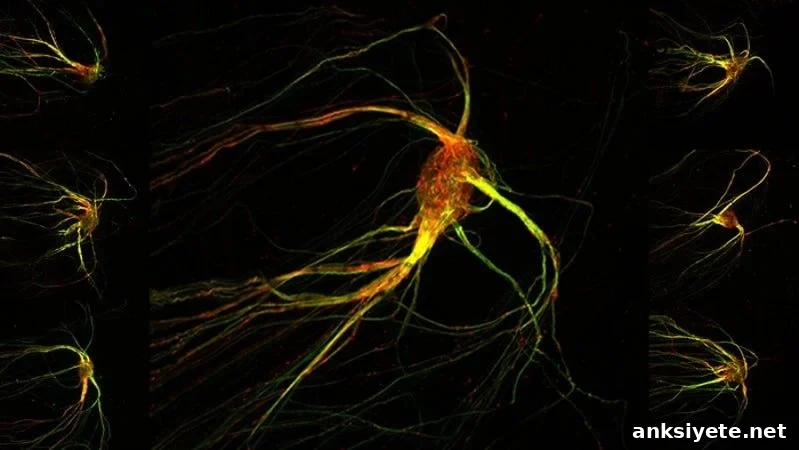
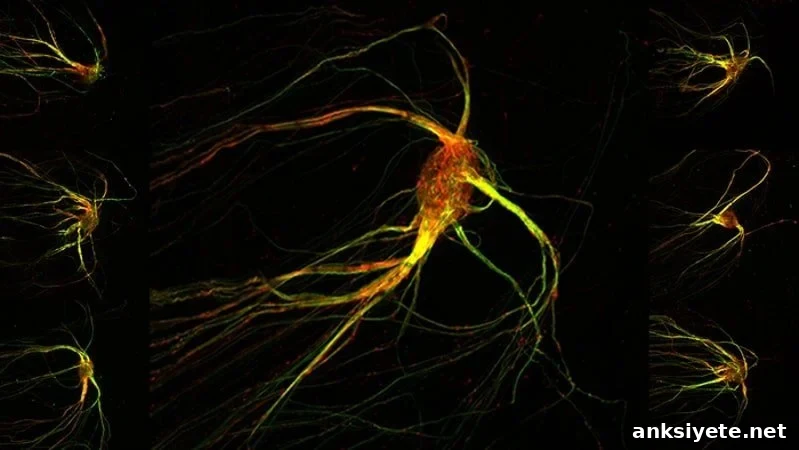
The striking, almost sea-creature-like images that accompany this report are microscopic views of the neurons that translate invisible odor molecules—like the scent of a rose or the pungency of a rotten egg—into neural signals. The red and green filaments in these images trace cells in the mouse olfactory bulb, the brain’s primary smell-processing structure.
The olfactory bulb is organized into hundreds or even thousands of discrete clusters called glomeruli. Each glomerulus responds in a characteristic way to the vast array of odor molecules present in the environment.
Each glomerulus receives input from a specific group of olfactory sensory neurons. Those sensory neurons are scattered across the nose in seemingly random positions, yet they are all tuned to the same odorant receptors. Since the 1990s, researchers—including Richard Axel and many colleagues—have shown that each group of sensory neurons expresses a distinct receptor protein determined by genetic processes, and each receptor binds selectively to particular odor molecules.
That raises a fundamental question: how does each sensory neuron, which is randomly placed in the nose, reliably send its axon to only one exact glomerulus in the olfactory bulb?
The situation is like asking how fifty people, each starting from a different neighborhood, can all independently arrive at the same apartment if none of them initially knows the address. Somehow, every neuron knows where to go.
A major insight into this precise wiring has now emerged. In a study published in Cell, Stavros Lomvardas and Hani Shayya led a team that identified a likely central mechanism linking receptor identity in the nose to axon targeting in the olfactory bulb.
Their discovery centers on the three-dimensional shape each receptor protein adopts inside the endoplasmic reticulum (ER), a tubular compartment within the cell. Each receptor’s unique amino acid sequence determines how it folds, and this folding places a specific level of stress on the ER—similar to the way differently shaped objects cause varying strain when stuffed into a sock.
These varying levels of ER stress act like a biological dial. Different stress states trigger gene-regulatory programs that change the expression of axon guidance and cell adhesion molecules. In effect, the receptor’s intrinsic folding properties are translated into molecular instructions that guide axons to their appropriate glomerulus.
Because of this mechanism, every sensory neuron that expresses the same receptor protein—despite being randomly distributed in the nose—will end up sending its axon to the same glomerulus. Without such precise receptor-to-glomerulus mapping, the brain could misinterpret odors, and the smell of a rose might be confused with that of a rotten egg.
“It is mind blowing,” said Dr. Lomvardas, who is also a professor of neuroscience and of biochemistry and molecular biophysics at Columbia’s Vagelos College of Physicians and Surgeons. “This system found a way to create a genetically encoded, hard-wired means of transforming randomly chosen receptor identity into a very precise target in the olfactory bulb.”
The team also noted potential clinical implications. Olfactory dysfunction is an early feature of several neurodegenerative diseases, including Alzheimer’s and Parkinson’s. Detecting disruptions in the olfactory system’s precise wiring could therefore become important for early diagnosis or monitoring of these conditions.
Shayya added that this mechanism might extend beyond olfactory neurons. If ER stress–dependent wiring proves to be a general principle across other neuronal types, the finding could broaden our understanding of how varied neuronal identities are translated into specific neural circuits throughout the brain.
About this olfaction research news
Author: Ivan Amato
Source: Columbia University
Contact: Ivan Amato – Columbia University
Image: The image is credited to Hani Shayya/Stavros Lomvardas/Columbia’s Zuckerman Institute
Original Research: Open access. “ER stress transforms random olfactory receptor choice into axon targeting precision” by Richard Axel et al., Cell
Abstract
ER stress transforms random olfactory receptor choice into axon targeting precision
Highlights
- Olfactory receptor protein sequences set distinct levels of ER stress in sensory neurons
- Differences in ER stress correlate with changes in the expression of axon guidance genes
- Experimentally altering ER stress levels changes axon targeting specificity
- ER stress–responsive Ddit3 acts to convert receptor identity into precise targeting instructions
Summary
Olfactory sensory neurons (OSNs) must translate the stochastic selection of one among more than 1,000 olfactory receptor (OR) genes into the accurate, stereotyped projection of axons to OR-specific glomeruli in the olfactory bulb. The study shows that the PERK branch of the unfolded protein response (UPR) regulates both the coalescence of like axons into the same glomerulus and the specificity of their targeting.
Subtle sequence differences between OR proteins produce distinct patterns of endoplasmic reticulum stress during OSN development. Those stress patterns are converted into distinct gene expression programs. The researchers identify the transcription factor Ddit3 as a key downstream effector of PERK signaling; Ddit3 links OR-dependent ER stress to the transcriptional control of axon guidance and cell adhesion genes, thereby instructing precise targeting.
These results expand the functional scope of the UPR beyond its established role as a cellular quality-control mechanism for misfolded proteins. The UPR can also act as a sensor of cellular identity, interpreting physiological states to direct the wiring of axons.