
Summary: Researchers reveal how the posterior parietal cortex encodes and organizes information about body movement, with implications for neuroprosthetics and motor rehabilitation.
Source: CalTech.
A compact group of neurons encodes complex movement information across much of the body.
A very small patch of neurons in the brain’s posterior parietal cortex (PPC) can represent movements of many different body parts, according to researchers in the laboratory of Richard Andersen at Caltech. By revealing how the PPC encodes intentions and organizes multiple movement variables, this work advances our understanding of the neural code that supports voluntary action and may improve brain-machine interfaces and therapies for paralysis and stroke.
The findings are reported in a paper published online July 20 in Neuron.
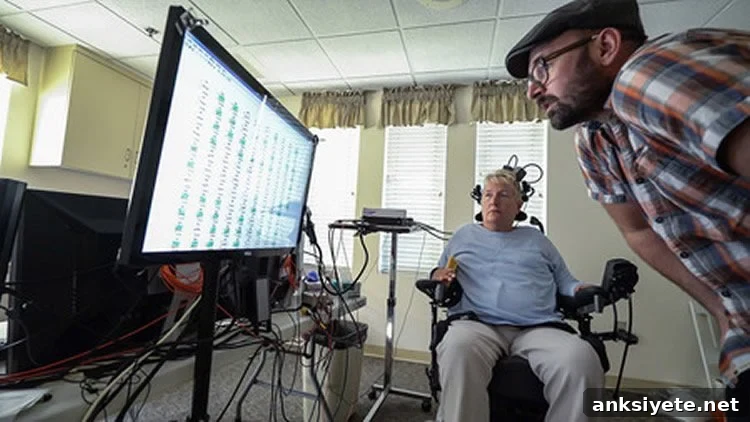
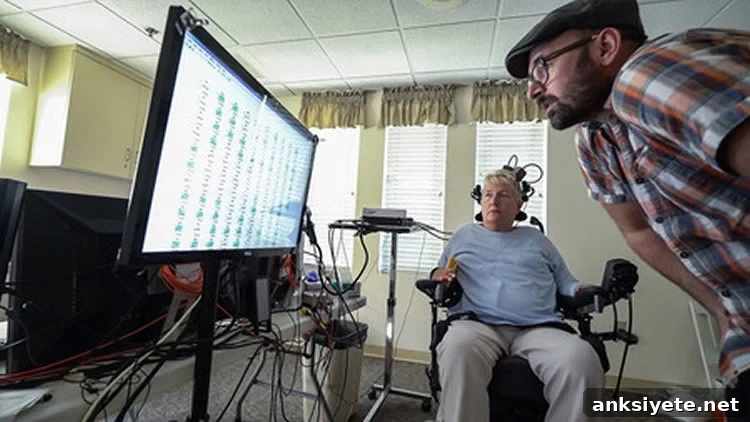
The motor cortex executes movements by sending commands to muscles, but earlier stages of the sensorimotor pathway encode the intention to move. The posterior parietal cortex is a high-level association area that represents intended actions—such as the intention to lift a cup—and communicates those intentions to motor regions. In 2015 Andersen and collaborators demonstrated that tiny implants in the PPC could capture movement intentions from paralyzed patients and drive robotic arms through neuroprosthetic systems.
In the current study the team investigated how a specific subdivision of the PPC, the anterior intraparietal area (AIP), encodes a wide variety of motor-related signals. They asked whether AIP neurons represent only grasping, as previously thought, or whether they encode other effectors (shoulder, hand), body side (left or right), and cognitive strategy (imagined versus attempted movement).
To probe these questions the researchers implanted a four-by-four-millimeter microelectrode array with 96 electrodes into AIP of a volunteer participating in a brain-machine interface clinical trial. Recording single-neuron activity during tasks that involved attempted and imagined movements of different body parts and sides, they discovered that this small cortical patch carried rich, multipurpose signals.
“We observed neurons tuned not only to different grasp types, but also to shoulder and hand movements, to actions on either side of the body, and—even surprisingly—to speech-related movements,” said Andersen. “It was remarkable to find such diverse information concentrated in such a small group of cells.”
Co-lead author Tyson Aflalo explains that this capacity arises from mixed encoding: individual neurons can respond to combinations of actions and variables. “A single neuron might respond during an imagined left-hand movement and during a right-shoulder movement,” Aflalo said. Importantly, the team found that this mixed encoding is not random. Rather, it follows a structured pattern organized primarily by the effector—the specific body part being moved.
Graduate student and co-lead author Carey Zhang describes this organization as partially mixed coding with functional segregation. “Effectors are encoded in a largely independent way within the neural population,” Zhang said. “Within each effector representation, related aspects such as body side and cognitive strategy are strongly correlated. For example, a neuron active for attempted right-hand movements is also likely to respond to attempted left-hand movements, but not necessarily to shoulder movements.”
This structured, partially mixed selectivity produces orthogonal coding across different effectors: although many neurons overlap anatomically, their response patterns separate hand-related dynamics from shoulder dynamics and so on. Andersen notes this segregation likely supports efficient computation and learning, allowing skill learned with one limb to transfer to the other while avoiding unintended movements in unrelated effectors.
Although AIP appears primarily specialized for grasp-related processing, it is connected to many other cortical areas. The presence of multiple body-signal representations in AIP may reflect this integration and coordination role. From a neuroprosthetics standpoint, the result is advantageous: a small implant sampling a modest number of neurons can provide information useful for decoding many kinds of intended movements across the body.
The overlap between imagined and attempted movement representations also carries practical implications. “Athletes and performers often use mental rehearsal to practice sequences,” Aflalo said. “We found that imagination recruits largely the same circuits as actual movement, although the patterns are not identical, which allows us to distinguish them.” This finding supports the idea that mental practice can engage motor networks in ways that facilitate learning and rehabilitation.
Andersen emphasizes that understanding the PPC’s neural code may extend beyond prosthetic control to treatments for motor deficits caused by stroke, traumatic brain injury, peripheral neuropathy, and other neurological disorders. “Our aim is to translate these insights into technologies and therapies that improve the lives of people with movement impairments,” he said.
Funding: Support came from the National Institutes of Health, the Tianqiao and Chrissy Chen Brain-Machine Interface Center at Caltech, the Della Martin Foundation, the Caltech Conte Center for Social Decision Making, and the James G. Boswell Foundation.
Source: Lori Dajose – CalTech
Image Source: Image credited to Caltech.
Original Research: Abstract for “Partially Mixed Selectivity in Human Posterior Parietal Association Cortex” by Carey Y. Zhang, Tyson Aflalo, Boris Revechkis, Emily R. Rosario, Debra Ouellette, Nader Pouratian, and Richard A. Andersen in Neuron. Published online July 20, 2017. doi:10.1016/j.neuron.2017.06.040
CalTech, “The Neural Codes for Body Movements.” NeuroscienceNews. 23 July 2017.
Abstract
Partially Mixed Selectivity in Human Posterior Parietal Association Cortex
Highlights
• A small patch of AIP encodes body parts, body sides, and cognitive strategies
• Multiple encoded effectors argue against strict anatomical segregation
• Orthogonal coding of different effectors may enable functional segregation
• Other variables are organized by body part (partially mixed coding)
Summary
To clarify motor representations in the posterior parietal cortex, the study tested how three motor variables—body side, body part, and cognitive strategy—are encoded in human anterior intraparietal cortex. All tested movements were represented, which argues against strict anatomical segregation of effectors. Single neurons coded for diverse combinations of variables, with different representational dimensions overlapping anatomically. Neurons encoding body parts displayed mixed selectivity that produced largely orthogonal coding among effectors, functionally segregating their responses despite anatomical overlap. Body side and strategy were organized by effector, not mixed indiscriminately. This “partially mixed coding” suggests that the nature of functional encoding depends on which dimensions are compared, and it is advantageous for neuroprosthetic applications because a single implanted array can decode intended movements across a large portion of the body.
“Partially Mixed Selectivity in Human Posterior Parietal Association Cortex” by Carey Y. Zhang et al., Neuron. Published online July 20, 2017. doi:10.1016/j.neuron.2017.06.040