
UNC researchers reveal new insights into how neurons selectively sever axons, a process tied to neurodevelopmental and neurodegenerative disorders
Researchers at the University of North Carolina School of Medicine have revealed unexpected details about how nerve cells intentionally remove parts of their wiring — a process called axon pruning — while protecting the rest of the neuron from the same destructive signals. Published May 21 in Nature Communications, the study clarifies how neurons use and regulate molecular pathways that can either remove a single axon or trigger the death of the entire cell, with implications for understanding conditions such as schizophrenia, autism and other neurological disorders.

Axons are the long projections of neurons that carry electrical signals to other cells. During development and learning, the nervous system refines its connections by pruning unnecessary or faulty axons. This targeted removal helps shape neural circuits that underlie cognition, behavior and memory. But pruning must be tightly controlled: the molecular machinery that dismantles an axon is closely related to the machinery that destroys whole cells, meaning a local “kill” signal could potentially spread and cause unwanted neuronal death.
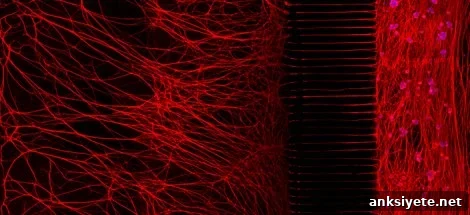
To investigate how neurons distinguish between local axon removal and full-cell death, the UNC team cultured mouse neurons in microfluidic chambers that separate the cell bodies from their axons. These devices let researchers manipulate the environment around axons independently of the somatic compartment, enabling experiments that specifically trigger axon pruning or apoptosis (programmed cell death) and allow direct comparison of the two processes.
The investigators focused on caspases, a family of proteases long known to execute apoptosis. They discovered that caspases are also active during axon pruning, but the way they are activated differs depending on whether the neuron is undergoing pruning or apoptosis. In apoptosis, caspase activation proceeds through a well-established activator called Apaf-1 (apoptotic protease activating factor 1). By contrast, caspases that operate during axon pruning are activated without involvement of Apaf-1, indicating a distinct, context-dependent activation mechanism.
“People had assumed the same molecular pathway drives both pruning and apoptosis, but our results show a clear separation,” said Mohanish Deshmukh, PhD, professor of cell biology and physiology at UNC and the study’s senior author. “The neuron uses the same building blocks in both cases but configures them differently so it can precisely control whether it prunes an axon or kills the whole cell.”
Beyond identifying a different mode of caspase activation during pruning, the team found that neurons apply additional molecular “brakes” to confine the destructive signal to the axon. These safety mechanisms help prevent caspase activity from spreading back to the cell body and triggering apoptosis. Remarkably, removing even a single brake increased neuronal vulnerability, demonstrating how finely balanced these protective systems are.
These findings provide new mechanistic insight into how neurons rewire themselves without risking self-destruction. Because abnormal axon pruning has been implicated in neurodevelopmental disorders such as schizophrenia and autism, and caspase dysregulation has been associated with neurodegenerative disease, the study’s results may help guide future research into disease mechanisms and potential therapeutic strategies that preserve healthy neural circuitry while preventing inappropriate cell loss.
The research team included Corey L. Cusack, Vijay Swahari, W. Hampton Henley and J. Michael Ramsey, in addition to senior author Mohanish Deshmukh. The controlled microfluidic approach and the discovery of an Apaf-1–independent caspase activation pathway during pruning emphasize how neurons can achieve local remodeling while maintaining overall cell integrity.
Notes about this neuroscience research
The study highlights two related but distinct processes: axon-specific pruning, which sculpts neural circuits and is reversible at the level of individual projections, and apoptosis, which irreversibly eliminates entire cells. By comparing these processes directly, the UNC team established that caspase activation can be context-specific and that multiple regulatory layers protect neurons from accidental self-destruction.
Contact: Tom Hughes — UNC Health Center
Source: UNC Health Center press release
Image Source: Image credited to UNC Health Center and adapted from the press release.
Original Research: “Distinct pathways mediate axon degeneration during apoptosis and axon-specific pruning” by Corey L. Cusack, Vijay Swahari, W. Hampton Henley, J. Michael Ramsey and Mohanish Deshmukh in Nature Communications. Published online May 21, 2013.