
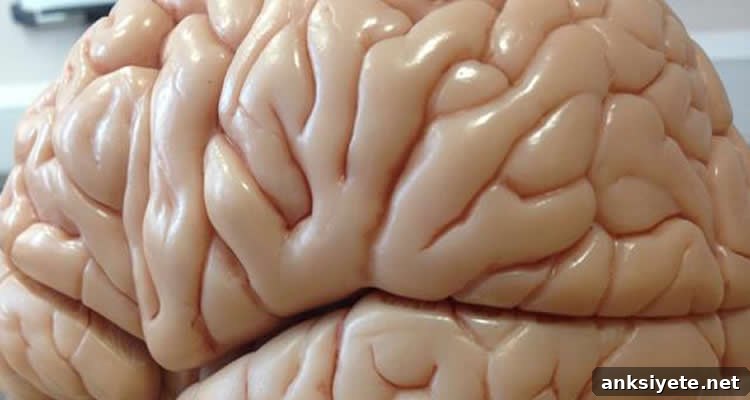
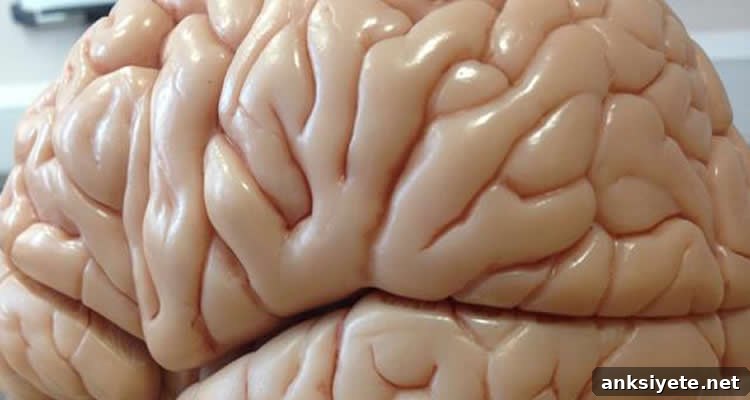
Our brains are plastic. They continuously remodel neural connections as we learn, experience and adapt. Researchers are now asking whether new insights into these processes can help us train our brains more effectively.
When a team of experimental psychologists moved into a new laboratory in Cambridge earlier this year, they chose an unusual design for their tea room: the walls were tiled with the Café Wall Illusion.
The Café Wall Illusion, named after an example spotted on a Bristol café wall in the 1970s, is a classic visual phenomenon in which perfectly parallel rows of black and white tiles appear as if they are sloped or wedge-shaped. It is a vivid example of how perception goes beyond raw sensory input—how the brain interprets and reconstructs visual information.
Professor Zoe Kourtzi, one of the experimental psychologists, explains that the illusion highlights how the brain integrates multiple sources of information. “When interpreting the world around us, our brains face a flood of data. Perception is not just the signals from our sensory organs; it also reflects context in space and time and prior experience,” she says. “In the Café Wall Illusion, the brain uses the surrounding tiles and prior knowledge to resolve what it sees.”
From birth, neurons form connections that bind sights, sounds, tastes, touch and smell with memories and experience. Neuroscientists call this capacity neuroplasticity—the brain’s ongoing ability to reorganize and form new patterns of neuronal interaction. Understanding how this plasticity supports learning is central to Kourtzi’s work.

Kourtzi’s team studies how the brain recognises objects within cluttered scenes—an ability that is essential in daily life, from spotting a face in a crowd to identifying a landmark while navigating. Visual perception is highly trainable: prior experience allows the brain to pick relevant cues out of background noise more quickly, improving detection and recognition.
Despite the central role of plasticity, many questions remain: how can we stimulate the brain to enhance learning across the lifespan? Which training approaches work best for different people and ages? Kourtzi highlights that “learning to learn” is a core component of flexible behaviour. It supports how children acquire literacy and numeracy and how adults update work-related skills later in life.
One key finding from her research is that the ability to attend to multiple streams of information—multitasking in a controlled, attentive way—predicts faster learning more than sheer memorisation. “Faster learners recruit brain areas involved in attention and can monitor several things at once,” she explains. “Slower learners often rely on memory systems and show greater activity in memory-related brain regions.”
Importantly, age itself is not the limiting factor. “What matters is strategy: older adults who maintain strong attentional skills can learn as quickly as younger people,” Kourtzi notes. This has significant implications for ageing populations. With rising life expectancy and a growing proportion of older adults in the workforce and society, effective training and cognitive resilience are becoming increasingly important goals.
Using functional magnetic resonance imaging (fMRI), Kourtzi and colleagues track which brain areas activate in response to sensory inputs and how these circuits change with learning. Their studies show that young and older adults can both improve visual recognition through training, but they often employ different neural strategies. Younger adults tend to engage anterior brain regions linked to perceptual decision-making, while older adults more frequently recruit posterior regions that support attention and the selection of targets from distracting clutter. “This suggests that training programs should be age-appropriate and tailored to the neural strategies people use,” she says.
Another important observation is individual variability in training benefit. While “practice makes perfect” holds in general, some individuals derive greater gains from specific interventions than others. To understand why, the research goes beyond biology—cognition and genetics—to examine social and environmental influences: how a person’s learning habits, social context and strategies shape their ability to benefit from training.
This multidisciplinary perspective guides the European Union–funded Adaptive Brain Computations project, which Kourtzi leads. The project brings together behavioural scientists, computer scientists, pharmacologists and neuroscientists across multiple universities and industry partners to map how learning happens and how to translate findings into practical applications.
“Our goal is to develop evidence-based training programmes that are appropriate for different ages and individual profiles,” Kourtzi says. The Café Wall Illusion remains a favourite example because perceptual tricks like this illustrate how context and prior experience alter what the brain perceives—exactly the same principles that shape learning in everyday life.
Contact: Press Office – University of Cambridge
Source: University of Cambridge press release
Image Source: The plastic brain image is credited to Sam Webster and is licensed Creative Commons Attribution-NonCommercial-ShareAlike 3.0 Unported. The Café Wall tile image is credited to Tony Kerr and is adapted from the University of Cambridge press release.
Original Research: More detailed information about the underlying studies will be provided when it is released.