
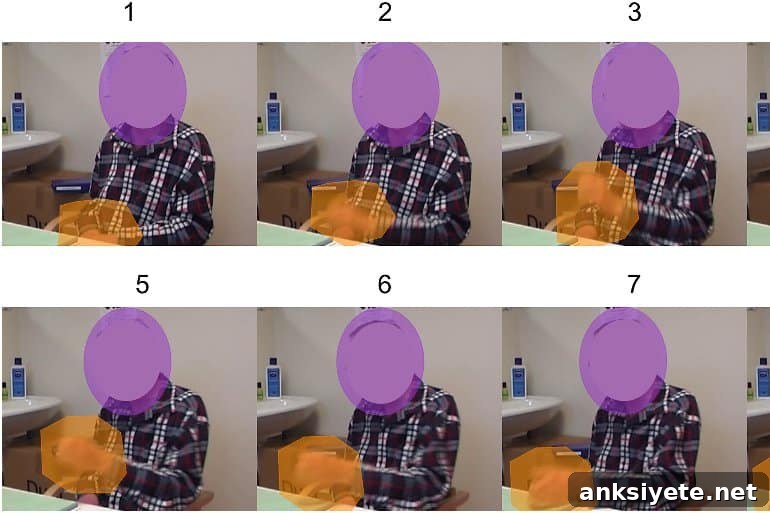
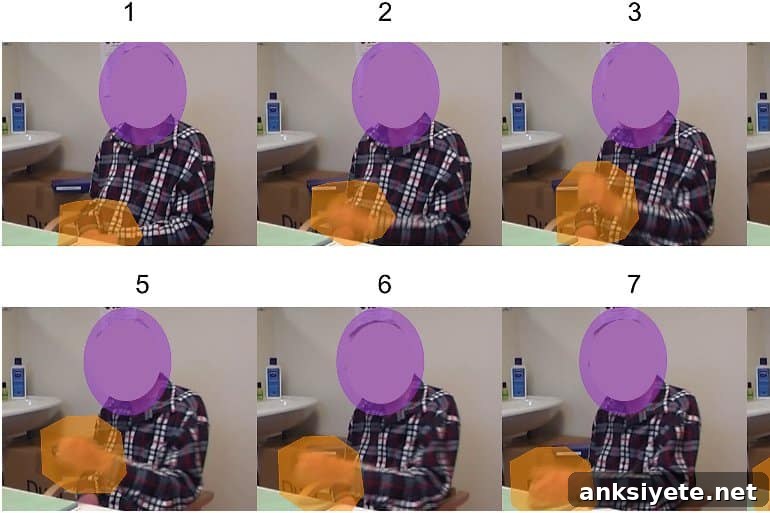
Summary: When people with language disorders such as aphasia speak, listeners shift their attention toward the speaker’s hand movements and gestures. Gestures can supplement limited verbal output and help conversation partners understand the intended message.
Source: University of Zurich
When words are limited, gestures can bridge the gap—particularly for people with aphasia.
An international research team has shown that listeners pay more attention to the gestures of people with aphasia than previously recognized. The findings have practical implications for communication strategies and speech therapy.
Aphasia and other acquired language disorders—often caused by stroke, traumatic brain injury, or brain tumor—can severely limit a person’s ability to produce clear, informative speech. In those cases, nonverbal signals such as hand gestures frequently become an important part of how people try to convey meaning.
Earlier studies reported that people with aphasia use gestures more often, but assumptions about how much attention those gestures attract were largely based on studies with speakers who do not have language disorders. The new study directly tested whether listeners change where they look when the speaker’s verbal output is impaired.
Communicating with gestures
Researchers from the University of Zurich, together with colleagues in the Netherlands and Japan, used eye-tracking to measure how much attention healthy observers give to gestures produced by speakers with and without aphasia. Observers watched short video clips in which speakers described everyday scenarios—describing a shopping trip or an accident—while the observers’ eye movements were recorded.
Attention shifts from face to hands
The study found that when speakers produced very limited or less informative speech, observers looked more often and for longer at the speakers’ hand movements. “Our results show that when people have severe speaking difficulties and produce less informative speech, their listeners are more likely to attend to hand movements and to look longer at gestures,” explains Basil Preisig of the Department of Comparative Language Science at the University of Zurich.
In contrast, when speakers had no verbal production limits, their hand gestures attracted relatively little attention. Taken together, the evidence suggests that listeners adaptively reallocate visual attention toward nonverbal information when speech comprehension becomes more difficult.
“For people with aphasia, deliberately using gestures may improve how well they are understood,” says Preisig. The study supports the idea that gestures perform a communicative function, not merely accompany speech.
Implications for therapy and everyday communication
Published in Neuropsychologia, the study highlights the role gestures can play in rehabilitation and everyday interactions. Clinicians and therapists can encourage people with aphasia to use gestures intentionally as part of a multi-modal approach to communication. Likewise, family members and caregivers can be taught to attend to and interpret gestures to support understanding.
Therapeutic guidance that promotes all available channels—speech, gesture, facial expression, and contextual cues—can help maximize successful exchanges. Because listeners naturally look at gestures when speech is less informative, training both speakers and their communication partners to use and notice gestures can strengthen mutual understanding.
About this language and communication research news
Author: Press Office
Source: University of Zurich
Contact: Press Office – University of Zurich
Image: The image is credited to the researchers
Original Research: Open access.
“Gesture in the eye of the beholder: An eye-tracking study on factors determining the attention for gestures produced by people with aphasia” by Karin van Nispen et al. Neuropsychologia (DOI: 10.1016/j.neuropsychologia.2022.108315)
Abstract
Gesture in the eye of the beholder: An eye-tracking study on factors determining the attention for gestures produced by people with aphasia
Co-speech hand gestures are a widespread form of nonverbal communication that can convey information not present in speech. When verbal production is impaired, as in post-stroke aphasia, gestures may become more important for getting a message across. People with aphasia tend to produce gestures more frequently, and some of those gestures carry information essential for understanding their meaning.
To determine whether listeners attend to these gestures, healthy observers watched short video clips while their eye movements were recorded. The clips featured both people with aphasia and non-brain-damaged speakers describing everyday scenarios such as buying a sweater or witnessing an accident.
Results show that gestures produced by speakers with aphasia were looked at longer on average than gestures by non-impaired speakers. This difference remained significant even after accounting for the longer duration of gestures produced by people with aphasia. Additionally, gestures accompanying less informative speech were attended to more frequently.
These findings indicate that listeners reallocate their visual attention toward co-speech gestures when speech comprehension is challenged by the speaker’s verbal production deficits. The study supports the communicative value of gestures and recommends that people with aphasia be encouraged to use gestures to express information they cannot easily convey verbally, while caregivers and therapists learn to recognize and respond to those gestures.