
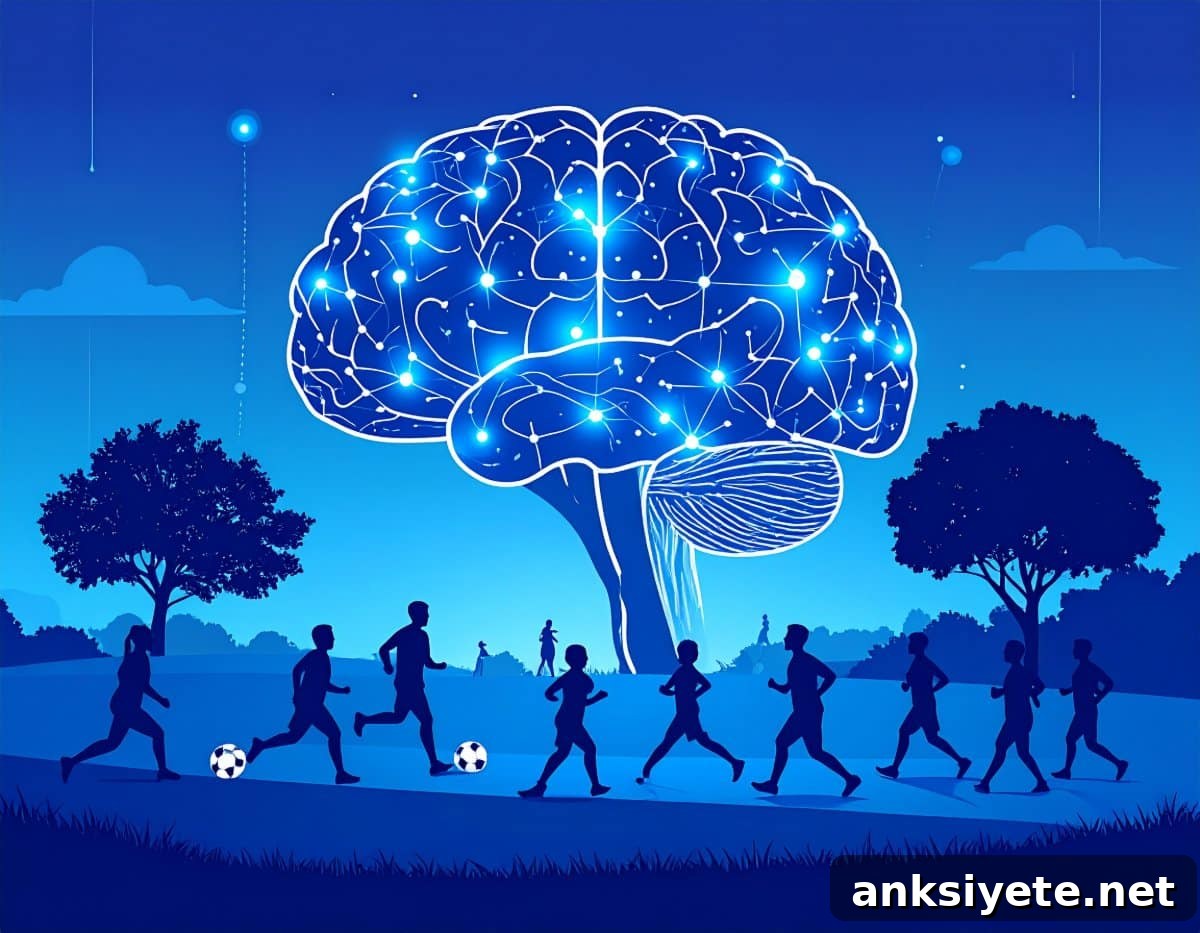
Summary: A new review from the University of Georgia shows that the mental health benefits of physical activity depend not only on how much you move but also on the context in which that movement occurs. Leisure activities such as yoga, recreational running, or team sports tend to produce stronger mood and mental health benefits than obligatory activities like household chores or physically demanding paid work. The social setting, environment, and the nature of the activity all influence outcomes, suggesting that tailoring exercise to personal preferences and circumstances may maximize its positive effects on mental health.
Recent research emphasizes the importance of context: who you exercise with, why you are exercising, where it takes place, and how enjoyable the activity feels. These factors can substantially alter whether physical activity supports reduced anxiety and depression or has little effect.
Key Facts:
- Context Counts: Social setting, purpose, and enjoyment shape the mental health impact of exercise.
- Leisure Wins: Voluntary, recreational activities generally show stronger associations with lower depression and anxiety than occupational or domestic activity.
- Tailored Approach: Considering personal preferences, setting, and social dynamics can improve outcomes and adherence.
Source: University of Georgia
For decades, exercise research emphasized the “dose” of activity—how long people exercise or how many calories they burn. Patrick O’Connor, co-author of the review and professor in the Mary Frances Early College of Education’s Department of Kinesiology, explains that focusing exclusively on dose overlooks critical contextual elements. The same physical effort can have very different psychological effects depending on the circumstances.
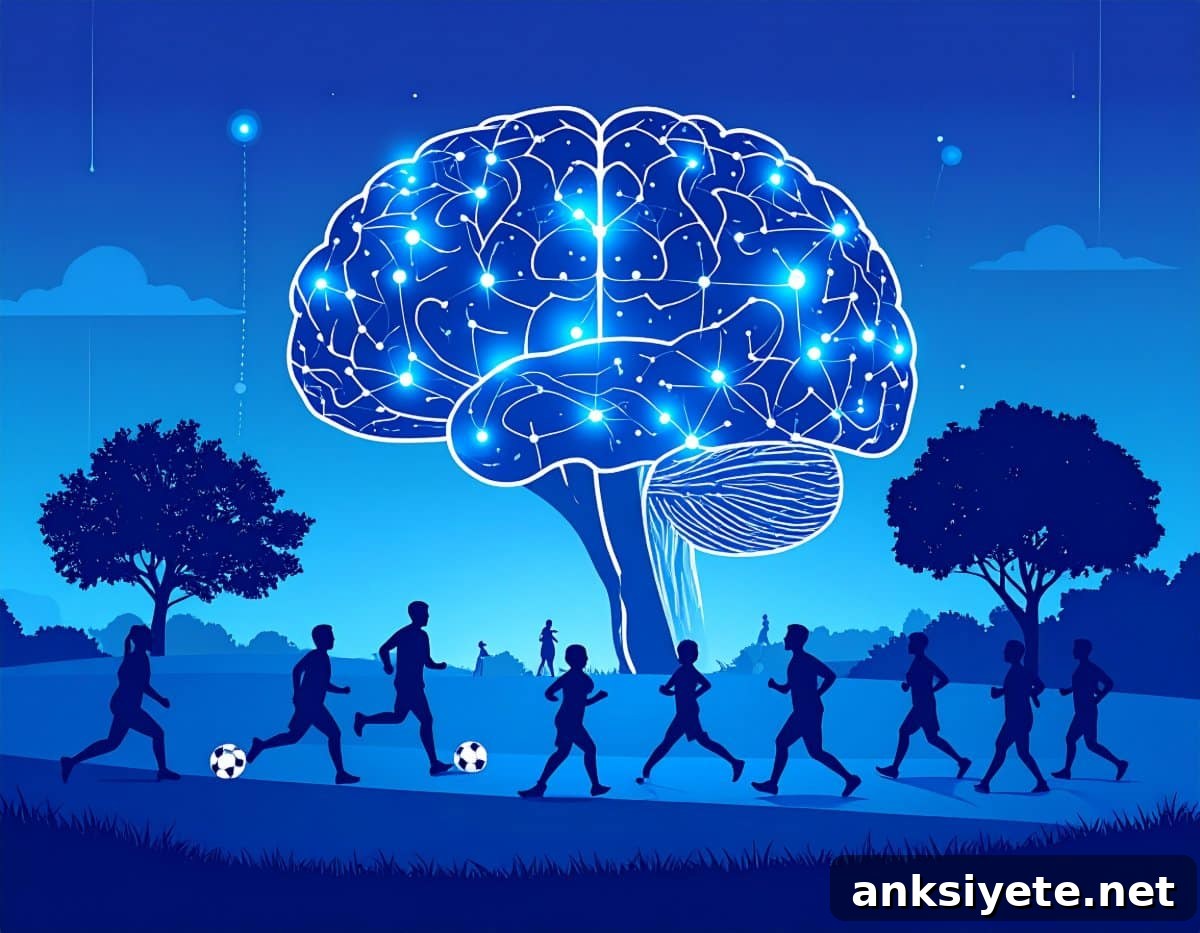
Large population studies (epidemiological research) consistently find that regular leisure-time physical activity is associated with fewer symptoms of depression and anxiety. However, that positive relationship is weaker or unclear for activity carried out as part of paid work, commuting, or household chores. In other words, voluntary and enjoyable activity appears to be more protective for mental health than activity that is mandatory or stressful.
Randomized controlled trials also report mental health benefits when people adopt exercise routines, particularly for individuals already experiencing mental health disorders. But many of these trials are small, short-term, and drawn from relatively homogeneous samples, which limits confidence in how broadly the results apply. O’Connor notes that average effects in trials are modest, especially among people without preexisting mental health conditions, and urges larger, longer, and more diverse studies to clarify the true impact.
Why context matters
Context includes social elements (teammates, group dynamics, instructor style), environmental conditions (weather, location, time of day), and the activity’s purpose (recreation, transportation, work). These factors shape how people perceive and experience the same physical movements. O’Connor gives a simple example: the exhilaration a soccer player feels after scoring a winning goal is very different from the stress of performing the same physical actions and then being blamed by teammates. Such differences show how the social and emotional environment can alter psychological responses to identical exercise doses.
Contextual factors may influence outcomes through several pathways: enjoyment and intrinsic motivation increase adherence and amplify mood benefits; social support and positive group climates provide emotional resources; and negative conditions—such as pressure, poor instruction, or uncomfortable weather—can reduce or even reverse benefits. The review highlights that contextual influences could help explain why some studies report robust mental health improvements while others find only small or inconsistent effects.
The authors call for future research designs that intentionally measure and manipulate contextual elements. By moving beyond dose-only paradigms and examining how social environment, instructor behavior, program quality, and setting alter mental health responses, researchers can develop more effective, personalized exercise interventions.
Co-authors of the review include Eduardo Bustamante (University of Illinois Chicago), Angelique Brellenthin (Iowa State University), and David Brown (formerly of the Centers for Disease Control and Prevention). Their article, informed by a 2023 ACSM colloquium, synthesizes evidence from epidemiological studies, randomized trials, and emerging investigations into context to clarify where evidence is strong and where it remains limited.
About this exercise and mental health research news
Author: Cole Sosebee
Source: University of Georgia
Contact: Cole Sosebee – University of Georgia
Image: The image is credited to Neuroscience News
Original Research: Closed access. “Up for Debate: Does Regular Physical Activity Really Improve Mental Health?” by Patrick O’Connor et al., published in Medicine & Science in Sports & Exercise. DOI: 10.1249/MSS.0000000000003636
Abstract
This review summarizes evidence presented at a 2023 ACSM colloquium and evaluates strengths and limitations across three perspectives: population-based epidemiological research, randomized controlled trials, and studies that explicitly examine contextual factors. While a substantial epidemiological literature links leisure-time physical activity to reduced depression and anxiety, evidence is weaker for occupational, commuting, or household activity. Randomized trials generally support mental health benefits from regular exercise but are often limited by small samples, short duration, and participant homogeneity. Emerging research suggests that contextual elements—such as social climate, program quality, and implementation—can meaningfully influence outcomes, but current evidence is insufficient to identify which contextual variables consistently produce moderate or large effects. The authors recommend that future work systematically incorporate contextual measures and more diverse, longer-term trials to clarify how physical activity affects mental health across real-world settings.