
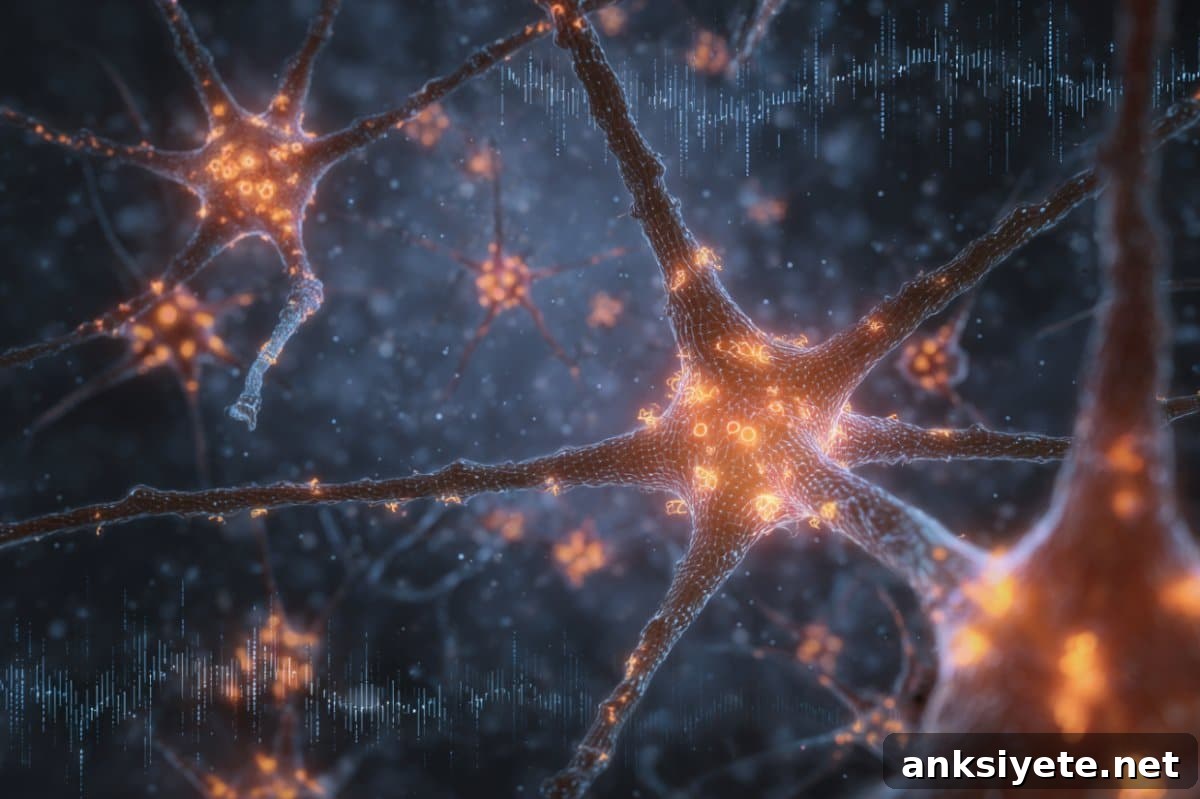
Summary: New research reveals that astrocytes—glial cells once viewed mainly as neural support—actively shape brain network dynamics. Using computational modeling and machine learning, the study shows astrocytes subtly fine-tune synchronized neural activity that underlies memory, attention and sleep rhythms.
These star-shaped glial cells influence rhythmic brain states in ways that often escape conventional measures but become evident through advanced analytics. The results point to a broader role for astrocytes in brain function and suggest new directions for therapies that consider neuron–glia interactions.
Key facts:
- Astrocytes actively modulate synchronized brain rhythms rather than acting solely as passive support.
- Machine learning methods can uncover astrocytic effects that traditional metrics miss.
- Understanding astrocyte-driven coordination may inform novel approaches to treat neurological disorders.
Source: FAU
For years, glial cells—non-neuronal cells that support, protect and interact with neurons—were largely overlooked in network-level brain studies. A new study from Florida Atlantic University highlights how astrocytes take on a more active and dynamic role, especially in coordinating population-level neural activity.
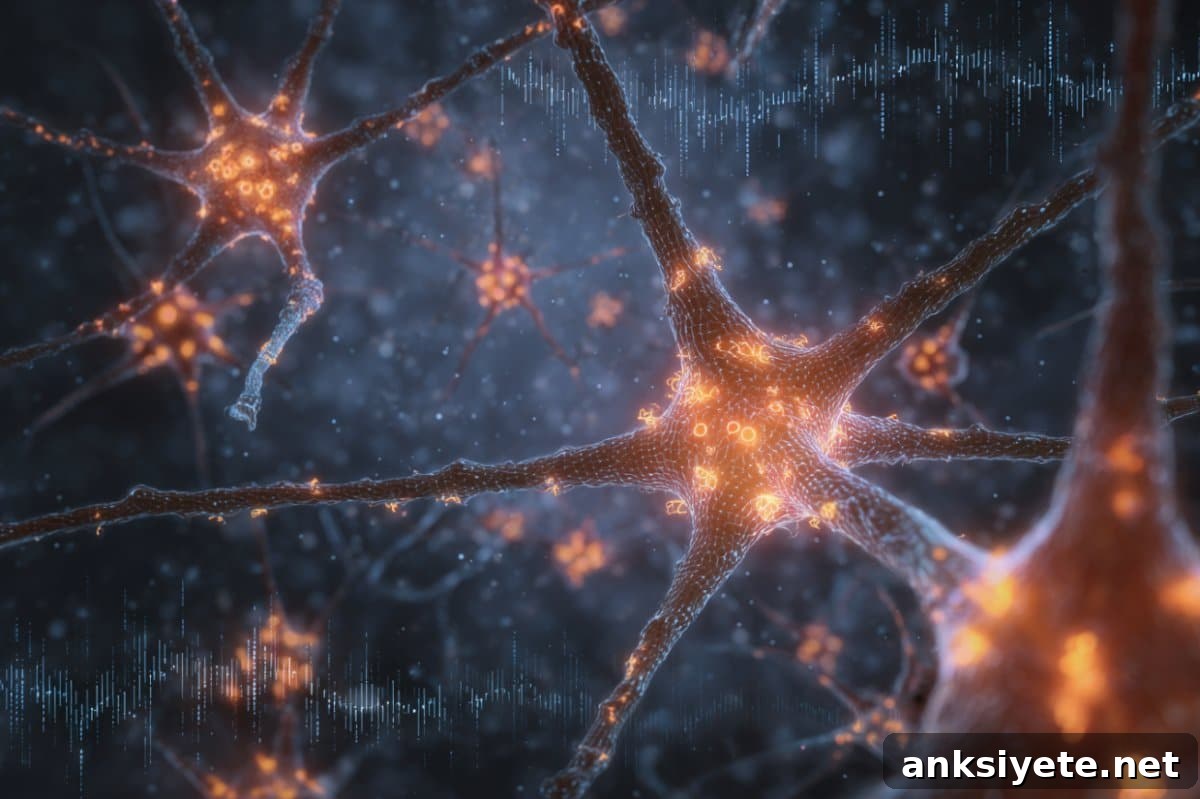
Using detailed computational models and multiple machine learning approaches, the research team demonstrated that astrocytes subtly alter neuronal communication patterns, with the strongest effects emerging when networks enter synchronous states—periods when large groups of neurons fire together in a coordinated rhythm. These synchronous states are critical for cognitive functions such as attention, memory formation and sleep regulation.
“Glial cells are clearly implicated in many brain processes, and identifying their signature among neuronal signals is both important and challenging,” said Rodrigo Pena, Ph.D., senior author and assistant professor of biological sciences at FAU’s Charles E. Schmidt College of Science. He noted that realistic simulations of neuron–glia interactions demand advanced computational techniques.
The study, conducted in collaboration with researchers at the Federal University of São Carlos and the University of São Paulo, addresses a gap in neuroscience by moving beyond the traditional neuron-centric view. “Recent work has shown astrocytes participate in synaptic modulation, energy regulation and broader network coordination,” said Laura Fontenas, Ph.D., co-author and assistant professor of biological sciences at FAU. “This project extends those findings by demonstrating measurable network-level effects.”
To probe astrocytic influence, the team generated synthetic brain network data and applied a set of machine learning classifiers—Decision Trees, Random Forests, Gradient Boosting, Bagging and Feedforward Neural Networks—to distinguish networks with and without astrocytic modulation across synchronous and asynchronous conditions.
Among the algorithms tested, feedforward neural networks performed best overall, particularly in asynchronous states where neuronal firing is less coordinated and subtle patterns require more expressive models. The researchers also evaluated different summary features extracted from the simulated data and found that the Mean Firing Rate (MFR) worked especially well as an accessible, informative measure for machine learning detection of astrocytic effects.
One notable finding is that astrocytes have the greatest impact during synchronous activity. In those states, advanced statistical tools such as spike-train coherence revealed shifts toward more coordinated timing and a richer frequency composition when astrocytes were included. In other words, astrocytes appear to fine-tune the timing and spectral diversity of network firing, which could support stability and efficient information transfer.
At the same time, common experimental metrics—mean firing rate and coefficient of variation—can miss these nuanced contributions. The study illustrates that astrocytic modulation may not produce large, obvious changes in traditional measures, so detecting their presence benefits from tailored analytics and machine learning pipelines that capture deeper structure in activity patterns.
The authors emphasize that these computational results provide testable predictions for biological experiments. The team plans to investigate the modeled signatures in suitable animal systems, such as zebrafish, to validate how astrocytes affect network dynamics in vivo.
“By improving our ability to detect glial influence with advanced statistical methods and accessible features like mean firing rate, we open new pathways to explore how neuron–glia interactions shape cognition and behavior,” Pena said. He adds that this perspective could broaden therapeutic strategies to address neurological disorders by targeting the full cellular ecosystem of the brain, not just neurons.
Study co-authors include João Pedro Pirola (first author, Federal University of São Carlos), Paige DeForest (FAU Wilkes Honors College), Paulo R. Protachevicz, Ph.D. (University of São Paulo), and Ricardo F. Ferreira, Ph.D. (Federal University of São Carlos).
About this AI and neuroscience research news
Author: Gisele Galoustian
Source: FAU
Contact: Gisele Galoustian – FAU
Image: The image is credited to Neuroscience News
Original Research: Open access. “Astrocytic signatures in neuronal activity: a machine learning-based identification approach” by Rodrigo Pena et al., Cognitive Neurodynamics. DOI: 10.1007/s11571-025-10276-4
Abstract
Astrocytic signatures in neuronal activity: a machine learning-based identification approach
This study explores the growing evidence that astrocytes, the most abundant glial cells, play an active role in brain network function. Focusing on synchronous and asynchronous network states, we used computational modeling to generate synthetic neuronal population data and evaluated how astrocytic modulation alters synaptic communication.
Different feature extraction strategies were compared to determine which measures best reveal astrocytic influence; mean firing rate emerged as a robust and experimentally accessible signal. We trained multiple machine learning models—Decision Trees, Random Forests, Bagging, Gradient Boosting and Feedforward Neural Networks—and found that feedforward neural networks provided the highest detection performance, particularly in asynchronous regimes.
Results indicate astrocytes exert a stronger and more detectable effect during synchronous activity, enhancing coordinated timing and frequency diversity within networks. These findings point to practical approaches for identifying neuron–glia interactions experimentally and highlight astrocytes as key modulators of population-level brain dynamics.