
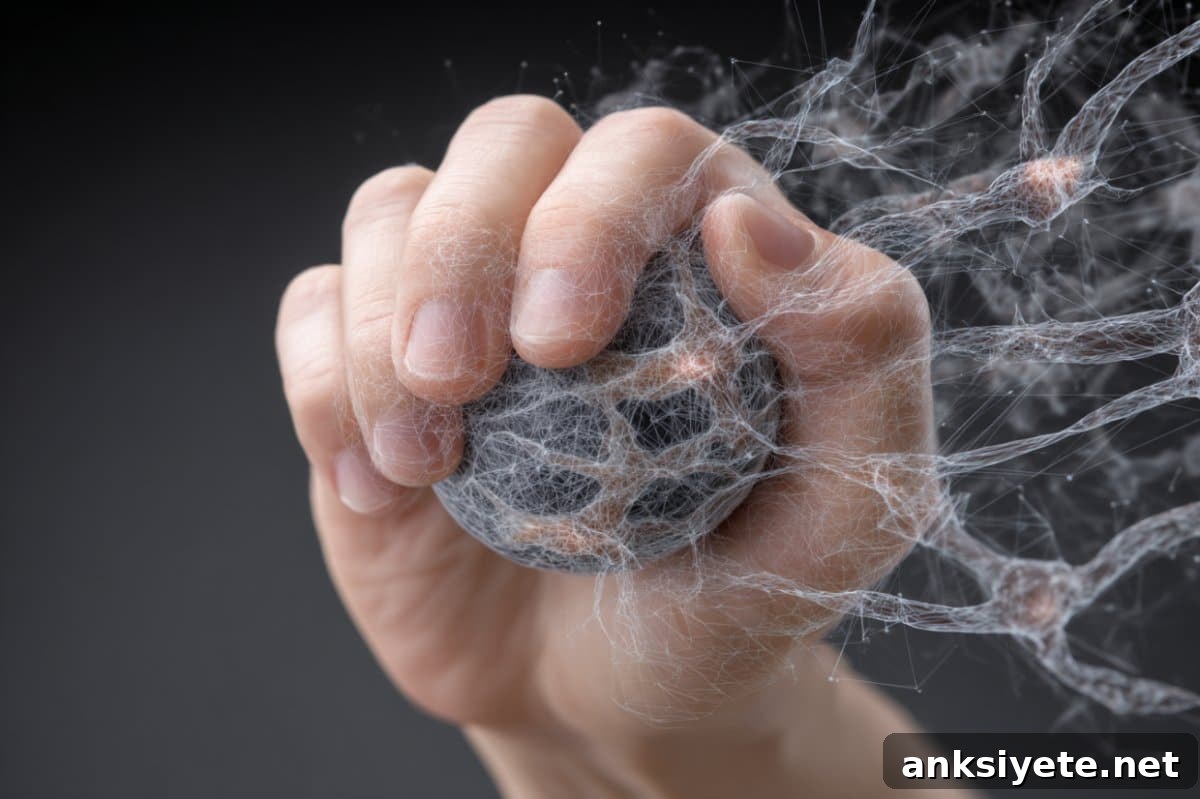
Summary: Psychosis may begin not with obvious hallucinations or delusions but with subtle motor changes such as reduced grip strength. A new study links weaker grip strength in people with early psychosis to altered brain connectivity, especially in networks that coordinate movement and higher-order cognition.
These connectivity changes involve regions including the anterior cingulate cortex, sensorimotor cortex, and cerebellum, all showing altered relationships with the default mode network (DMN). Because grip strength is simple to measure, these findings suggest a practical, accessible marker for early detection and for tracking interventions. The results also point toward potential therapies—from brain stimulation like transcranial magnetic stimulation (TMS) to targeted motor training and exercise—that could strengthen relevant neural pathways and improve mental health outcomes.
Key Facts:
- Motor clues: Lower grip strength in early psychosis is associated with reduced functional connectivity in specific brain networks.
- Brain targets: Disrupted communication between the sensorimotor system, anterior cingulate, cerebellum, and the default mode network may underlie both motor and higher-order symptoms.
- Intervention potential: Noninvasive neuromodulation (for example, TMS) and motor training or exercise could be explored to restore network function and improve well-being.
Source: Indiana University
Psychosis often begins with changes in movement rather than the classic mental symptoms most people recognize—delusions and hallucinations.
Researchers led by Alexandra Moussa-Tooks, assistant professor in the Department of Psychological and Brain Sciences at Indiana University, and Heather Burrell Ward, assistant professor of psychiatry and behavioral sciences at Vanderbilt University Medical Center, investigated how a simple motor measure—hand grip strength—relates to brain network function and overall well-being in early psychosis.
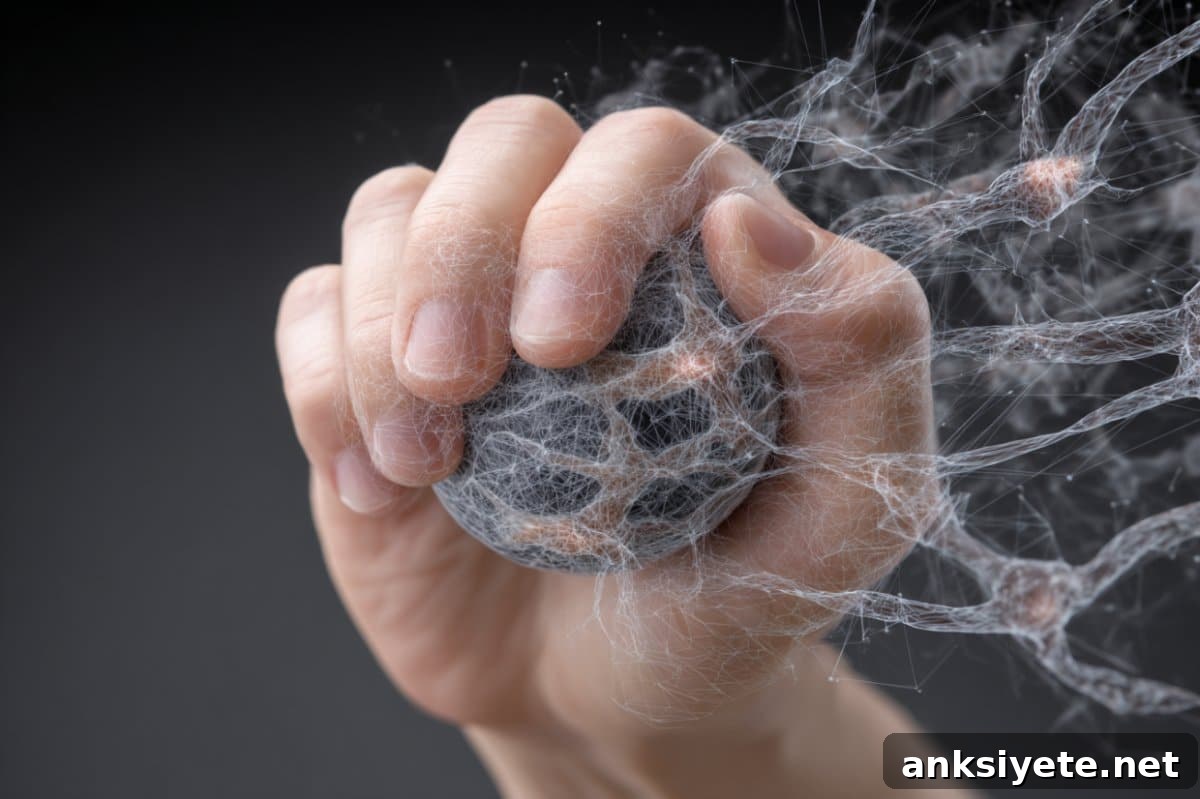
Published on June 25 in the American Journal of Psychiatry, the study uses resting-state functional MRI and data-driven connectome analysis to show that weaker grip strength in young people with recent-onset psychosis corresponds with distinct patterns of brain connectivity. These patterns overlap with the same networks that predict reduced well-being and functional status, suggesting a shared neural basis linking motor function and mental health.
As Moussa-Tooks explains, “Poor grip strength has been associated with many negative outcomes across populations—lower subjective well-being, reduced daily functioning, and greater long-term health risk. Yet it has not been widely studied as a marker of brain function in early psychosis. Our data suggest that grip strength can reflect broader network disruptions that affect both movement and psychological health.”
A unifying circuit-level explanation
The team analyzed data collected from the Human Connectome Project for Early Psychosis, a multi-site initiative conducted from 2016 to 2020 that included 89 participants within five years of a first psychotic episode and 51 healthy control subjects aged 16 to 35. The design allowed researchers to rule out age- or medication-related motor decline as primary drivers of the findings.
Compared with control participants, those with early psychosis had consistently lower grip strength as well as lower measures of well-being and overall function. Multivariate pattern analysis of whole-brain resting-state connectivity linked grip strength to three core regions: the sensorimotor cortex, the anterior cingulate cortex, and the cerebellum. Each of these regions showed meaningful connectivity with the default mode network, and stronger connectivity between these nodes and the DMN correlated with higher grip strength and greater well-being.
Identifying brain targets for treatment
Coauthor Heather Burrell Ward highlights the translational potential: “By identifying specific nodes and networks that link motor performance and mental health, we uncover concrete targets that could be modulated with existing tools. For example, TMS can noninvasively enhance network connectivity, and motor training or structured exercise could strengthen these circuits indirectly.”
Grip strength and other simple motor measures offer practical advantages for both research and clinical practice. They are easy to assess, reproducible, and easier to interpret than many complex cognitive tests. The study argues that using straightforward motor indicators can help locate the underlying neural disturbances that give rise to the more complex symptoms clinicians treat in psychosis.
Moussa-Tooks uses a house-fire analogy to summarize the implication: “If symptoms such as hallucinations and delusions are like smoke, motor disturbances help point to the source of the fire. Treating the smoke alone is rarely sufficient; by identifying where the fire began, we can better target interventions that address core network dysfunction.”
By connecting grip strength and well-being to specific resting-state network patterns, this study maps new routes for early detection and for designing interventions that target network integrity. That approach could improve outcomes by focusing treatment on the neural systems that underlie both motor function and the complex symptoms of psychosis.
About this psychosis research news
Author: Liz Rosdeitcher
Source: Indiana University
Contact: Liz Rosdeitcher – Indiana University
Image: The image is credited to Neuroscience News
Original Research: Closed access. “Grip Strength as a Marker of Resting-State Network Integrity and Well-Being in Early Psychosis” by Alexandra Moussa-Tooks et al., American Journal of Psychiatry.
Abstract
Grip Strength as a Marker of Resting-State Network Integrity and Well-Being in Early Psychosis
Objective:
Psychomotor function is an important indicator of risk and prognosis in psychosis. Grip strength is a simple, well-validated measure linked to structural brain integrity and subjective well-being. This study tested whether grip strength mirrors alterations in resting-state functional connectivity and whether it relates to overall well-being and global functioning in early psychotic disorders.
Methods:
The authors analyzed resting-state fMRI and grip strength measures in 89 individuals with early psychosis and 51 control subjects without psychiatric disorders, drawn from the Human Connectome Project for Early Psychosis. Participants were 16–35 years old. Using multivariate pattern analysis across the whole connectome, the study identified brain connectivity patterns associated with grip strength and then replicated those findings using NIH Toolbox well-being scores and the Global Assessment of Functioning (GAF) scale.
Results:
Compared to controls, the psychosis group showed lower grip strength, lower well-being, and lower GAF scores. Grip strength correlated with resting-state connectivity in the sensorimotor cortex, anterior cingulate cortex, and cerebellum, each of which connected with the default mode network (DMN). Stronger connectivity between these regions and the DMN was associated with higher grip strength and better well-being and functioning. The cerebellum and cingulate relationships were primarily driven by the psychosis group.
Conclusions:
Connectome-wide, data-driven analyses identified overlapping brain correlates for grip strength, overall function, and subjective well-being across young adults with psychosis and healthy controls. These results suggest that grip strength may serve as an accessible marker of DMN connectivity and overall brain health, offering a practical avenue for early assessment and intervention in psychosis.