
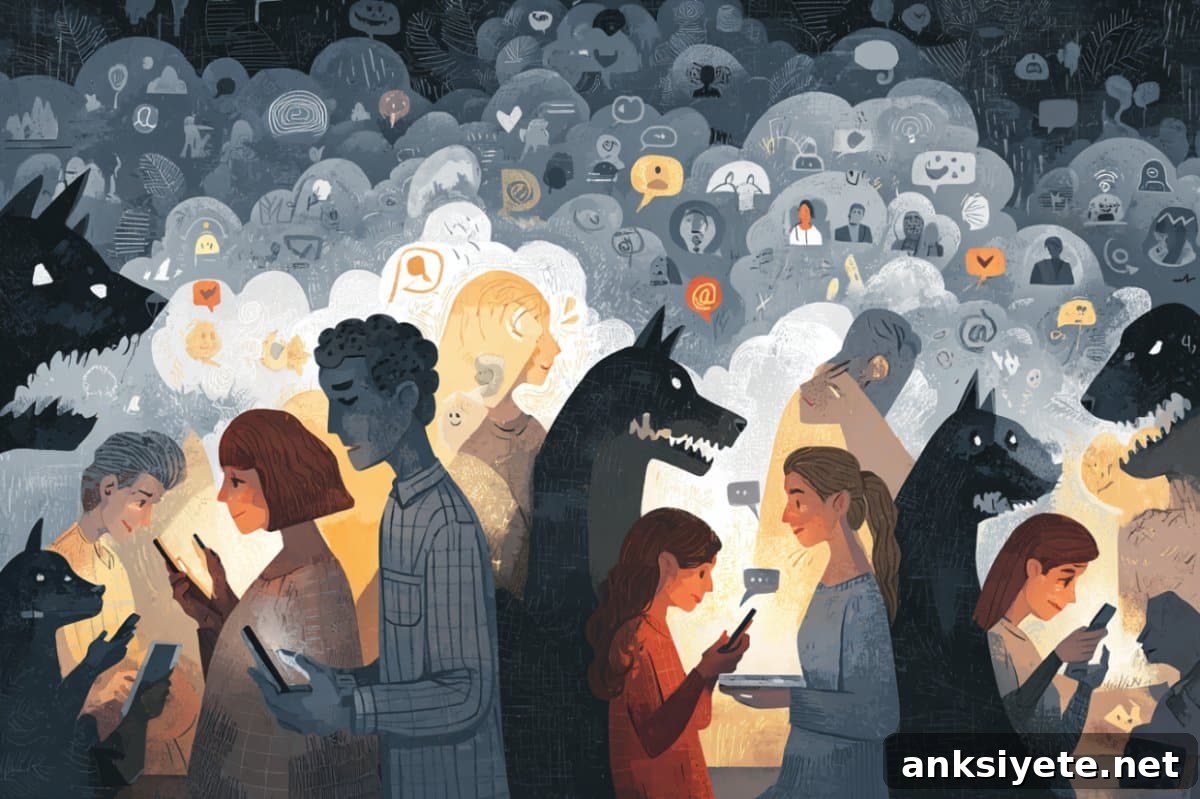
Summary: A large cross-national study analyzed how psychopathy, narcissism, fear of missing out (FoMO), and cognitive ability affect online political participation. Using surveys from more than 8,000 people across eight countries, researchers found that higher psychopathy and FoMO consistently predict greater digital political activity, while narcissism predicts participation only in some cultural contexts. Higher cognitive ability was associated with lower overall participation and reduced the influence of darker personality traits.
Across diverse political and cultural settings, the study shows a complex interplay between personality, social anxiety, and reasoning skills in shaping who engages — and how — in online political spaces.
Key Takeaways:
- Individuals scoring high in psychopathy and FoMO are more likely to engage in online political behaviors across countries.
- Greater cognitive ability correlates with lower online political participation and weakens the effects of dark personality traits.
- The influence of narcissism varies by culture, underscoring how local norms and social expectations shape political behavior online.
Source: Neuroscience News
Overview
In an era when social media and digital platforms make political engagement effortless, understanding who drives online political conversations is crucial. This international study examines how psychopathy, narcissism, and FoMO relate to online political activity, and how cognitive ability changes those relationships. The data come from more than 8,000 participants across eight countries, including the United States, China, and several Southeast Asian nations.
The results offer a clear, nuanced pattern: FoMO and psychopathy reliably predict higher levels of online political participation, whereas higher cognitive ability is linked to reduced participation. Narcissism predicts participation only in certain countries, indicating the role of cultural context.
The Dark Side of Political Participation
Much research on political engagement focuses on broad personality traits like conscientiousness and openness. Fewer studies examine darker personality dimensions such as psychopathy and narcissism and how these traits shape political behavior online. These “dark” traits often relate to impulsivity, dominance, and a diminished concern for others — characteristics that can be advantageous in competitive, attention-driven online environments.
Psychopathy, marked by fearlessness, impulsivity, and reduced empathy, emerged as a strong and consistent predictor of online political activity across all eight countries. From Western democracies to Asian societies, individuals with higher psychopathy scores were more likely to share, comment, and otherwise engage in political content online, suggesting that provocative or confrontational online spaces attract those with these tendencies.
Narcissism — defined by grandiosity and a craving for admiration — was associated with increased participation in only three countries (the United States, the Philippines, and Thailand). This variation likely reflects cultural differences in how self-promotion and public visibility are valued; in more collectivist settings such behaviors may be discouraged, reducing narcissism’s impact on political engagement.
FoMO Fuels Engagement
Fear of missing out (FoMO) — the anxiety that others are having meaningful experiences without you — is closely tied to frequent social media use. This study found FoMO to be one of the most consistent predictors of online political participation across all examined countries. Individuals who fear being excluded from social and political conversations are more likely to jump into discussions, share political posts, or otherwise stay visibly engaged online.
That pattern suggests that a substantial portion of digital political activity may be driven by social motivations and anxiety rather than civic duty or carefully formed political convictions. When participation stems from FoMO, it risks prioritizing visibility and immediacy over deliberation and fact-based discourse.
Intelligence Dampens Impulsivity
One of the study’s most notable findings is that higher cognitive ability — measured via a standardized verbal reasoning test — consistently correlates with lower levels of online political participation. People with stronger reasoning and critical thinking skills tended to engage less in online political activities, suggesting greater restraint or more selective participation.
Importantly, cognitive ability also moderated the effects of dark personality traits and FoMO. The influence of psychopathy and narcissism on online political behavior was much stronger among individuals with lower cognitive ability. In practical terms, those who combined higher psychopathy or narcissism with lower reasoning ability were the most active politically online and potentially more prone to impulsive or disruptive interactions.
Across most countries this moderating pattern held, with one exception: in China the relationship between psychopathy and participation was actually stronger among more cognitively able individuals. This deviation points to how cultural, institutional, or political factors can alter how personality and cognition interact in online political contexts.
Implications for Democracy and Digital Culture
These findings carry important implications for democratic discourse on digital platforms. While online spaces broaden participation, they also lower barriers for impulsive, uncivil, or manipulative behavior. If a disproportionate share of visible political engagement originates from individuals high in psychopathy or driven by FoMO, public discussions may tilt toward sensationalism rather than careful deliberation.
For policymakers, platform designers, and civic educators, the challenge is to encourage inclusive, informed engagement while reducing incentives for reactive or harmful participation. Strengthening digital literacy, designing interfaces that promote thoughtful exchange, and highlighting quality information over engagement metrics could help rebalance online political culture.
The study also underscores the importance of cultural context. Differences in how narcissism and self-promotion relate to participation across countries suggest that interventions should be sensitive to local norms and expectations.
Moving Forward
The research opens several avenues for future work. Longitudinal studies could track how these relationships evolve as digital platforms change, and experimental research could test interventions that reduce the negative effects of dark personality traits on political discourse. Further nuance may also be gained by distinguishing subtypes of narcissism (vulnerable vs. grandiose) and psychopathy (primary vs. secondary) to see how they differently predict online behavior.
Ultimately, the study highlights that online political participation is shaped by a dynamic mix of personality, social motivations, and cognitive capacity. Understanding how these factors combine can inform efforts to create healthier, more constructive digital civic spaces.
About this personality and political psychology research news
Author: Neuroscience News Communications
Source: Neuroscience News
Contact: Neuroscience News Communications – Neuroscience News
Image: The image is credited to Neuroscience News
Original Research: Open access. “Dark personalities in the digital arena: how psychopathy and narcissism shape online political participation” by Saifuddin Ahmed et al., Humanities and Social Sciences Communications
Abstract
Dark personalities in the digital arena: how psychopathy and narcissism shape online political participation
This cross-national study examines how psychopathy, narcissism, and fear of missing out (FoMO) relate to online political participation, and how cognitive ability moderates these associations. Drawing on surveys from the United States and seven Asian countries, the study finds that individuals high in psychopathy and FoMO are consistently more likely to engage in online political activity. Narcissism is associated with participation in a subset of countries. Higher cognitive ability is linked to lower levels of online political engagement and reduces the influence of darker personality traits in most contexts. These results highlight the nuanced interplay between personality, social anxieties, and cognitive function in shaping digital political behavior across diverse socio-political environments.