
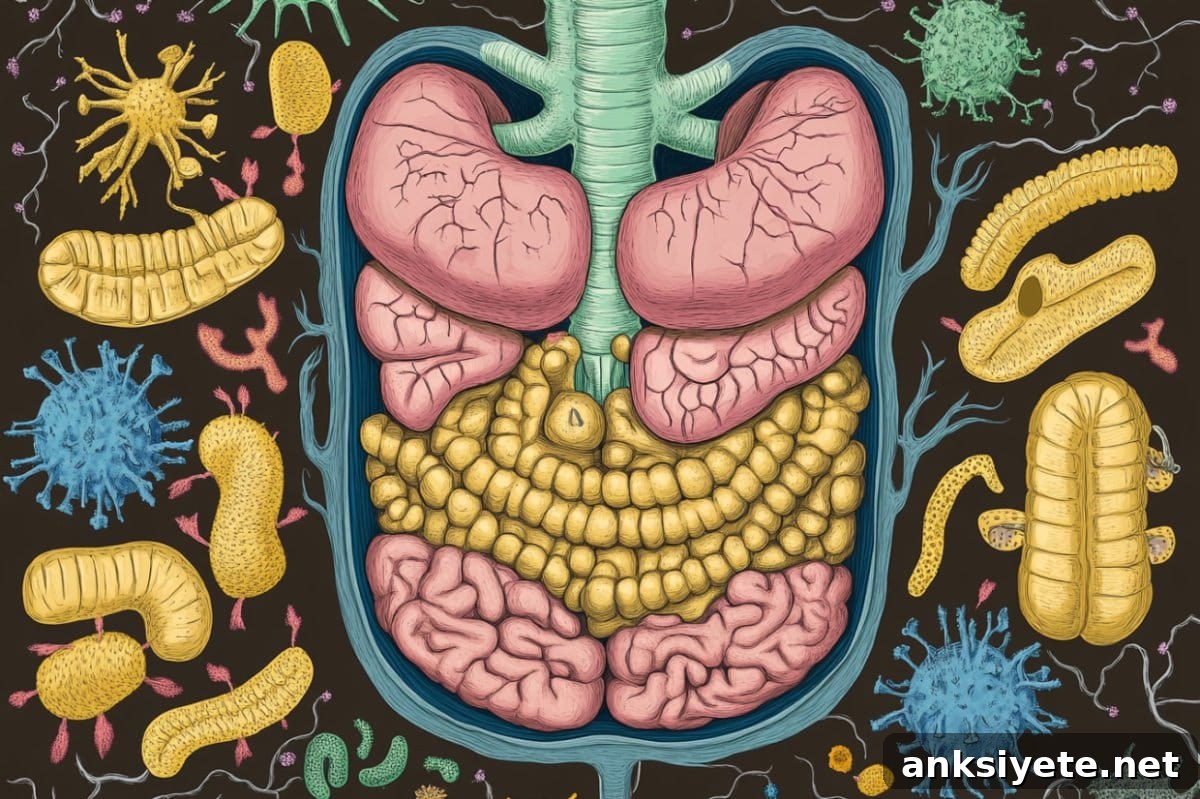
Summary: New research indicates that fecal microbiota transplants (FMT) can create persistent mismatches across gut regions, producing lasting metabolic, immune, and behavioral changes. FMT is intended to restore a healthy gut community by transferring stool-derived microbes from a healthy donor, but most organisms in stool originate in the colon and may colonize unintended regions such as the small intestine.
When these colon-derived microbes settle outside their native niches, they can alter local tissues to favor their survival — a process the researchers describe as “terraforming.” The study urges greater caution in current FMT use and proposes an alternative strategy, called omni-microbial transplants (OMT), designed to better match microbes to their native intestinal regions.
Key Facts:
- Microbial mismatch: Colon microbes delivered by FMT can colonize unintended gut regions, including the small intestine, and alter regional function.
- Long-term effects: In mice, a single FMT produced enduring changes in metabolism, immune activity, and behavior that lasted for months.
- Proposed alternative: Researchers recommend omni-microbial transplants that include microbes from all intestinal regions to better restore regional balance.
Source: University of Chicago
Fecal microbiota transplants (FMT) have been explored as treatments for conditions ranging from recurrent C. difficile infection to inflammatory bowel disease, metabolic disorders, and even neurodevelopmental conditions.
Researchers at the University of Chicago caution that FMT, as commonly performed, may carry unintended and long-lasting consequences. Their experiments show that microbes derived from stool samples — which are dominated by anaerobic colon microbes — can colonize parts of the intestine where they do not normally belong, persist there, and change local tissue function.
Stool-based transplants are rich in anaerobic organisms adapted to the oxygen-poor environment of the colon. When these organisms are introduced to the small bowel or other parts of the digestive tract, they can create a regional imbalance. In mouse experiments and in studies of human tissue, researchers observed duodenal engraftment of colon-derived anaerobes within weeks after FMT, and these organisms remained detectable for months.
Beyond simply occupying new locations, these microbes reshaped their new environments: they altered gene and protein expression in the intestinal lining, changed the profile of local metabolites, and drove shifts in liver metabolism that corresponded with immune gene activity. The host animals also displayed differences in feeding behavior, activity, and energy expenditure after receiving mismatched transplants.
“This should prompt a reevaluation of how we apply FMT,” said Orlando (Landon) DeLeon, PhD, a postdoctoral researcher at the University of Chicago and lead author on the study published in Cell. “If therapeutic microbes are to benefit patients long-term, we need to consider the regional specificity of the gut microbiota and avoid indiscriminately moving large-bowel microbes into parts of the intestine where they don’t belong.”
A vast and varied ecosystem
The gut is not a single uniform environment. Instead, it comprises several distinct regions — each with its own chemical conditions, cell types, and microbial communities that perform region-specific functions. Most microbiome research has focused on the colon, yet many diseases implicate the small intestine and other regional niches.
FMT is currently approved by the U.S. Food and Drug Administration for recurrent infections caused by Clostridioides difficile, where it can restore a protective community after antibiotic-associated dysbiosis. Encouraged by that success, clinicians have experimented with FMT for other conditions. But because stool-derived transplants predominantly contain microbes adapted to the colon, the practice can introduce a suite of organisms that are poorly matched to the small bowel environment.
To investigate regional effects, DeLeon, Eugene B. Chang, MD, and colleagues performed controlled experiments in antibiotic-treated mice. They compared three types of microbial transfers: jejunal microbiota transplant (JMT) from the small intestine, cecal microbiota transplant (CMT) from the junction between small and large bowel, and standard fecal microbiota transplant (FMT) from stool. Each transplant type colonized the full intestinal tract of recipients, not just its region of origin.
These regional mismatches persisted for up to three months after a single transplant. JMT and FMT differentially influenced regional microbial membership and function: jejunal-derived communities tended to favor host metabolic pathways, while fecal-derived communities were associated with immune-related responses. The transplants also altered expression of regional identity genes and differentiation markers in the intestinal lining, indicating that microbes actively reshape tissue characteristics to favor their survival.
An ‘omni-microbial’ approach
Based on their findings, the researchers recommend more careful design of microbiota-based therapeutics. Rather than relying solely on stool-derived communities, they propose omni-microbial transplants (OMT) that combine microbes sampled from multiple regions of the intestine so that transferred communities better reflect the host’s native regional ecology.
“Microbes tend to settle where they are best suited, especially when competing with the microbes that normally belong there,” DeLeon explained. “If there is an open niche, something will fill it, but the microbes that evolved to occupy that niche are most likely to thrive and restore normal function.”
Future work from the team will apply tools such as single-cell sequencing and metabolomics to track how specific microbes influence different gut regions and to test strategies for restoring tissues that have been reshaped by microbial mismatch. Understanding how to reverse terraforming effects could improve the safety and efficacy of microbial therapies and help realize their therapeutic potential without off-target consequences.
Funding: The study, titled “Regional microbiota mismatches from fecal microbiota transplants promote persistent, off-target consequences to the host,” received support from the National Institutes of Health/National Institute of Diabetes and Digestive and Kidney Diseases and the UChicago GI Research Foundation.
Additional authors listed on the paper include Mora Mocanu, Candace M. Cham, Alan Tan, Ashley M. Sidebottom, Jason Koval, Hugo D. Ceccato, John J. Colgan, Marissa M. St. George, Joash M. Lake, Michael Cooper, Jingwen Xu, and David T. Rubin from the University of Chicago; Julia Moore and Kristina Martinez-Guryn from Midwestern University; and Zhilu Xu, Siew C. Ng, Francis K.L. Chan, Hein M. Tun, and Qi Su from the Chinese University of Hong Kong.
About this neuroscience research news
Author: Orlando DeLeon
Source: University of Chicago
Contact: Orlando DeLeon – University of Chicago
Image: The image is credited to Neuroscience News
Original Research: Open access. “Microbiome mismatches from microbiota transplants lead to persistent off-target metabolic and immunomodulatory effects” by Orlando DeLeon et al., published in Cell.
Abstract
Microbiome mismatches from microbiota transplants lead to persistent off-target metabolic and immunomodulatory effects
Fecal microbiota transplant (FMT) is an increasingly used intervention, but its suitability to restore regional gut microbiota—particularly in the small bowel—warrants scrutiny because stool is dominated by anaerobic, colon-adapted microbes.
In human subjects receiving FMT by upper endoscopy, duodenal engraftment of anaerobes was observed after four weeks, suggesting that peroral FMTs can create host-microbe mismatches that impact small-bowel homeostasis. To investigate mechanisms, antibiotic-treated specific-pathogen-free mice received jejunal, cecal, or fecal microbiota transplants and were studied one and three months later.
Jejunal and fecal transfers altered regional microbiota composition and function, energy balance, and intestinal and hepatic transcriptomes. Jejunal-derived communities favored host metabolic pathways, while fecal-derived communities favored immune pathways. Transplants influenced expression of regional identity genes (Gata4, Gata6, Satb2) and downstream differentiation markers. Complementary RNA sequencing of human enteroids and duodenal biopsies exposed to metabolites confirmed relevant transcriptional changes.
These results indicate that regional microbial mismatches after FMT can produce unintended and persistent consequences, highlighting the need to rethink microbiome-based interventions and to develop strategies that respect regional gut ecology.