
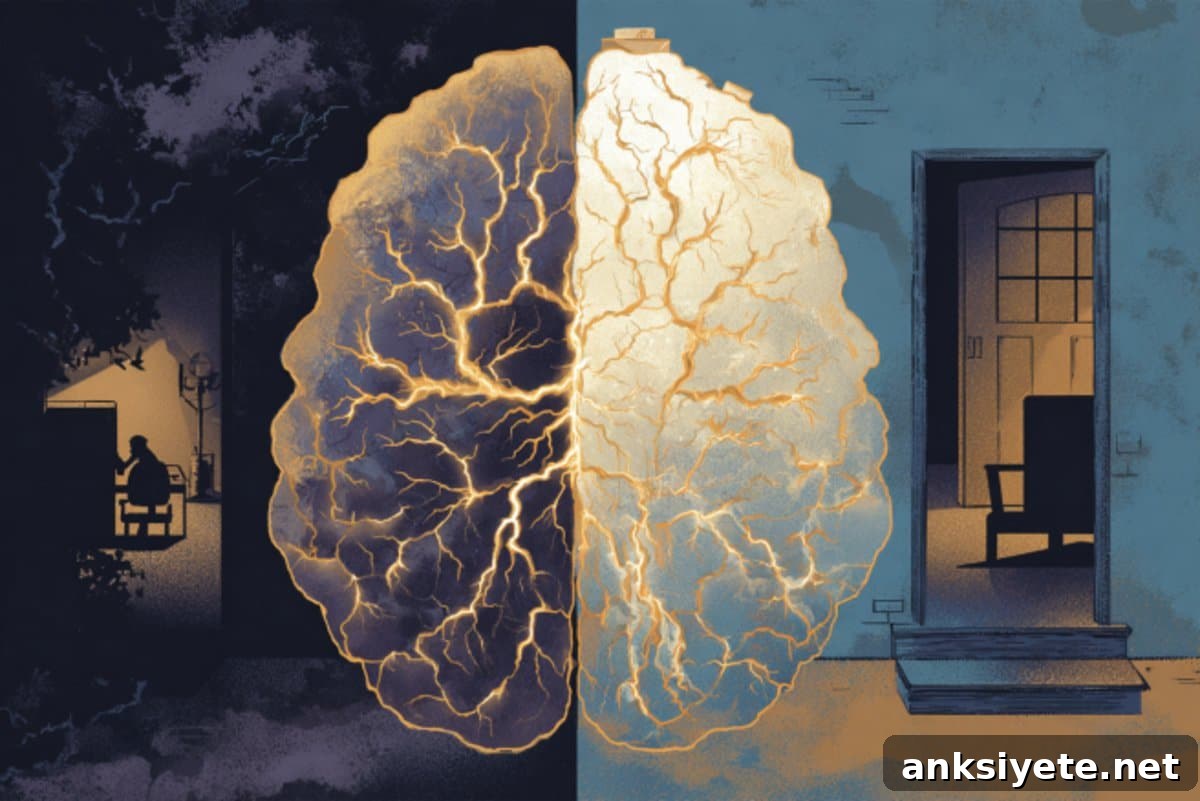
Summary: A new five-year research project will investigate how dopamine may drive changes in brain myelin during periods of social isolation. The team will track interactions between dopamine and oligodendrocytes—the specialized cells that produce myelin and support neuron function—to determine whether dopamine controls myelin plasticity and how that may relate to neuropsychiatric and neurodegenerative conditions.
Funded by a National Science Foundation CAREER award, the study aims to reveal whether altering dopamine signaling can prevent or reverse myelin changes caused by isolation. The results could point to new therapeutic strategies for disorders that involve myelin breakdown, from addiction and schizophrenia to multiple sclerosis and other neurodegenerative diseases.
Key Facts
- Novel hypothesis: Dopamine may directly regulate myelin plasticity through effects on oligodendrocytes.
- Isolation impact: Social isolation is known to change dopamine levels and alter myelin structure in the brain.
- Broader relevance: Findings may apply to addiction, multiple sclerosis, schizophrenia, Parkinson’s disease, and other disorders where myelin integrity is disrupted.
Source: CUNY
Researchers have long observed that social isolation changes brain organization and can contribute to myelin deterioration, the fatty sheath that insulates axons. What remains unclear are the precise molecular and cellular mechanisms that trigger these changes.
A five-year project led by Leora Yetnikoff, professor of Biology at the CUNY Graduate Center and professor of psychology at the College of Staten Island, will explore how dopamine signaling affects oligodendrocytes and myelin dynamics. The work is supported by a $1 million NSF CAREER award.
Using advanced genetic tools and state-of-the-art imaging techniques, Yetnikoff’s laboratory will observe how dopamine communicates with oligodendrocytes and whether manipulating dopamine levels can prevent or reverse myelin alterations caused by social isolation.
“Myelin traditionally has been viewed as the electrical insulation for axons,” Yetnikoff explained, referring to the long projections that transmit electrical signals between neurons. This insulation increases signal speed and efficiency, much like plastic coating around a wire.
Recent research, however, highlights another crucial role for oligodendrocytes: metabolic support. These cells provide molecules that help sustain the energy needs of axons as electrical impulses travel through neural circuits. Without adequate metabolic support, axons can weaken or degenerate, compromising neural communication and circuit function.
“That raises an important question: beyond making myelin, what other functions are oligodendrocytes performing?” Yetnikoff said. “We suspect dopamine may be a key signal that makes myelin itself more plastic—able to change with experience—and that this represents a previously underappreciated form of brain plasticity.”
The project will examine three interconnected areas. First, it will test the novel idea that dopamine, a neurotransmitter central to learning and reward, directly influences oligodendrocyte behavior and myelin remodeling—essential components of experience-dependent plasticity.
Second, the study will explore the wider implications of dopamine-driven myelin plasticity. Social isolation is one cause of myelin change, but similar myelin alterations appear in brain injury and in psychiatric and neurological disorders such as schizophrenia and addiction. Because dopamine is implicated in many of these conditions, understanding its role in myelin regulation could reveal common mechanisms across diverse illnesses.
Third, the team will investigate the specific forms of social isolation that drive these brain changes. “We’re seeing isolation across age groups—older adults who experienced increased loneliness during and after the COVID pandemic, and young people who spend long hours isolated with digital media,” Yetnikoff said. “We want to know how different isolation experiences affect dopamine signaling, oligodendrocytes, and myelin.”
Evidence linking social deprivation to myelin deficits stretches back decades. Animal studies since the 1960s have shown that isolation alters dopamine systems. Human studies—such as a landmark investigation of children raised in Romanian orphanages—observed that severe neglect and psychosocial deprivation were associated with reduced myelination in the prefrontal cortex and other tracts, regions critical for cognitive control and emotional regulation.
If Yetnikoff’s team can identify the cellular pathways that lead from altered social experience to demyelination, the findings could inform novel interventions for a range of disorders characterized by myelin loss or dysfunction, including substance use disorders, multiple sclerosis, Parkinson’s disease, and other neuropsychiatric conditions.
The project will also serve as a training platform: graduate and undergraduate students will gain hands-on experience with cutting-edge genetic models and imaging approaches in the Yetnikoff Laboratory over the five-year funded period. Yetnikoff credits her students with contributing substantially to the grant proposal and the laboratory’s research direction.
Funding: Yetnikoff previously received a young investigator grant from the Brain and Behavior Research Foundation for studies of dopamine and adolescence (2017) and a SCORE Award from the National Institutes of Health for research on glial cells (2021). She was honored with the CUNY Feliks Gross Award for outstanding research in 2022.
About this neuroscience and social isolation research news
Author: Shawn Rhea
Source: CUNY
Contact: Shawn Rhea – CUNY
Image: The image is credited to Neuroscience News