
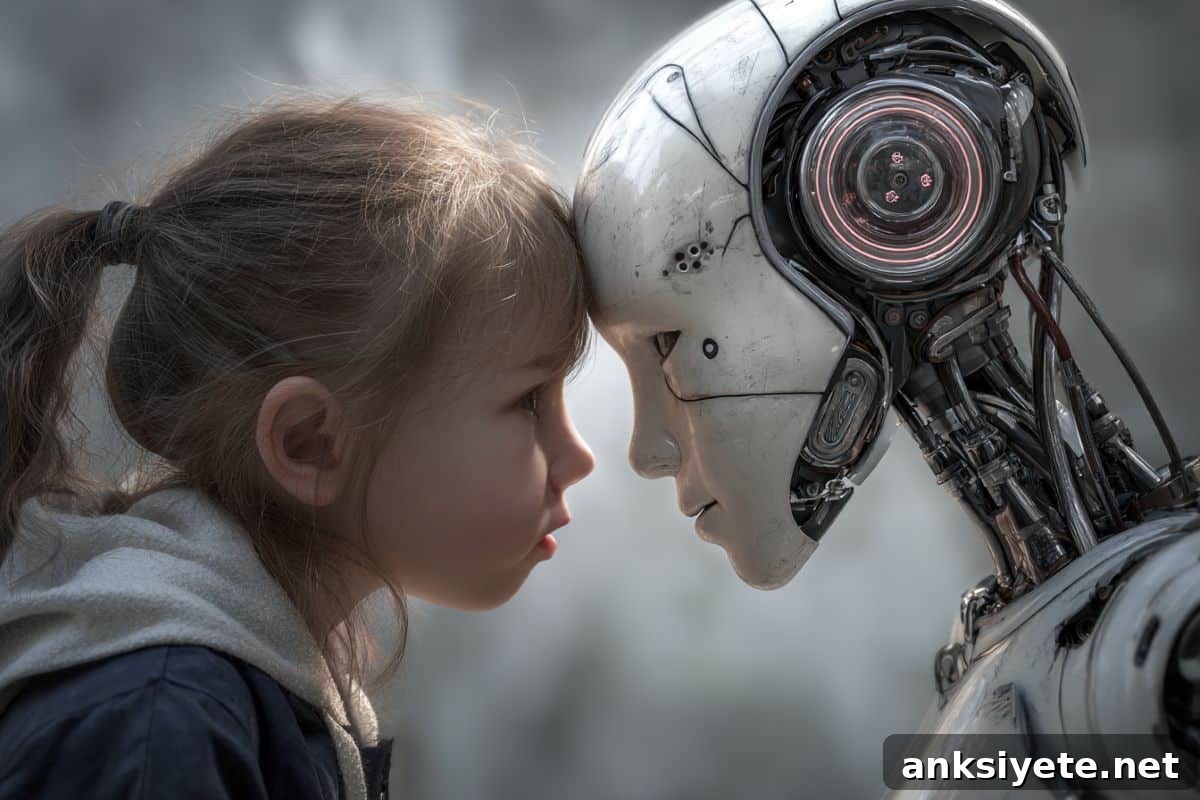
Summary: A multinational study in developmental psychology and artificial intelligence found that very young children—some as young as three—read intentions and preferences from a person’s gaze but do not interpret the same communicative signal when a humanoid robot looks at an object. The results show that simply copying a human cue like eye direction is not enough for robots to form meaningful social bonds with children, and they point to design requirements for embodied AI in child-facing technologies.
By demonstrating the limits of isolated mimicry, the study reframes how engineers and clinicians should approach child–robot interaction. Effective social robots for early childhood must combine gaze with language, gesture, reciprocity, context, and physical presence to be perceived as having intentions or preferences.
Key Facts
- The Developmental Eye Test: Led by Professor Antonella Marchetti of Università Cattolica and CERITOM, researchers tested 58 Italian children aged 3 to 5 to compare how human and humanoid robot gazes influence children’s attribution of preferences.
- Intentionality vs. Mechanical Motion: Children reliably interpreted a human gaze as an intentional signal and inferred the person’s preference. The same gaze directed by a humanoid robot did not lead children to attribute a genuine psychological preference to the machine.
- Preference Attribution vs. Preference Change: While the human gaze helped children infer what another agent liked, neither human nor robot gaze significantly altered the children’s own object choices or preferences.
- Limits of Simple Mimicry: Marchetti emphasizes that programming a robot to reproduce an isolated human cue—such as eye movement—does not automatically make it communicative to young children. Richer, developmentally appropriate interactions are required.
- Embodied AI Requirement: The study underlines that communication for children is multi-dimensional. Embodied AI—robots integrated as physical, interactive systems—plays a crucial role in enabling children to attribute mental states like intentions and beliefs to technology.
- Clinical Applications and the ROBIN Project: The findings have direct implications for interventions aimed at children on the autism spectrum, where gaze and shared attention are key targets. The ROBIN (ROBot-based Neuropsychomotor INtervention) project, coordinated by the Don Carlo Gnocchi Foundation and CeRiToM of Università Cattolica, is scheduled to begin in June 2026 and will use humanoid robots to promote imitation and socio-communicative rehabilitation.
Source: Universita Cattolica del Sacro Cuore
Core Finding: Very young children can infer desires and preferences from a human gaze but do not interpret a humanoid robot’s gaze as a comparable intentional signal.
The study, published in the International Journal of Child-Computer Interaction and coordinated by Antonella Marchetti (Director, Department of Psychology, Università Cattolica; CERITOM), involved collaborators from Japan and Italy, including Davide Massaro, Cinzia Di Dio, Federico Manzi, and other colleagues.
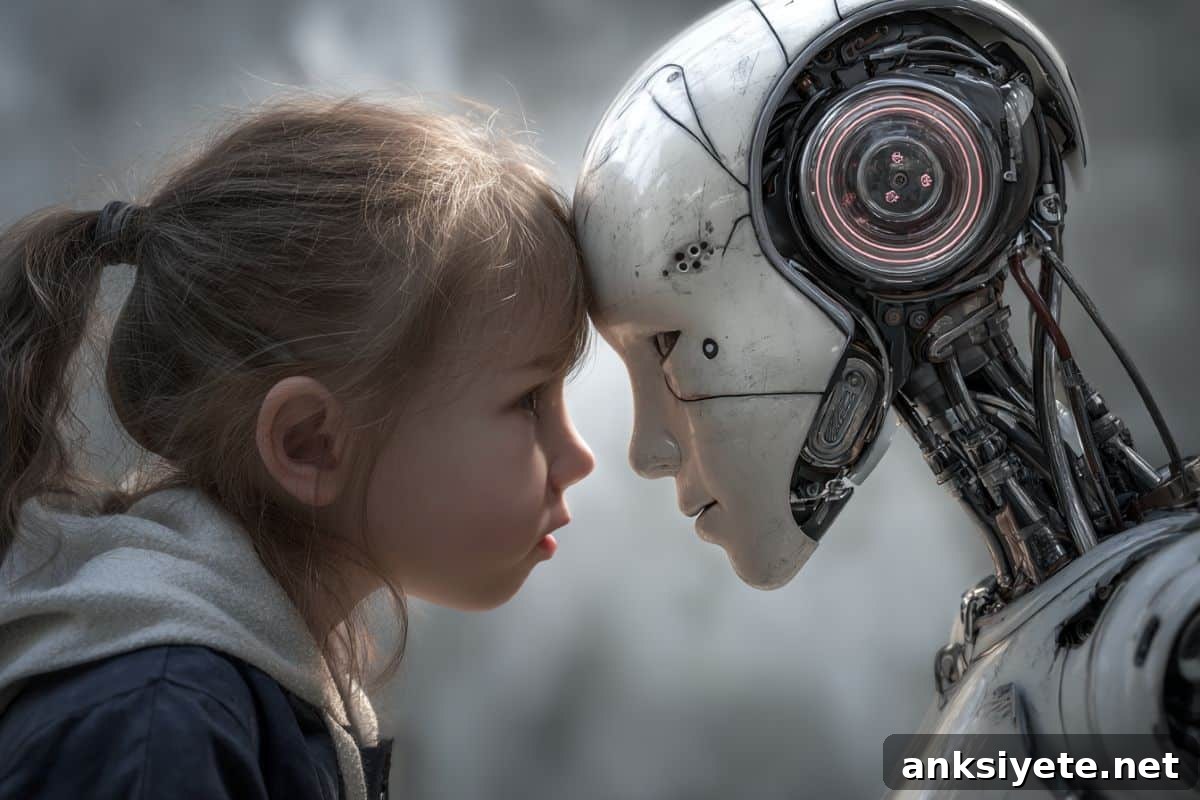
THE STUDY
Researchers presented 58 children, ages 3 to 5, with videos showing a human and a humanoid robot each looking at one of two objects. After each clip, children were asked which object the agent preferred (preference attribution) and which object they themselves preferred (preference formation). The team also measured children’s Theory of Mind abilities and their tendency to attribute mental states to humans versus robots.
The key outcome was clear: children consistently used human gaze as a cue for preference attribution. The human gaze signaled intentionality and led children to infer that the person liked the object they were looking at. By contrast, when a humanoid robot looked at an object, children rarely attributed a genuine psychological preference to the machine.
Importantly, neither human nor robot gaze significantly influenced children’s own choices—gaze helped children understand another agent’s likes but did not transform their personal preferences. Moreover, children’s attribution of mental states to humans (but not to robots) predicted accurate preference attribution. Performance on a standard false-belief task did not relate to gaze-based responses, suggesting different socio-cognitive mechanisms at play.
Professor Marchetti highlights that the results do not rule out the educational or therapeutic potential of robots. Rather, they indicate that robots must offer richer, more natural multimodal interactions—words, gestures, reciprocity, and shared presence—if they are to be perceived as communicative partners by young children.
Key Questions Answered
A: Children naturally infer a mind behind human eyes; a human gaze is interpreted as an expression of intention. A humanoid robot’s gaze, when presented in isolation, appears mechanical and does not reliably signal that the machine holds wants or preferences.
A: No. Robots can play an important educational and therapeutic role, but designers must go beyond copying single signals. Effective child-facing robots should combine gaze with speech, gesture, contextual engagement, and reciprocal behavior to be experienced as social agents.
A: ROBIN will use humanoid robots to develop targeted interventions that promote imitation and shared attention skills. By understanding when and how children interpret a robot’s gaze, clinicians can design safer, more natural rehabilitation exercises tailored to the needs of children on the autism spectrum.
Editorial Notes
- This article was edited by a Neuroscience News editor.
- The journal paper was reviewed in full.
- Additional context was provided by editorial staff.
About this robotics and neurodevelopment research news
Author: Nicola Cerbino
Source: Universita Cattolica del Sacro Cuore
Contact: Nicola Cerbino – Universita Cattolica del Sacro Cuore
Image: Image credited to Neuroscience News
Original Research: Closed access. “Preschoolers attribute preferences in response to human but not robot gaze” by Federico Manzi, Mitsuhiko Ishikawa, Cinzia Di Dio, Shoji Itakura, Takayuki Kanda, Hiroshi Ishiguro, Davide Massaro, and Antonella Marchetti. International Journal of Child-Computer Interaction. DOI: 10.1016/j.ijcci.2026.100822
Abstract
Preschoolers attribute preferences in response to human but not robot gaze
As robots and artificial agents become more present in children’s environments, understanding how young minds interpret social cues from machines is essential. This study examined whether preschoolers attribute preferences to agents based on gaze cues and whether they respond differently to human and humanoid robot gazes.
Fifty-eight Italian children aged 3 to 5 watched videos in which a human and a humanoid robot each looked at one of two objects. Children then indicated which object the agent preferred and which object they preferred themselves. Researchers also assessed children’s Theory of Mind performance and their tendency to attribute mental states to human and robot agents.
Children consistently attributed preferences when the cue came from a human gaze, but not when the same cue was produced by a robot. Gaze did not significantly affect children’s own preferences. Mental-state attribution to the human predicted correct preference attribution, while mental-state attribution to the robot did not. No relationship was found between false-belief task performance and gaze-based responses.
These results indicate that gaze alone may not function as an effective communicative cue for young children when produced by a robot, and they stress the importance of designing developmentally informed, multimodal interaction strategies for child-focused robotic systems.