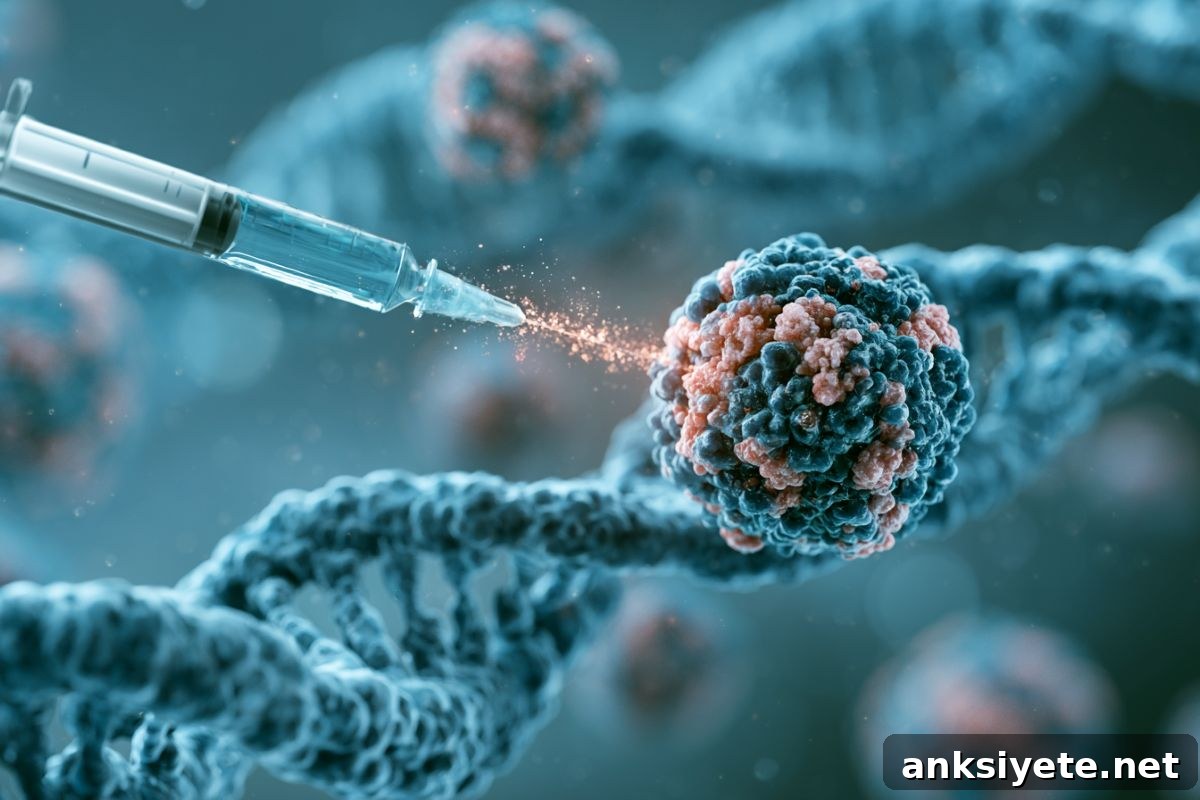
Summary: Researchers have produced the first preclinical proof-of-concept showing that an mRNA vaccine can target neuroblastoma, the most lethal childhood cancer. This study addresses a disease responsible for roughly 15% of pediatric cancer deaths and highlights the urgent need for new therapies, since many high-risk cases do not respond to current treatments.
Using an advanced delivery system built from self-assembling peptide nanoparticles, the research team formulated an mRNA vaccine that directs the immune system against Glypican 2 (GPC2), a protein found in high amounts on neuroblastoma cells. In animal models, the vaccine markedly reduced tumor size and postponed the rapid growth typical of aggressive neuroblastoma.
Key Facts
- 70% Tumor Shrinkage: In preclinical testing, the mRNA vaccine reduced tumor volume by about 70% compared with unvaccinated controls.
- Delayed Progression: Vaccinated animals showed a delay in tumor development of approximately 10 to 11 days.
- GPC2 Targeting: The vaccine trains immune cells to recognize Glypican 2 (GPC2), a protein overexpressed on neuroblastoma cells, using peptide nanoparticle delivery.
- Modular Design: The platform’s modular “LEGO-like” architecture allows researchers to swap components, enabling customization to match an individual tumor’s profile.
- Clinical Need: Neuroblastoma contributes to 15% of childhood cancer deaths; many high-risk patients currently do not respond to standard treatments.
Source: RCSI
A new study from RCSI University of Medicine and Health Sciences presents a novel strategy for an anticancer vaccine, offering the first preclinical evidence that an mRNA vaccine can effectively target neuroblastoma.
Led by Dr Olga Piskareva, Senior Lecturer in the Department of Anatomy and Regenerative Medicine at RCSI, the research team evaluated an mRNA vaccine formulated with peptide carriers to test its effect on neuroblastoma tumors in murine models.
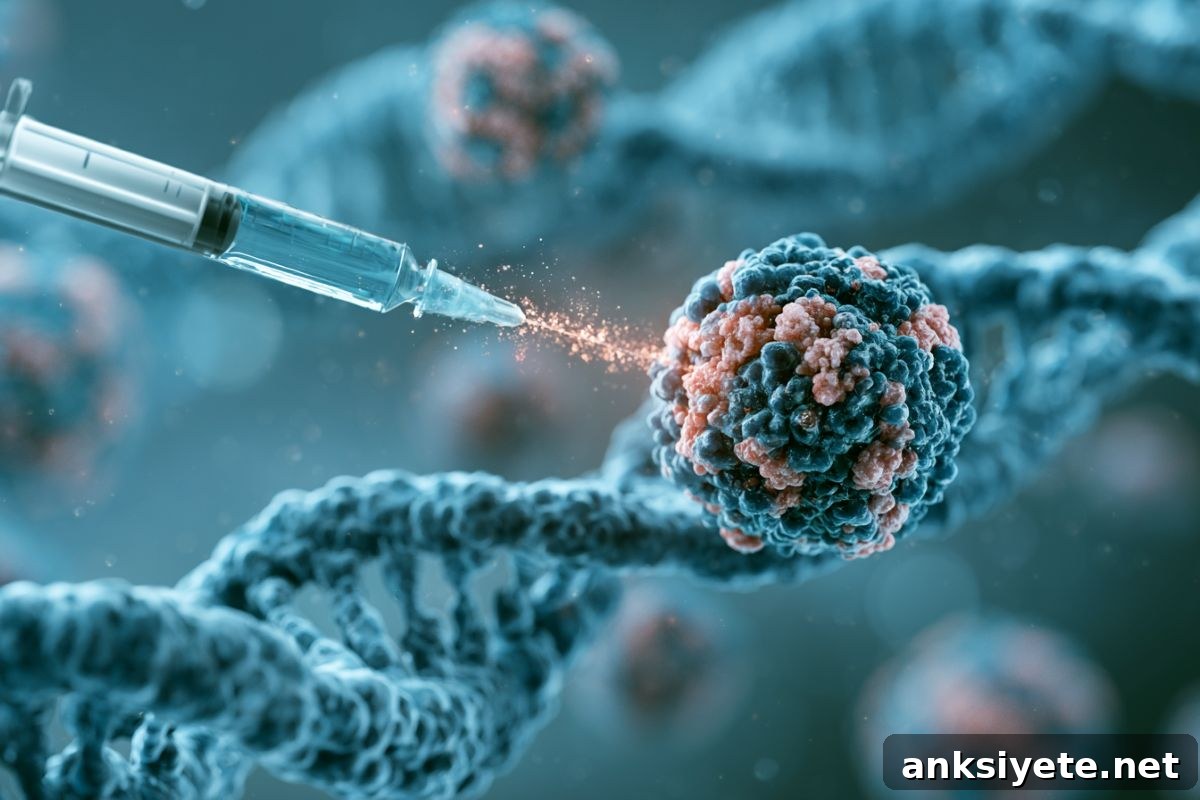
The vaccine formulation enhanced immune recognition of neuroblastoma, delaying tumor onset in treated animals by 10–11 days and reducing tumor burden by approximately 70%. These effects demonstrate strong antitumor activity in a preclinical setting.
Neuroblastoma remains a leading cause of childhood cancer mortality despite advances in care. It accounts for an estimated 15% of childhood cancer deaths. In some regions, only a handful of cases occur annually, and a large proportion of high-risk patients show limited or no response to conventional therapies, underscoring the need for different treatment strategies.
Dr Piskareva described the mRNA platform as being like “LEGO bricks,” emphasizing its modularity. Because the vaccine platform is built from interchangeable elements, researchers can adapt the mRNA sequence or delivery components to match different tumor antigens or to counter tumor evolution, creating the potential for personalized cancer vaccines.
The team employed RALA, a self-assembling peptide, as the delivery vehicle for mRNA that encodes GPC2. These peptide nanoparticles facilitate cellular uptake and present the antigen to the immune system, provoking antigen-specific responses. The study reports increased expression of immune signaling molecules—such as IFN-γ and IL-2—from splenocytes, and elevated TNF-α production by both CD4+ and CD8+ T cells following vaccination.
Because GPC2 is also upregulated in several adult and pediatric cancer subtypes, targeting this antigen could broaden the vaccine’s applicability beyond neuroblastoma. This makes the RALA/mGPC2 approach a promising candidate for further development into an adaptable cancer immunotherapy platform.
Relapsed neuroblastoma is particularly challenging to treat because recurrent tumors often develop resistance to existing drugs. New mechanisms of action, including immunotherapies like mRNA vaccines, are therefore a crucial area of research to improve outcomes for patients with resistant disease.
Funding: The study involved collaboration with the School of Pharmacy at Queen’s University Belfast and received funding from the Irish Research Council (IRC), the Higher Education Authority (HEA), the Health Research Board (HRB), and The Conor Foley Neuroblastoma Cancer Research Foundation.
Key Questions Answered:
A: The vaccine packages mRNA encoding the tumor antigen GPC2 inside self-assembling peptide nanoparticles. Once taken up by cells, the mRNA is translated into the GPC2 protein fragments that prime T cells. These antigen-specific T cells then recognize and kill cancer cells displaying GPC2, while sparing normal tissues that lack high levels of the protein.
A: Neuroblastoma is biologically aggressive and capable of rapid adaptation. Many high-risk cases do not respond to standard treatments, and relapsed tumors frequently develop resistance to available drugs. That makes alternative approaches like immunotherapy particularly important.
A: The analogy refers to the vaccine’s modular design: delivery systems and mRNA sequences can be swapped or combined to target different tumor antigens or to personalize treatment, much like assembling different LEGO pieces to form a customized structure.
Editorial Notes:
- This article was edited by a Neuroscience News editor.
- The journal paper was reviewed in full.
- Additional context was added by editorial staff.
About this genetics and brain cancer research news
Author: Laura Anderson
Source: RCSI
Contact: Laura Anderson – RCSI
Image: The image is credited to Neuroscience News
Original Research: Open access. Title: “mRNA vaccination using peptide nanoparticles triggers a strong immune response against endogenous GPC2 in a murine neuroblastoma model” by Ellen King, Chayanika Saha, Rabia Saleem, Binyumeng Jiang, Eve O’Donoghue, Federica Cottone, Helen O. McCarthy, Olga Piskareva. Journal: Molecular Therapy Oncology. DOI: 10.1016/j.omton.2026.201244
Abstract
mRNA vaccination using peptide nanoparticles triggers a strong immune response against endogenous GPC2 in a murine neuroblastoma model
Neuroblastoma is an aggressive pediatric solid tumor that originates during embryonic development and is responsible for a substantial proportion of childhood cancer deaths. Until now, there has been no published experimental or clinical data demonstrating an mRNA vaccine for neuroblastoma. This study fills that gap by developing and characterizing an mRNA vaccine delivered with self-assembling peptide nanoparticles.
The investigators used the peptide carrier RALA to deliver mRNA encoding murine GPC2. They performed detailed in vitro characterization of nanoparticle formulations, showing efficient cellular uptake and functional protein expression. Vaccination of mice with RALA/mGPC2 produced a robust antigen-specific cellular immune response, with increased IFN-γ and IL-2 from splenocytes and raised TNF-α in both CD4+ and CD8+ T cells.
In a subcutaneous murine model of MYCN-amplified neuroblastoma, immunization delayed tumor growth by 10–11 days and reduced tumor volume by roughly 70% versus unvaccinated controls. These findings indicate the therapeutic promise of the RALA/mGPC2 vaccine and support further development toward broader cancer immunotherapy applications, since GPC2 is upregulated across multiple tumor types.