
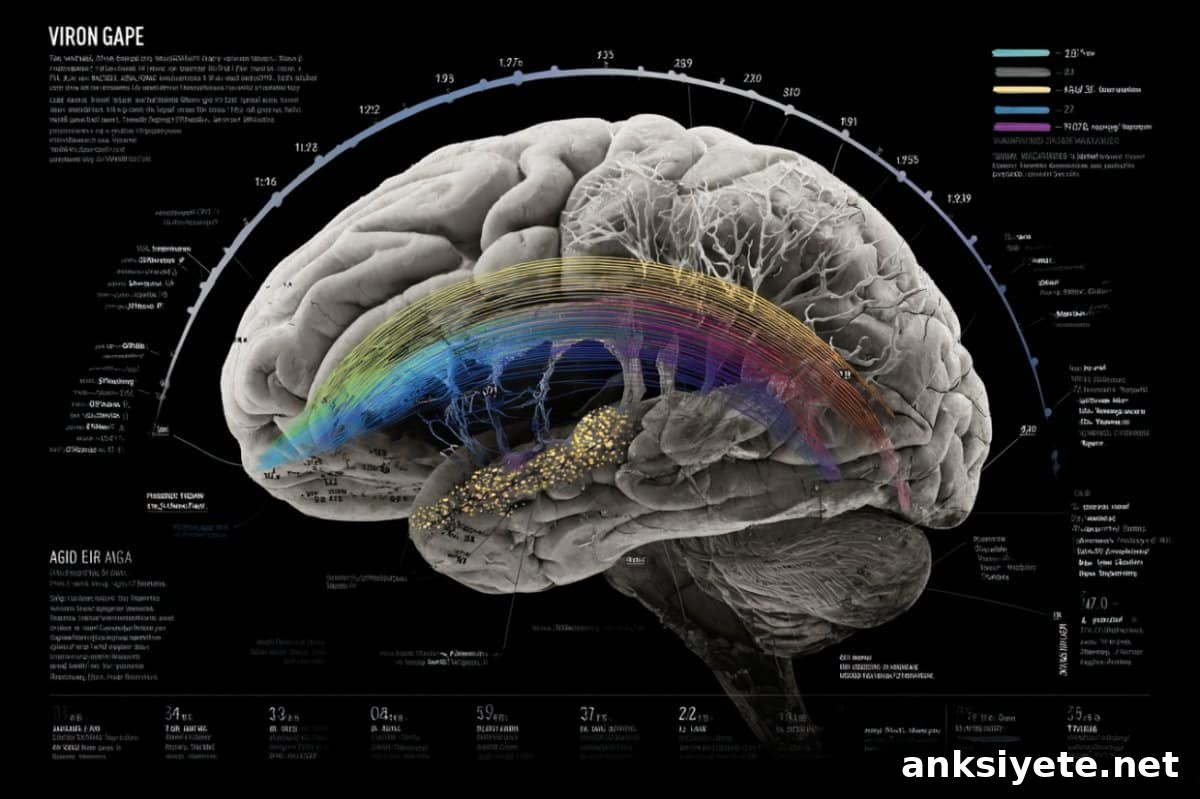
Summary: New research indicates that the brain age gap—the difference between a brain’s predicted biological age and a person’s chronological age—may affect how health risk factors such as diabetes and high blood pressure relate to cognitive performance. Applying machine learning to neuroimaging from more than 1,400 older adults, investigators observed that a larger brain age gap is associated with worse thinking and memory abilities.
This relationship was particularly pronounced in individuals showing markers of cerebrovascular disease. The results suggest the brain age gap could be an informative biomarker for forecasting cognitive decline in adults with elevated vascular or metabolic risk.
Key Facts:
- Brain Age Gap: Accelerated brain aging correlates with poorer cognitive performance, especially in executive function and language domains.
- Cerebrovascular Influence: The brain age gap has a stronger effect on cognition among people with imaging markers of cerebrovascular disease.
- Predictive Contribution: The brain age gap accounted for up to 34% of the association between cognitive risk factors and performance in certain cognitive domains.
Source: AAN
The gap between a brain’s predicted biological age and its owner’s chronological age—a measure known as the brain age gap—may shape how risk factors for cognitive impairment, including hypertension and diabetes, relate to thinking and memory abilities, according to a study published June 18, 2025, online in Neurology.
Recent advances in neuroimaging combined with machine learning make it possible to estimate a brain’s biological age from structural scans. These models detect patterns linked to aging and provide a predicted brain age that can be compared with chronological age to produce the brain age gap.
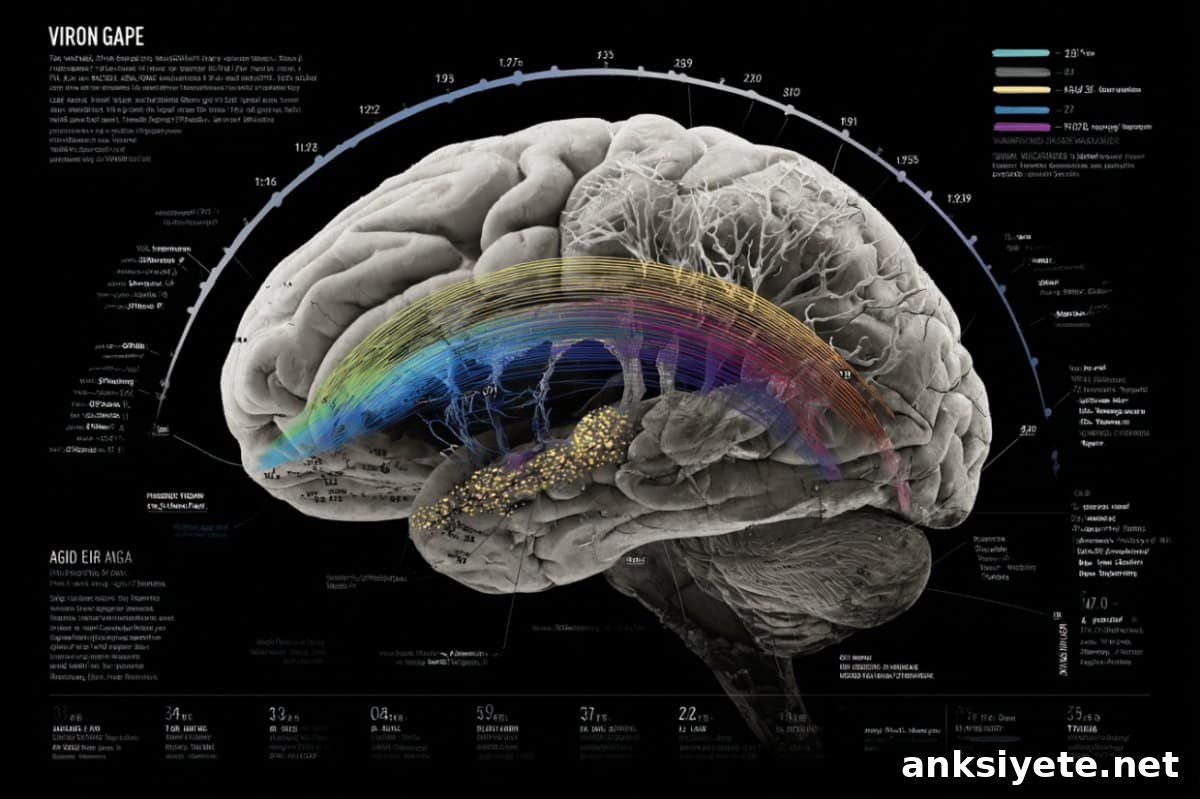
“As people age, brain structure changes—brain volume declines and the vascular network that supports tissue can deteriorate—and medical conditions can accelerate these changes,” said study author Saima Hilal, MD, PhD, of the National University of Singapore. “On brain scans, these changes can make a person’s brain appear older than their chronological age. Our work shows that having more risk factors for cognitive impairment is tied to poorer cognitive performance, and the brain age gap helps explain that connection, particularly in those with cerebrovascular disease.”
The analysis included 1,437 community-dwelling adults without dementia with an average age of 66 years; roughly 60% of participants had no measurable cognitive impairment.
Researchers collected medical histories through questionnaires and interviews, reviewed current medications, and conducted physical exams, blood tests and brain imaging. They quantified each participant’s risk burden for cognitive impairment by combining factors including age, ethnicity, education level, past and current smoking, body mass index, depressive symptoms, hypertension, diabetes, high cholesterol and history of stroke. Higher scores indicated greater overall risk.
Cognitive performance was assessed using standardized tests covering multiple domains: executive function, attention, language, memory, visuoconstruction (such as copying a drawing), and visuomotor speed (the speed of translating visual information into action).
Across the group, higher risk scores were consistently linked with lower performance on cognitive tests, with the strongest associations seen for visuoconstruction and visuomotor speed.
To estimate biological brain age, the team trained a machine learning model on structural brain scans and applied it to each participant’s images to generate a predicted brain age. Subtracting chronological age from predicted brain age produced the brain age gap: a positive gap indicates accelerated brain aging relative to chronological age.
Investigators also evaluated scans for markers of cerebrovascular disease—such as microbleeds and infarcts—and grouped participants by the amount of vascular injury visible on imaging. In the subgroup with higher cerebrovascular burden, the brain age gap more strongly mediated the effect of risk factors on cognitive outcomes, especially for executive function and language.
Overall, the brain age gap explained about 20% of the link between cumulative cognitive risk factors and cognitive performance. When looking at specific domains, the mediation proportion rose to 34% for executive function and 27% for language.
“These findings indicate that the brain age gap could be a useful biomarker to help identify adults at higher risk of cognitive decline, particularly those with cerebrovascular conditions,” Hilal said. “It highlights accelerated brain aging as a potential pathway connecting vascular and metabolic risk factors to declines in thinking and memory.”
The study has limitations: it analyzed a Southeast Asian cohort, so results may not generalize to other populations, and the researchers lacked complete data to evaluate the roles of exercise, diet and Alzheimer’s genetic markers on brain structure and cognition.
Funding: The research was supported by the National University of Singapore, the Singapore National Medical Research Council and the Singapore Ministry of Education.
About this brain aging research news
Author: Renee Tessman
Source: AAN
Contact: Renee Tessman – AAN
Image: The image is credited to Neuroscience News
Original Research: The findings will appear in Neurology