
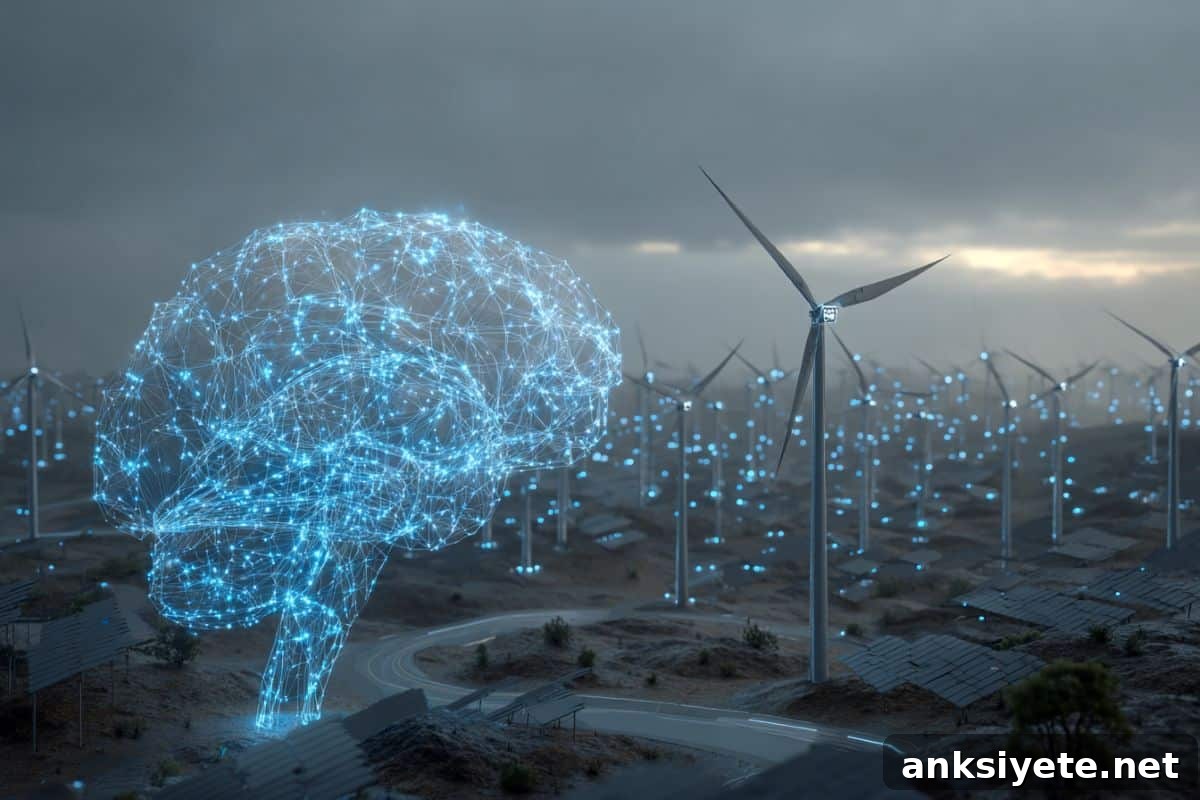
Summary: As fossil-fuel power plants give way to solar and wind, electrical grids are becoming more intermittent and harder to control. Researchers at the University of Vaasa developed a brain-inspired solution that uses Artificial Neural Networks (ANN) to predict and adapt to rapid changes in supply, improving stability and lowering hardware costs.
Hussain Khan’s doctoral research demonstrates how biomimetic controllers—AI systems modeled on the human brain—can learn from thousands of operating scenarios to anticipate voltage and frequency disturbances and respond in milliseconds. This software-driven approach can outperform traditional control methods, reduce the number of physical sensors required, and make local grids more resilient and cost-effective.
Key Facts
- The stability challenge: Inverter-based generation from solar and wind lacks the mechanical inertia produced by large spinning turbines in conventional power plants. That lower inertia increases the risk of rapid voltage and frequency instability in AC and DC microgrids.
- Brain-inspired control: Artificial Neural Networks trained on diverse scenarios allow controllers to predict impending instability and apply corrective actions for voltage and current almost instantly.
- Hardware versus software: The precision of the AI controllers makes it possible to replace some physical hardware with virtual sensing and control, achieving equivalent results with fewer sensors and fewer mechanical failure points.
- The black-box hurdle: While real-time tests show strong performance, understanding exactly how complex AI models arrive at each decision remains difficult—an important consideration for deployment in critical infrastructure.
- Enabling carbon-neutral grids: By improving stability and reducing hardware needs, these AI controllers are an enabling technology for microgrids and local systems that aim to integrate much larger shares of renewable energy without compromising reliability.
Source: University of Vaasa
Power systems are in a major transition as fossil-fuel generation is replaced by inverter-based renewable sources. This shift introduces variability and lower inertia, which complicate grid operation and voltage stability. Hussain Khan’s dissertation in electrical engineering addresses these challenges by implementing ANN-based control strategies for microgrids and distributed energy systems.
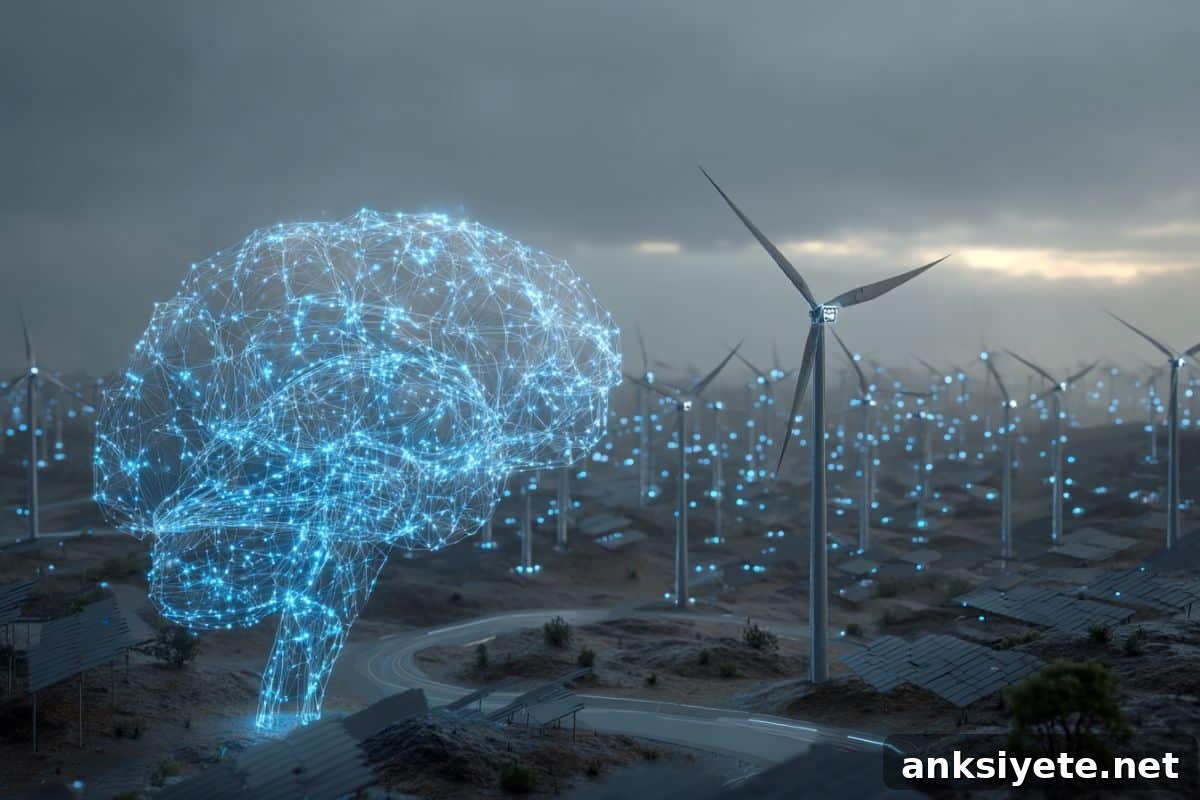
Khan’s work applies Artificial Neural Networks—computational models inspired by interconnected neurons in the brain—to control power converters and stabilize local grids. By training these networks on many different operating conditions, the controllers learn to predict disturbances and adjust control signals in real time. This behavior mirrors how biological systems adapt to changing environments.
Cost-effective solutions through sensor optimisation
Conventional control systems rely on multiple physical sensors to monitor voltage, current and system state, which adds cost and raises the number of potential failure points. Khan demonstrates that advanced ANN controllers can compensate for reduced sensing by using virtual sensors and software estimations. In tests, the system achieved equivalent control performance while relying on fewer physical sensors, which reduces capital and maintenance costs and improves overall reliability.
Reducing hardware while maintaining performance is particularly attractive for microgrids and distributed energy resources, where installation and upkeep expenses have a direct impact on project viability. AI-driven controls enable utilities and community energy projects to deploy more renewable capacity at lower cost and with greater operational flexibility.
However, integrating intelligent controllers into critical infrastructure also introduces important considerations. The most prominent is the “black box” nature of many AI models: operators can observe inputs and outcomes but may not fully trace the internal reasoning. Khan’s research addresses this by subjecting controllers to rigorous real-time validation, demonstrating reliable operation under varied conditions. Still, achieving broader acceptance will require progress in explainable AI (XAI) and standards for verification and certification.
Overall, this research contributes a practical pathway for integrating higher shares of wind and solar into local electricity systems while preserving stability and lowering costs. By combining neural-network-based prediction with fast control action and sensor optimisation, microgrids can become more resilient, economical, and better suited for the move toward carbon-neutral energy systems.
Key questions answered
A: Traditional grids rely on the inertia of large rotating machines to smooth disturbances. Solar and wind output can change much faster. An AI-based controller acts like a rapid stabilizer, making thousands of micro-adjustments per second to keep voltage and frequency within safe limits when supply changes abruptly.
A: Physical sensors and control hardware are a significant part of grid capital and maintenance costs. By replacing some of that hardware with validated virtual sensing and ANN-based control, utilities can reduce installation and servicing expenses, lowering overall system costs over time.
A: Trust is built on rigorous validation and controlled deployment. Khan’s controllers underwent real-time testing that verified their performance. For broader adoption, the field is moving toward explainable AI methods, verification frameworks and operational safeguards to ensure transparency and safety in critical systems.
Editorial Notes:
- This article was edited by a Neuroscience News editor.
- The referenced journal paper was reviewed in full.
- Additional context was added by editorial staff.
About this AI and neuroscience research news
Author: Sini Heinoja
Source: University of Vaasa
Contact: Sini Heinoja – University of Vaasa
Image: Image credited to Neuroscience News