
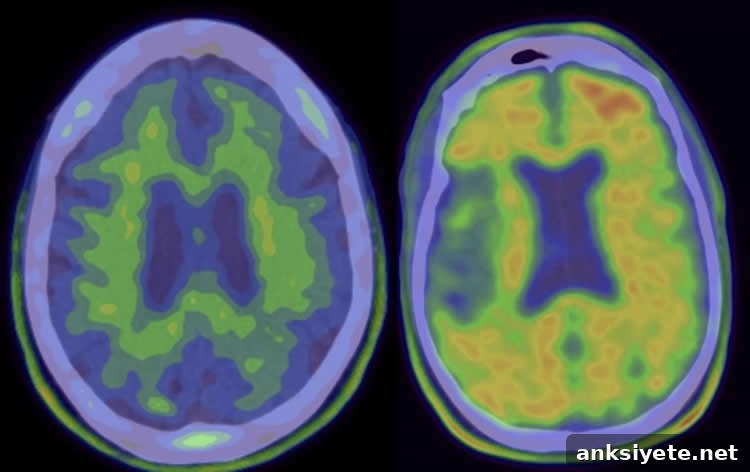
Summary: Researchers report that solanezumab, a drug developed to target amyloid plaques in people with Alzheimer’s disease, did not produce a statistically significant slowing of cognitive decline in a large phase 3 trial.
Source: Columbia University Medical Center
Key finding: A paper published in the New England Journal of Medicine reports that solanezumab — a monoclonal antibody developed by Eli Lilly to target amyloid-beta — failed to provide a statistically significant benefit on the primary cognitive outcome in patients with mild dementia due to Alzheimer’s disease.
Columbia University Irving Medical Center (CUIMC) led the multicenter, double‑blind, placebo‑controlled phase 3 trial, which required molecular evidence of amyloid deposition for enrollment — the first major Alzheimer’s trial to do so.
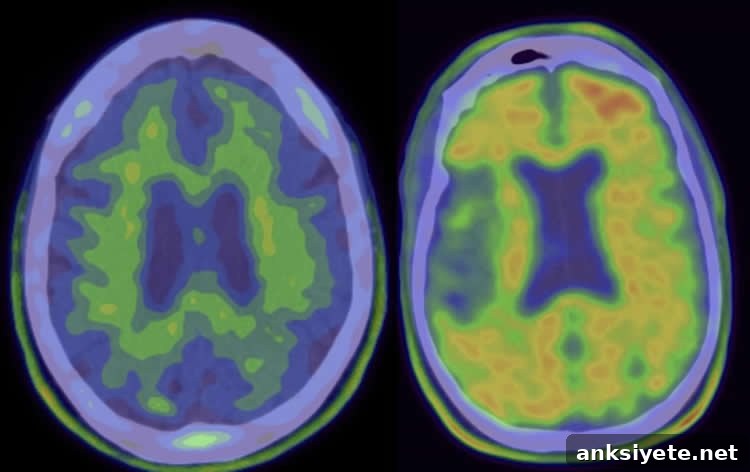
Background: The amyloid hypothesis proposes that Alzheimer’s disease is driven, at least in part, by accumulation of amyloid‑beta (Aβ) peptides that form sticky plaques in the brain and damage neuronal connections. Solanezumab was engineered to bind soluble Aβ peptides, increasing their clearance and preventing aggregation into plaques.
Trial design: The trial enrolled 2,129 patients with mild dementia due to Alzheimer’s disease, defined by a Mini–Mental State Examination (MMSE) score between 20 and 26. All participants had evidence of brain amyloid from florbetapir positron‑emission tomography or low cerebrospinal fluid Aβ1‑42. Patients were randomized to receive 400 mg solanezumab or placebo by intravenous infusion every four weeks for 76 weeks. The prespecified primary endpoint was the change from baseline to week 80 on the 14‑item cognitive subscale of the Alzheimer’s Disease Assessment Scale (ADAS‑cog14), which measures cognitive impairment (higher scores indicate worse performance).
Results: Of the 2,129 enrolled participants, 1,057 received solanezumab and 1,072 received placebo. At week 80 the mean change in ADAS‑cog14 was 6.65 points in the solanezumab group and 7.44 points in the placebo group. The between‑group difference was −0.80 (95% confidence interval, −1.73 to 0.14; P = 0.10), which did not reach statistical significance for the primary outcome. Because the primary outcome was not statistically significant in the prespecified hierarchical analysis, subsequent secondary outcomes were treated as descriptive. For example, mean change in MMSE was −3.17 in the solanezumab group versus −3.66 in placebo. Adverse events of cerebral edema or effusion observed on MRI were rare: one case in the solanezumab group and two in the placebo group.
Interpretation: The authors conclude that solanezumab at 400 mg every four weeks did not significantly alter the course of cognitive decline in patients with mild Alzheimer’s disease when initiated at this stage and dose. They note several possible explanations: the dose may have been insufficient, or intervention may need to occur earlier in the disease process, potentially before clinical symptoms emerge.
Ongoing research: CUIMC and other centers are continuing to study anti‑amyloid approaches. Solanezumab is being evaluated in presymptomatic individuals at elevated risk for Alzheimer’s disease, and other anti‑amyloid agents are being tested at different doses and in different clinical stages.
Expert comment: Lead author Lawrence Honig, MD, PhD, professor of neurology at CUIMC, emphasized that despite this setback, each well‑conducted trial advances scientific understanding and helps refine future study design. There remains cautious optimism that some ongoing or future studies will identify approaches that can slow the course of Alzheimer’s disease.
The trial results were initially presented in late 2016 at the international Clinical Trials on Alzheimer’s Disease meeting. The full peer‑reviewed report appears in the New England Journal of Medicine. The published trial is identified as EXPEDITION3 (ClinicalTrials.gov number NCT01900665). The study was designed and funded by Eli Lilly and Company.
Selected contributors to the multicenter study include Lawrence Honig, MD, PhD; Bruno Vellas, MD; Michael Woodward, MD; Mercè Boada, MD, PhD; Roger Bullock, MD; Michael Borrie, MB, ChB; Klaus Hager, MD; Niels Andreasen, MD, PhD; Elio Scarpini, MD; Hong Liu Seifert, PhD; Michael Case, MS; Robert A. Dean, MD, PhD; Ann Hake, MD; Karen Sundell, BS; Vicki Poole Hoffmann, PharmD; Christopher Carlson, PhD; Rashna Khanna, MD; Mark Mintun, MD; Ronald DeMattos, PhD; Katherine J. Selzler, PhD; and Eric Siemers, MD, among others.
Conclusion: This large, biomarker‑confirmed phase 3 trial found that solanezumab did not produce a statistically significant reduction in cognitive decline for patients with mild dementia due to Alzheimer’s disease at the tested dose and timing. The findings highlight the challenges of treating established symptomatic Alzheimer’s and reinforce the need for continued research into early intervention, dosing strategies, and alternative therapeutic targets.
Abstract (summary): Trial of Solanezumab for Mild Dementia Due to Alzheimer’s Disease
Background: Alzheimer’s disease features amyloid‑beta plaques and neurofibrillary tangles. Solanezumab is a humanized monoclonal antibody intended to increase clearance of soluble Aβ peptides that may be synaptotoxic and precede fibrillary amyloid deposition.
Methods: Double‑blind, placebo‑controlled phase 3 trial of patients with mild dementia due to Alzheimer’s (MMSE 20–26) and biomarker evidence of amyloid. Randomization to solanezumab 400 mg or placebo IV every 4 weeks for 76 weeks. Primary outcome: change in ADAS‑cog14 from baseline to week 80.
Results: 2,129 patients enrolled. Mean ADAS‑cog14 change: 6.65 (solanezumab) vs. 7.44 (placebo); between‑group difference −0.80 (95% CI, −1.73 to 0.14; P = 0.10). MMSE change: −3.17 vs. −3.66. Serious cerebral imaging abnormalities were rare.
Conclusions: Solanezumab at 400 mg every 4 weeks did not significantly affect cognitive decline in mild Alzheimer’s disease in this trial. (Funded by Eli Lilly; EXPEDITION3.)