
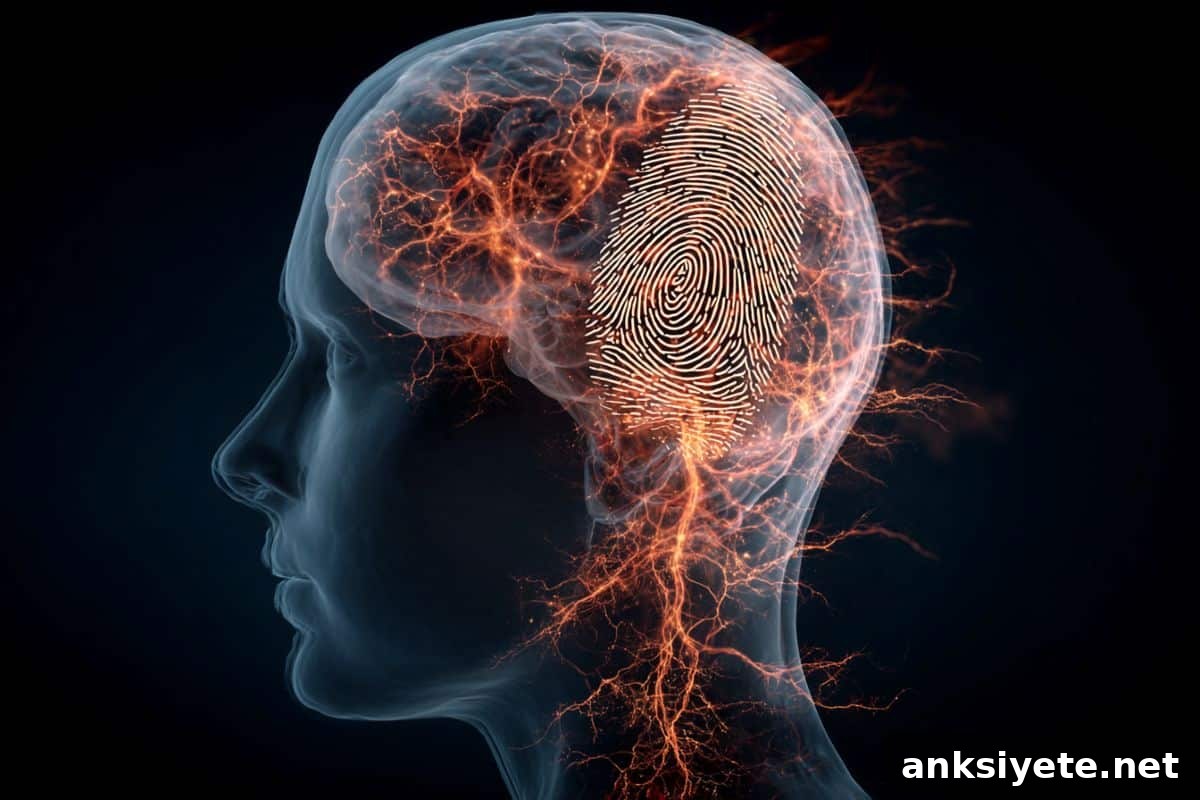
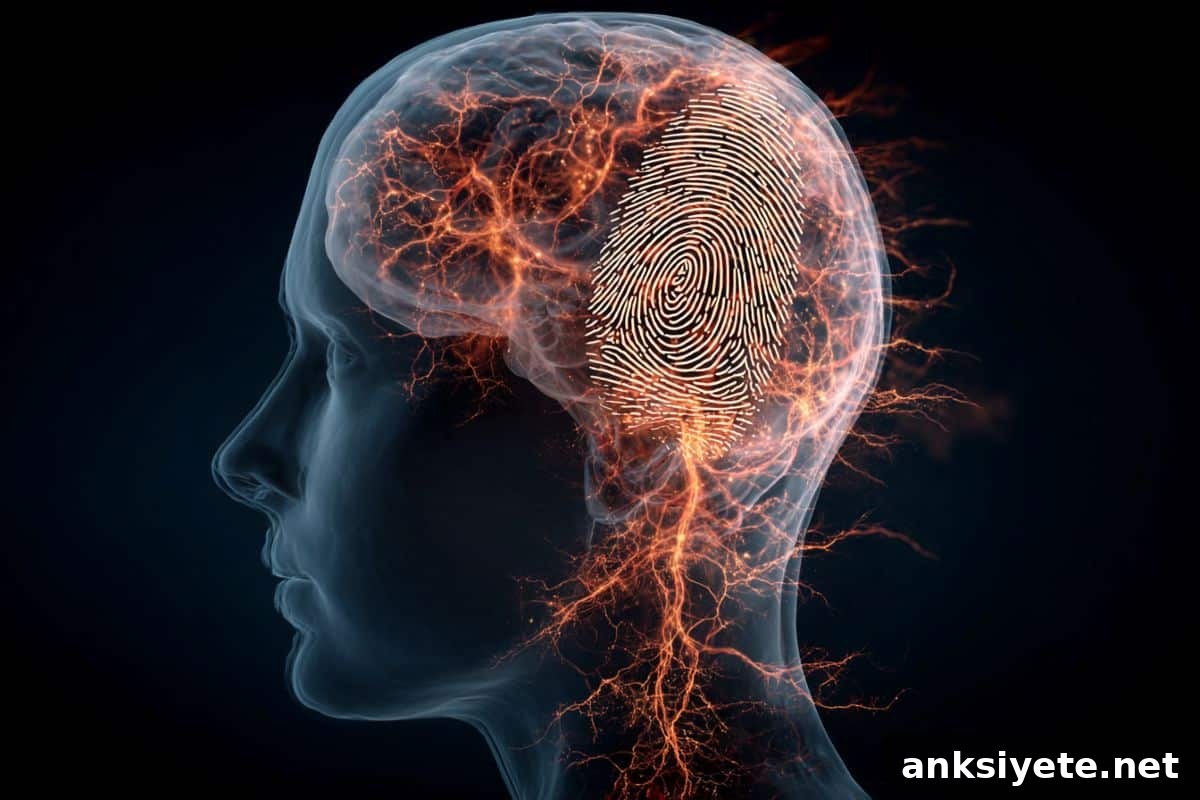
Summary: Chronic pain is often described as an “invisible disability” because clinicians have lacked objective measures—until now. A recent breakthrough shows that chronic pain produces a distinct, highly individualized brain signature. This discovery points to a new path for objective assessment and personalized treatment using precision neuroimaging.
Researchers used intensive longitudinal functional MRI (fMRI) sampling in people with fibromyalgia over more than six months and applied machine learning to build individualized models that decoded spontaneous pain fluctuations in real time. The results demonstrate that universal, one-size-fits-all brain biomarkers are unlikely to work for chronic pain; instead, reliable assessment requires person-specific approaches and rich, repeated sampling.
Key Facts
- Making the invisible visible: Whole-brain functional connectivity patterns allowed researchers to predict moment-to-moment pain intensity without relying solely on verbal reports.
- Highly individualized signatures: Each participant’s “pain connectome” was unique; models trained on one person did not generalize to another.
- Extensive data is essential: Short, conventional scans were insufficient. Robust pain fingerprints emerged only after months of repeated imaging and behavioral sampling.
- Focus on fibromyalgia: The study targeted fibromyalgia, a disorder marked by widespread, spontaneously fluctuating pain without a clear external trigger.
- Precision medicine implications: The findings provide proof-of-concept that non-invasive neuroimaging can be used to develop objective, individualized biomarkers to guide brain-targeted therapies.
Source: Institute for Basic Science
Background: Chronic pain affects nearly one in five adults worldwide and is a leading cause of long-term disability. Unlike acute pain tied to obvious injury, chronic pain often emerges internally and fluctuates across minutes, hours and days. Clinicians still rely primarily on self-reported pain scales because no routine, objective biomarker—analogous to blood pressure or body temperature—exists for pain.
A team led by Associate Director WOO Choong-Wan at the Center for Neuroscience Imaging Research (CNIR), Institute for Basic Science (IBS), together with Professor CHO Sungkun’s group at Chungnam National University, performed the intensive longitudinal study to capture internally generated pain signals. Participants with fibromyalgia underwent repeated whole-brain fMRI sessions across more than six months while continuously rating their spontaneous pain. fMRI detects blood-oxygen-level–dependent changes across the brain, enabling analysis of functional connectivity—the shifting patterns of communication between brain regions.
Using machine learning on these rich, within-person datasets, the investigators built person-specific decoding models that predicted each participant’s real-time pain intensity. Models tracked pain across multiple timescales—from minute-by-minute fluctuations within a scan to variations across sessions and days. Crucially, prediction accuracy improved substantially as more training data were added, revealing that typical short-duration scans are inadequate to reveal stable individual pain signatures.
One of the study’s most important findings is the extent of inter-individual variability. The functional connectivity features that signaled pain in one person did not transfer to another; cross-participant testing failed to produce meaningful predictions. This suggests that chronic pain is encoded by unique, person-specific network configurations rather than by a single universal brain signature.
Unlike earlier studies that focused on a handful of brain regions, this work used whole-brain connectivity to capture distributed network interactions implicated in pain processing. The results show that spontaneous chronic pain can be objectively tracked with non-invasive imaging when models are trained on sufficient, individualized data. This provides a methodological framework and proof-of-principle for precision neuroimaging in chronic pain research.
“Because chronic pain is invisible, patients often face skepticism,” said Dr. WOO Choong-Wan, associate director at IBS CNIR and senior author. “Precision neuroimaging offers a way to evaluate that invisible suffering more objectively at the individual level.” First author LEE Jae-Joong added, “Each participant displayed a unique pattern of brain connectivity linked to their pain. Understanding these personalized neural signatures could guide targeted assessment and treatment in the future.”
The study used a small sample and is not yet clinically applicable, but it establishes an important blueprint: developing reliable, brain-based biomarkers for chronic pain will require dense, longitudinal sampling and individualized modeling. Future research with larger, more diverse cohorts will determine whether there are shared subtypes of neural signatures across patients or whether most chronic pain states demand fully personalized solutions.
Key Questions Answered
A: Chronic pain reflects complex, distributed interactions among many brain regions. Because individual brains are wired differently, the connectivity patterns that correspond to a given pain level vary from person to person. A single standardized scan therefore cannot capture this individual variability.
A: No. The study provides objective, biological evidence that chronic pain corresponds to measurable brain states. That supports patients’ reports and demonstrates pain is a real, physiologically grounded condition, even when it does not appear on conventional structural tests.
A: Not yet. This proof-of-principle study shows what is possible, but current methods require months of data and advanced analysis. The next challenge is scaling and automating these approaches so they can be practical in clinical settings.
Editorial Notes
- This article was edited by a Neuroscience News editor.
- Journal paper was reviewed in full for accuracy.
- Additional contextual information was added by editorial staff.
About this AI and pain research news
Author: William Suh
Source: Institute for Basic Science
Contact: William Suh – Institute for Basic Science
Image credit: Neuroscience News
Original Research: Closed access. “Personalized brain decoding of spontaneous pain in individuals with chronic pain” by Jae-Joong Lee, Seongwoo Jo, Sungkun Cho & Choong-Wan Woo. Published in Nature Neuroscience. DOI: 10.1038/s41593-026-02221-3
Abstract
Personalized brain decoding of spontaneous pain in individuals with chronic pain
Spontaneous pain is a defining feature of many chronic pain disorders, yet objective assessment has been limited by a lack of robust biomarkers. This study used precision fMRI collected over more than six months from two individuals with chronic pain to develop personalized decoding models. These models tracked spontaneous pain fluctuations across minutes, runs and sessions with significant prediction–outcome correlations and effective discrimination between higher and lower pain states. Performance improved with increased training data, and each model relied on distinct individual brain features that did not generalize across participants, highlighting the need for patient-specific approaches.