
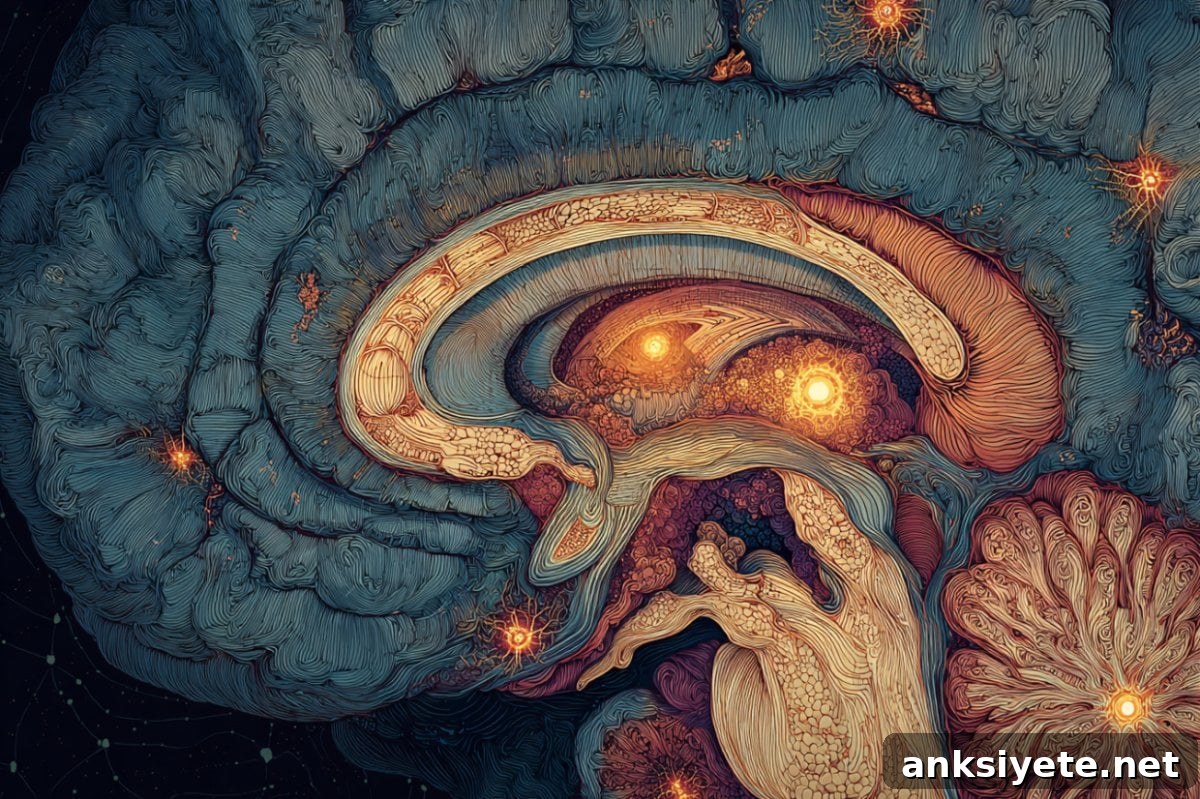
Summary: A major new study demonstrates that the human hippocampus continues to produce new neurons well into late adulthood. Researchers identified neural progenitor cells—the precursor cells that give rise to neurons—in people as old as 78, providing direct evidence of ongoing neurogenesis in the brain’s memory center.
Combining advanced sequencing, imaging and machine learning, the team mapped the developmental trajectory of these cells and pinpointed their location within the hippocampus. These findings refine our understanding of adult brain plasticity and could inform regenerative strategies for cognitive and psychiatric conditions.
Key Facts:
- Neural progenitor cells persist in the hippocampus through late adulthood, supporting ongoing neurogenesis.
- Newly formed neurons are localized in the dentate gyrus, a key region for memory formation and learning.
- Significant individual variation in progenitor cell abundance could influence susceptibility to or recovery from brain disorders.
Source: Karolinska Institutet
New evidence, published in the journal Science, shows that neurons continue to be generated in the adult human hippocampus.
This international study led by researchers at Karolinska Institutet in Sweden addresses a long-standing debate about the extent to which the adult human brain remains capable of producing new neurons. The hippocampus is essential for learning, memory consolidation and aspects of emotion regulation, making the question of adult neurogenesis highly relevant to both basic neuroscience and clinical research.
Earlier work from Jonas Frisén’s group at Karolinska, including a notable 2013 study, provided initial evidence that new neurons form in adult human hippocampus by using carbon-14 dating of DNA to estimate cell birth dates. However, direct identification of the dividing precursor cells—neural progenitor cells—has remained elusive, and the degree to which neurogenesis persists with age has been debated.
Identifying the cells of origin
In this study the researchers report clear identification of neural progenitor cells in adult human hippocampal tissue, demonstrating that dividing precursors are present and can generate new neurons in adults. “We have now been able to identify these cells of origin, which confirms that there is an ongoing formation of neurons in the hippocampus of the adult brain,” says Jonas Frisén, Professor of Stem Cell Research at the Department of Cell and Molecular Biology, Karolinska Institutet, and the study’s lead author.
Samples spanning infancy to late adulthood
The team analyzed hippocampal tissue from donors aged 0 to 78 years obtained through several international biobanks. They applied single-nucleus RNA sequencing to profile gene expression in individual cell nuclei and used flow cytometry to characterize cellular properties. By integrating these datasets with machine learning-based classification, the researchers reconstructed developmental stages from stem cells through immature neurons and identified many cells in active division.
To determine the precise tissue location of these progenitors and immature neurons, the study used spatial gene expression techniques including RNAscope and Xenium. Both approaches consistently localized the newly formed cells to the dentate gyrus, a hippocampal subregion critically involved in forming new memories, learning and cognitive flexibility.
Implications for treatment and individual variability
The analysis revealed that human neural progenitors resemble those seen in mice, pigs and nonhuman primates, while also displaying species-specific differences in gene activity. Importantly, the study documented considerable individual variation: some adults had abundant neural progenitor cells, while others had few detectable progenitors. This heterogeneity could help explain differences in cognitive resilience, age-related decline and individual responses to therapies.
“This gives us an important piece of the puzzle in understanding how the human brain works and changes during life,” Frisén notes. The discovery may also inform the development of regenerative approaches that aim to stimulate neurogenesis for neurodegenerative diseases and psychiatric disorders, though clinical translation will require further research.
The work was carried out in close collaboration with colleagues at Karolinska Institutet, including Ionut Dumitru and Marta Paterlini, and with researchers at Chalmers University of Technology.
Funding: The research received support from the Swedish Research Council, the European Research Council (ERC), the Swedish Cancer Society, the Knut and Alice Wallenberg Foundation, the Swedish Foundation for Strategic Research, the StratRegen programme, EMBO, Marie Sklodowska-Curie Actions and SciLifeLab. Jonas Frisén is listed as a consultant for 10x Genomics. See the scientific article for the full list of acknowledgements and potential conflicts of interest.
About this neurogenesis research news
Author: Press Office
Source: Karolinska Institutet
Contact: Press Office – Karolinska Institutet
Image: The image is credited to Neuroscience News
Original Research: Closed access. “Identification of proliferating neural progenitors in the adult human hippocampus” by Jonas Frisén et al., Science.
Abstract
Identification of proliferating neural progenitors in the adult human hippocampus
Continuous adult hippocampal neurogenesis contributes to memory formation and mood regulation but is difficult to study directly in humans.
Challenges in detecting actively dividing progenitor cells have raised questions about whether and how new neurons are generated in adulthood.
In this study we analyzed human hippocampal tissue from birth through adulthood using single-nucleus RNA sequencing.
We identified the full sequence of neural progenitor cell stages during early childhood. In adult samples, combining antibodies against the proliferation marker Ki67 with machine learning approaches allowed us to detect proliferating neural progenitor cells.
Spatial transcriptomic data further showed that these progenitors are localized within the dentate gyrus.
Together, these results advance understanding of neurogenesis in adult humans and provide a foundation for future studies on how this process affects cognition and mental health.