
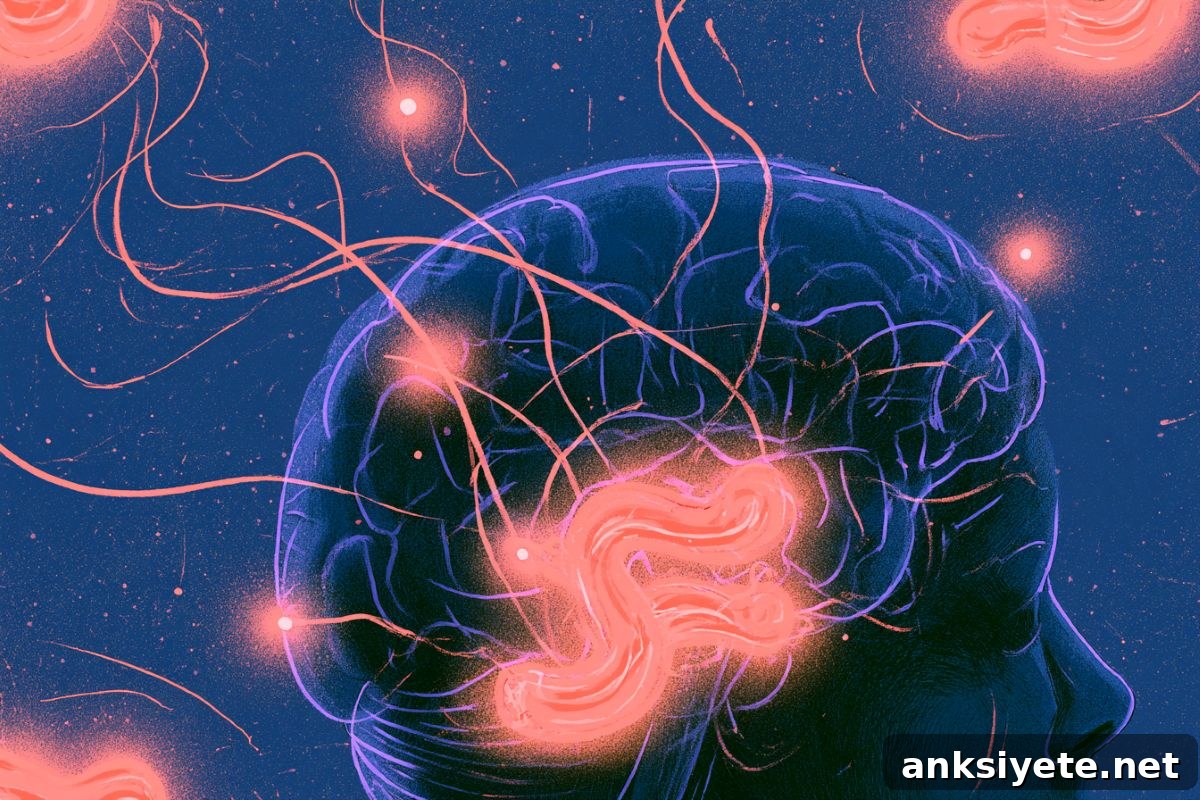
Summary: New research shows that gut-to-brain signals carried by the vagus nerve are essential for forming memories—especially memories about where nutrient-rich food was found.
The investigators demonstrate that eating caloric foods activates vagal signaling to the hippocampus, triggering increased release of acetylcholine, a neurotransmitter important for spatial learning and memory encoding.
The study also shows that while brief intake of sugars and fats sharply enhances hippocampal memory encoding, prolonged exposure to high-fat, high-sugar diets early in life permanently disrupts vagus-to-hippocampus communication. This provides a biological link between junk-food consumption, metabolic disorders, and long-term cognitive deficits.
Key Facts
- Nutritional vagal signaling: Consuming caloric nutrients such as sugar or fat provokes vagal nerve activity that prompts acetylcholine release in the hippocampus, supporting spatial memory encoding.
- Caloric value matters: Non-caloric sweeteners do not trigger hippocampal acetylcholine release or boost memory, indicating the brain responds to the nutrient and caloric content of food rather than taste alone.
- Vagal transection impairs memory: Cutting vagus nerve input abolishes food-evoked acetylcholine spikes in the hippocampus and reduces the ability to recall where food had been found.
- Diet-related cognitive effects: Early-life, long-term consumption of high-fat, high-sugar diets weakens gut-vagal-hippocampal signaling and produces persistent spatial memory deficits, even after returning to healthier eating.
- Alzheimer’s implications: Reduced hippocampal acetylcholine signaling is an early feature of Alzheimer’s disease. Findings suggest vagus nerve-based approaches could be explored to support cholinergic function and memory preservation.
Source: USC
When French writer Marcel Proust famously recovered a childhood memory from the taste of a madeleine, his gut may have helped to do the remembering.
Memory is usually associated with brain processes of formation and storage, but new work led by Scott Kanoski, professor of biological sciences at USC Dornsife College of Letters, Arts and Sciences, shows that the gut also helps encode certain memories—particularly those related to food. The study, published in Nature Communications, focuses on the vagus nerve, a major communication route connecting the digestive tract with the brain.
The vagus nerve is already known to regulate digestion, appetite, and satiety. This research extends that role, demonstrating that nutrient-driven signals traveling from the gut to the brain can actively promote memory formation.
Memorable munchies
In experiments with rats, the team found that consuming nutritious, caloric foods triggers neurons that connect to the hippocampus—a brain region crucial for learning and spatial memory—to release higher levels of acetylcholine. This neurotransmitter supports the encoding of new experiences and the formation of memories.
Those acetylcholine increases depend on vagal input from the gut. When the researchers interrupted vagus nerve communication, the nutrient-evoked acetylcholine surge in the hippocampus disappeared, and the animals performed worse on tasks requiring them to remember the locations where they had recently found food.
Importantly, the brain’s response tracked nutritional value rather than taste. Rats given sugar or fat showed strong memory-related hippocampal activity; rats given low- or non-caloric sweet liquids did not. This indicates internal metabolic feedback—signals that convey caloric content—drives the memory-enhancing effect.
“We think this mechanism likely evolved to help animals remember vital information about food sources,” says Logan Lauer, the study’s first author and a PhD student in Kanoski’s lab. Remembering where nutrient-rich resources appear seasonally would help animals locate important foods when they are hungry. Gut signals essentially tell the brain: this meal provided valuable nutrients, so remember where it came from.
Brain-boosting research and diet risks
Although acute consumption of high-fat and high-sugar foods produced robust memory signals, the study also found that chronic exposure to these diets undermines the same system over time.
Rats fed a Western-style, high-fat/high-sugar diet early in life developed weakened vagal-to-hippocampal communication and diminished acetylcholine responses later on. Even after switching back to a healthier diet, these animals continued to show reduced memory-related brain activity and poorer performance on food-location memory tasks.
These results have clear relevance to human health. Obesity, poor diet, and metabolic diseases such as diabetes are linked to cognitive decline, and this work suggests a mechanism: prolonged junk-food exposure can disrupt the gut-brain signaling that supports memory.
The findings may also inform research into neurodegenerative disease. “Disruption of acetylcholine signaling in the hippocampus is one of the earliest neurochemical changes in Alzheimer’s disease,” Kanoski notes. By showing that vagal gut signaling can boost hippocampal acetylcholine, the study points to potential non-pharmacological strategies—like vagus nerve stimulation or therapies to improve gut health—to support cholinergic signaling and memory.
While additional research is required to confirm whether these mechanisms operate in humans, the work adds to growing evidence that gut and brain are tightly interconnected and that diet can shape cognitive function through neural pathways.
About the study
The study’s authors include Logan Lauer and Scott Kanoski, with contributions from Anna Hayes, Andrea Suarez, Alexander Bashaw, Molly Klug, Alicia Kao, Robert Cheng, Jessica Rea, Keshav Subramanian, Anna Nourbash, Kristen Donohue, Lindsey Schier (USC Dornsife), Kevin Myers (Bucknell University), and Léa Décarie-Spain (Université de Montréal).
Funding: This research was supported by grants from the National Institute of Diabetes and Digestive and Kidney Diseases (DK104897, DK123423, F31AG092136), a Postdoctoral Ruth L. Kirschstein National Research Service Award from the National Institute on Aging (F32AG077932), a Quebec Research Funds postdoctoral fellowship (315201), and an Alzheimer’s Association Research Fellowship to Promote Diversity.
Key Questions Answered:
A: Caloric nutrients in the digestive tract are detected by the vagus nerve, which sends signals to the brain. Those signals activate neurons that project to the hippocampus and drive acetylcholine release, helping to encode memories of the meal’s context and location.
A: The vagal–hippocampal circuit responds to nutritional and caloric content rather than taste alone. Non-caloric or very low-calorie sweeteners do not engage this pathway and therefore do not elevate hippocampal acetylcholine or enhance memory.
A: Prolonged exposure to high-fat and high-sugar diets, particularly early in life, reduces vagal sensitivity and weakens connections with the hippocampus. This disruption causes lasting spatial memory deficits and decreased cholinergic signaling, even after dietary improvement.
Editorial Notes:
- This article was edited by a Neuroscience News editor.
- The journal paper was reviewed in full.
- Additional context was provided by editorial staff.
About this neuroscience and memory research news
Author: Nina Raffio
Source: USC
Contact: Nina Raffio – USC
Image: The image is credited to Neuroscience News
Original Research: Open access.
“The vagus nerve promotes memory in rats via nutrient-induced septo-hippocampal acetylcholine signaling” by Logan Tierno Lauer, Anna M. R. Hayes, Andrea N. Suarez, Alexander Bashaw, Molly E. Klug, Alicia E. Kao, Robert Cheng, Jessica J. Rea, Keshav S. Subramanian, Anna Nourbash, Kristen N. Donohue, Lindsey A. Schier, Kevin Myers, Léa Décarie-Spain & Scott E. Kanoski.
DOI: 10.1038/s41467-026-73896-2
Abstract
The vagus nerve promotes memory in rats via nutrient-induced septo-hippocampal acetylcholine signaling
The vagus nerve conveys metabolic information from the gastrointestinal tract to the brain. Recent evidence implicates vagally mediated gut-brain signaling in higher cognitive functions, but the mechanisms have been unclear.
This study demonstrates in male rats that nutrient intake enhances hippocampal-dependent memory by triggering vagus nerve-mediated acetylcholine (ACh) release in the dorsal hippocampus (HPCd) from medial septum (MS) neurons. In vivo fiber photometry showed that HPCd ACh release is engaged during nutrient consumption.
The response was eliminated by medial septum cholinergic neuron ablation, subdiaphragmatic vagotomy (SDV), or early-life Western diet (WD) exposure. Each manipulation—MS cholinergic neuron ablation, SDV, and WD—impaired meal-location memory, indicating that this signaling pathway promotes memories of eating events.
Overall, the results identify a neurobiological mechanism by which nutrient consumption enhances memory function and suggest that disruption of this vagal-brain signaling pathway underlies Western diet-associated memory impairments.