
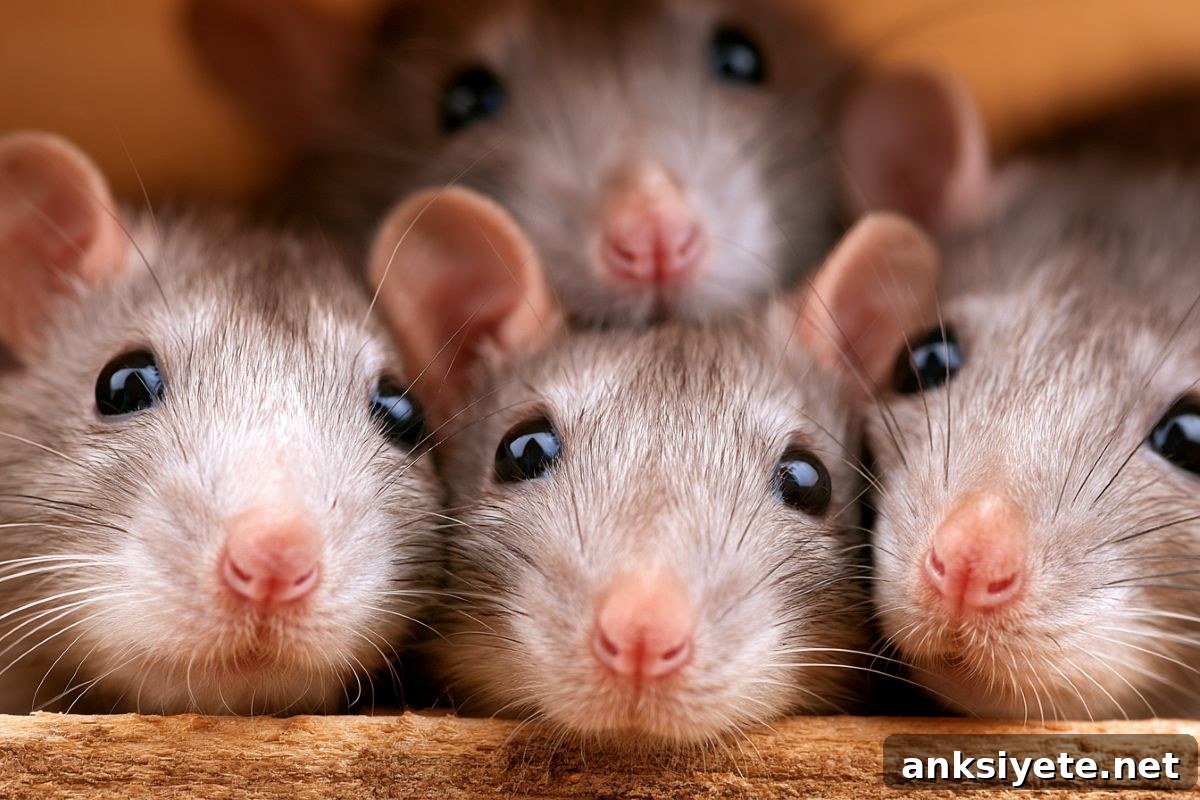
Summary: Empathy—the capacity to perceive and share others’ emotions—is often described as the social glue that makes human relationships personal and supportive. Traditionally considered a uniquely human ability, empathy has long been used to draw a sharp line between people and other animals. But is that boundary scientific, or a product of human bias? While pet owners readily interpret canine behavior as empathetic, people tend to dismiss similar claims about animals like rats. How can researchers evaluate empathy in other species without projecting human traits onto them?
A systematic, species-sensitive study reframed the question of animal empathy. Instead of asking whether animals are empathetic in a yes/no way, the researchers developed a five-dimension behavioral profile to measure different aspects of empathy. Applying this framework to existing research—most notably a well-known 2011 experiment—shows that rats display flexible, other-oriented behaviors that qualify as a form of empathy, even if they lack the more complex mental-state representation associated with human empathy.
Key Facts
- The landmark 2011 experiment: In a widely cited study published in Science, a free rat that had access to both chocolate and a trapped cagemate chose to free the trapped rat first and only then share the chocolate. This sequence suggested that the free rat prioritized the other animal’s distress over its own immediate reward.
- Not just pure instinct: Follow-up analyses showed the helping behavior was selective: rats helped familiar cagemates but not unfamiliar strangers. This selectivity argues against the idea that the response is a simple, hardwired reflex.
- Five dimensions of empathy: To create a rigorous, species-sensitive measure, researchers defined five behavioral dimensions that together make up an empathy profile:
- Registering emotion: Recognizing another individual’s basic emotional state.
- Registering situation: Perceiving another’s immediate physical predicament.
- Registering mental states: Detecting intentions, beliefs, or more complex mental processes beyond immediate emotion.
- Behavioral flexibility: Showing adaptable, context-sensitive helping rather than rigid, fixed actions.
- Other-oriented: Acting for the benefit of the other agent rather than for personal gain.
- Rats’ empathy profile: When assessed against these five dimensions, rats score:
- High on behavioral flexibility and on registering emotion and situation.
- Moderate on other-oriented motivation: their actions are targeted at others but appear driven by a limited affective map.
- Low or nearly absent on registering complex mental states beyond basic distress.
- Conclusion: Rats demonstrate a genuine form of empathy: flexible, socially targeted helping driven by perception of another’s distress. However, this form differs from human empathy because it lacks the sophisticated mental-state modeling humans use.
- A graded approach: The multidimensional framework replaces an all-or-nothing debate with a graded profile that can specify which aspects of empathy a species possesses, enabling clearer, data-driven comparisons across animals.
Source: RUB
Is empathy the trait that separates humans from other animals? Many pet owners instinctively say yes, while others respond with skepticism, accusing owners of anthropomorphism. The new approach provides a neutral, behavior-based way to evaluate empathetic capacities across species.
“Of course some owners see empathy in their pets,” notes the lead researcher, but the key is to rely on careful behavioral evidence rather than assumptions.
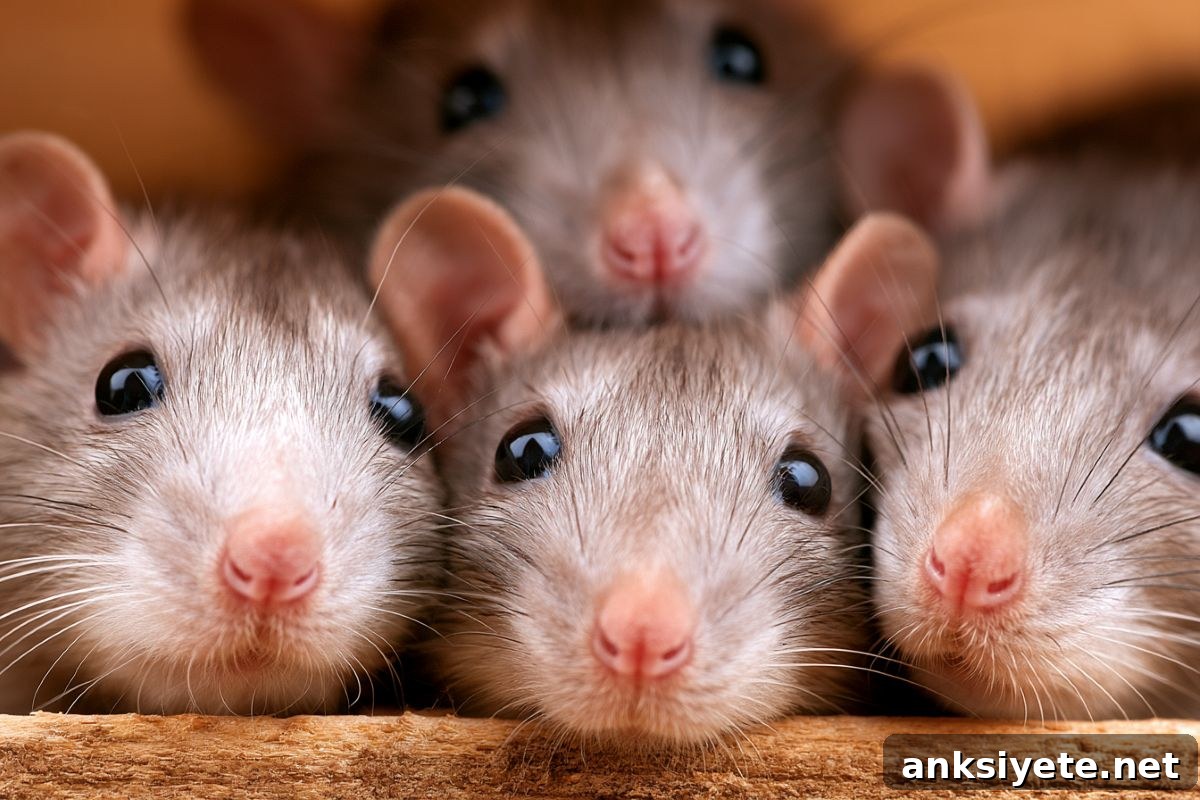
Rats are often stigmatized because they can carry disease, which biases how people interpret their behavior. The research team removed that bias by focusing on experimentally controlled observations and by comparing different species using the same multidimensional criteria.
Testing behaviors
The classic experimental setup placed two familiar rats in the same environment: one trapped in a narrow enclosure that only opened from the outside, the other free with access to chocolate. The free rat repeatedly chose to free the trapped partner before consuming or sharing the chocolate, indicating a preference to alleviate the partner’s distress before pursuing its own reward.
While some scientists interpreted this as full-blown empathy, others argued the behavior could be explained by simpler mechanisms. To address this, the research team developed the five-dimensional profile and examined whether the helping actions met each criterion.
Comparing species
Using published studies, the researchers compared empathy profiles across rodents, great apes, canids (dogs and wolves), and corvids. The profiles revealed distinct patterns: each species shows a unique combination of the five dimensions, which predicts how they will behave in complex social situations. For example, rats reliably detect distress and act flexibly to help, but they show limited sensitivity to nuanced mental states.
“Rats’ helping behavior qualifies as a form of empathy,” the lead author explains, “but it is a different profile than human empathy, lacking finer-grained mental-state recognition.” The graded profile view allows scientists to describe and compare these differences precisely.
Key Questions Answered:
A: The experiment presented a clear conflict: a tempting treat (chocolate) versus a distressed cagemate. If curiosity or self-reward guided the free rat, it would have consumed the chocolate first. Instead, the rat deliberately freed the trapped partner before engaging with the chocolate, showing the partner’s distress was the primary motivator.
A: The label reflects differences in complexity. Rats perceive distress and act to help in flexible ways, but they lack the richer mental-state understanding humans possess—such as inferring beliefs, plans, or subtle emotions. Describing it as a species-specific empathy profile highlights those distinctions without denying the behavior’s social significance.
A: It invites a move away from a single human benchmark toward nuanced, species-sensitive comparisons. The five-dimensional framework shows empathy can be made of different, evolvable components. This lets researchers recognize and study each species’ social abilities on their own terms instead of dismissing them for not matching human cognition.
Editorial Notes:
- This article was edited by a Neuroscience News editor.
- Journal paper reviewed in full.
- Additional context added by staff.
About this empathy research news
Author: Meike Driessen
Source: RUB
Contact: Meike Driessen – RUB
Image: Image credit: Neuroscience News
Original Research: Open access. “Animal Empathy Reconsidered: A Multidimensional Profile Account” by Albert Newen, Maja Griem, Ludwig Huber, Thomas Bugnyar, Aaron Blaisdell, and Simone Pika. Biological Reviews. DOI: 10.1002/brv.70196
Abstract
Animal Empathy Reconsidered: A Multidimensional Profile Account
Empathy supports social life, yet key questions remain: what exactly is empathy, is it uniquely human, and what varieties of empathy exist across species? To address these questions, the authors propose a species-sensitive, multidimensional profile of empathy that captures behavioral and cognitive features across animals. The framework enables cross-species comparisons by assessing how closely an animal’s empathy profile resembles paradigmatic cases. Applied to rodents, apes, canids, and corvids, the model shows each group possesses a distinct empathy profile with predictive power for behavior in complex situations. This approach moves beyond binary thinking and integrates evolutionary and developmental perspectives, offering a practical tool to describe empathy in humans and other animals in a species-appropriate way.