
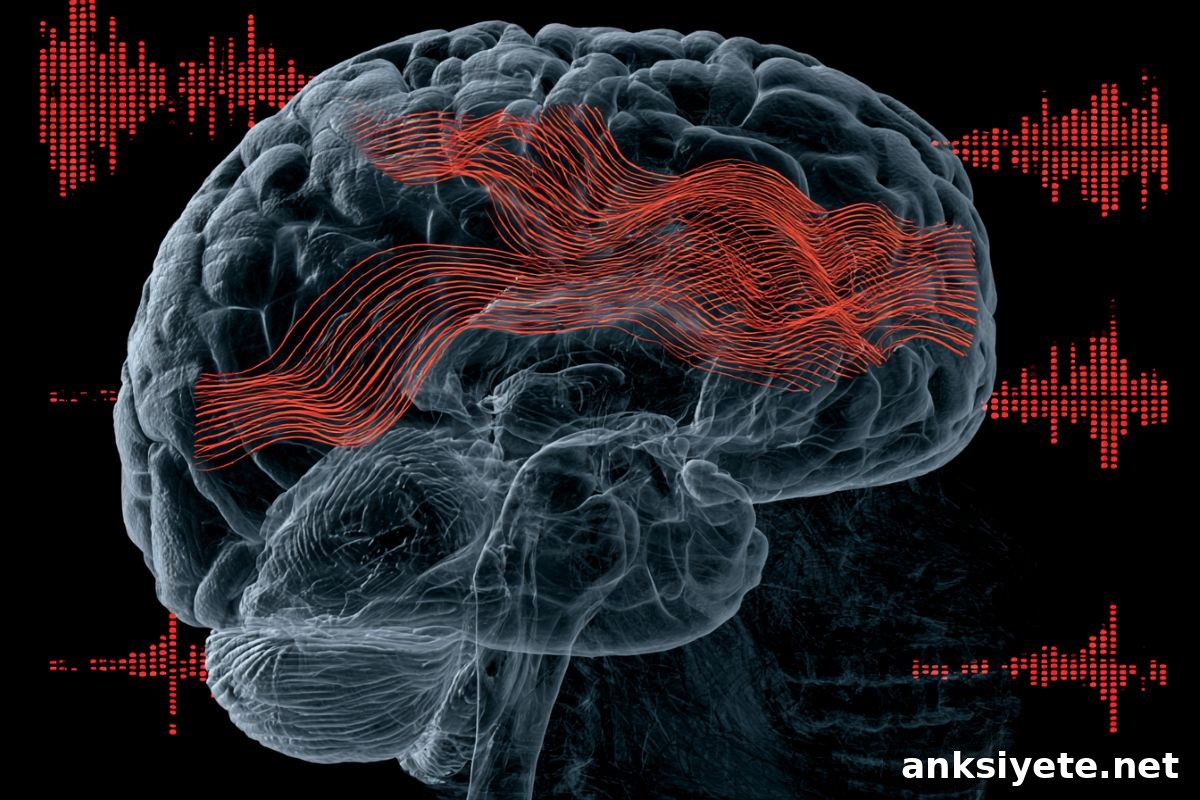
Summary: Watching a film often feels effortless: we follow dialogue, read facial expressions, notice musical cues, and track scene changes, all fused into a single coherent story. New research shows that beneath this seamless experience the frontal cortex acts as a dynamic traffic controller, shifting attention between auditory and visual streams in real time to prioritize the most relevant information.
Researchers directly recorded brain activity from patients with implanted electrodes as they watched a short multilingual movie. The millisecond-level recordings reveal that the frontal lobe does not treat sensory input as a single undifferentiated stream. Instead, it organizes and reallocates resources across distinct frontal regions so that sight or sound can dominate depending on context.
Key Facts
- Frontal cortex as controller: Rather than passively receiving processed inputs, frontal regions actively decide which sensory modality—audio or visual—should be emphasized before conscious awareness forms.
- Anatomical segregation: Direct neural recordings showed a clear spatial gradient: ventral (lower) frontal areas favor auditory features, while dorsal (upper) frontal areas favor visual features.
- Language-dependent shifts: When scenes were in English and speech was understandable, neural activity favored auditory regions. When the film switched to unfamiliar languages, activity shifted toward visual regions to exploit subtitles, gestures, and facial cues.
- Behavioral confirmation: Independent online raters judged whether audio or visual information mattered most in each clip. Their ratings closely matched the neural, millisecond-by-millisecond shifts observed in the patients.
- Clinical and technological implications: Mapping how the healthy brain reallocates attention could inform therapies for attention disorders, autism, language impairments, and hearing loss, and inspire adaptive AI systems that allocate processing power contextually.
Source: NYU
Overview
A study published in Nature Communications used intracranial electrocorticography (iEEG) to probe how the frontal cortex manages audiovisual information during naturalistic viewing. Nineteen epilepsy patients who had temporary clinical electrode implants watched a 12-minute short film containing scenes in English, Greek, German, and French. Some foreign-language segments included English subtitles. Because electrodes recorded electrical activity directly from the brain, researchers could measure neural responses with millisecond precision—capturing rapid shifts that slower imaging methods miss.
Analysis revealed a robust modality-specific organization within the frontal cortex. Ventral frontal regions showed stronger responses to auditory features, while dorsal frontal regions responded preferentially to visual features. Importantly, this organization was not fixed: it dynamically reweighted depending on what information best supported comprehension in each moment. When spoken language was intelligible, neural processing leaned toward auditory networks; when speech was unintelligible, processing tilted toward visual networks that support reading lips, interpreting gestures, and reading subtitles.
Behavioral ratings from online participants confirmed this interpretation. Raters identified which scenes relied more on audio or visual cues for narrative understanding, and their judgments mirrored the neural priority shifts observed in the iEEG data. This alignment suggests the frontal cortex’s dynamic allocation of sensory resources corresponds to how people subjectively use audio and visual information when following a story.
Significance
The results challenge simplified views of the frontal cortex as a uniform executive hub that only operates after sensory processing is complete. Instead, the frontal cortex appears organized into distinct networks that proactively assign priority to sound or sight, shaping perception in real time. That process helps explain how we maintain coherent understanding in complex, rapidly changing environments such as films, conversations in noisy rooms, or multilingual interactions.
Clinically, the findings point to potential strategies for rehabilitation and assistive technologies: therapies or devices could encourage use of the modality that the brain naturally prioritizes under given conditions. Technologically, designers of multimodal artificial intelligence could adapt resource allocation schemes based on this dual-network model—reducing needless processing when one modality is clearly dominant and ramping up visual or auditory analysis when comprehension demands change.
Limitations
The study relied on recordings from epilepsy patients undergoing clinical monitoring, and electrode placement was determined by medical necessity rather than experimental design. Consequently, coverage of frontal areas varied across participants, and results may not perfectly generalize to the broader population. Nonetheless, direct iEEG recordings provide rare, high-temporal-resolution insight into real-time sensory prioritization in the human brain.
Key Questions Answered:
A: Noninvasive imaging like fMRI captures changes over seconds and cannot resolve millisecond-level shifts that occur during fast-paced audiovisual scenes. Studying patients with clinically placed intracranial electrodes allowed researchers to measure the precise, rapid electrical dynamics that govern moment-to-moment attentional shifts between audio and visual streams.
A: Older models often described the frontal cortex as a homogeneous executive center operating after sensory inputs are processed elsewhere. This work shows a spatially organized frontal map that separates auditory and visual processing and actively reallocates resources before full conscious perception, suggesting a more proactive and structured role.
A: Yes. Current multimodal AI tends to process audio and visual streams equally, which is computationally costly. Emulating the frontal cortex’s adaptive allocation—scaling processing toward the modality that is most informative—could make AI systems more efficient and context-sensitive.
Editorial Notes:
- This article was edited by a Neuroscience News editor.
- Journal paper reviewed in full.
- Additional context added by staff writers.
About this auditory and visual neuroscience research news
Author: Leah Schmerl
Source: NYU
Contact: Leah Schmerl – NYU
Image: The image is credited to Neuroscience News
Original Research: Open access. “Frontal cortex organization supporting audiovisual processing during naturalistic viewing” by Faxin Zhou, Amirhossein Khalilian-Gourtani, Patricia Dugan, Andrew Michalak, Orrin Devinsky, Peter Rozman, Werner Doyle, Daniel Friedman & Adeen Flinker. DOI: 10.1038/s41467-026-73947-8
Abstract
Frontal cortex organization supporting audiovisual processing during naturalistic viewing
The brain adapts continuously to a multisensory world by coordinating inputs across modalities. How audiovisual stimuli are represented and evolve over time in natural contexts remains unclear. Using a movie-viewing paradigm and intracranial electrocorticography in 19 participants, the study identified a modality-specific gradient in the frontal cortex: ventral regions predominantly process auditory information, while dorsal regions process visual inputs. This cortical organization flexibly changes with movie context, reflecting dynamic assignment of audiovisual resources to build a coherent perception. Behavioral ratings supported the frontal cortex as a primary site for this modality assignment. Together, these findings clarify the frontal cortex’s role in flexible multisensory representation and integration during natural viewing.