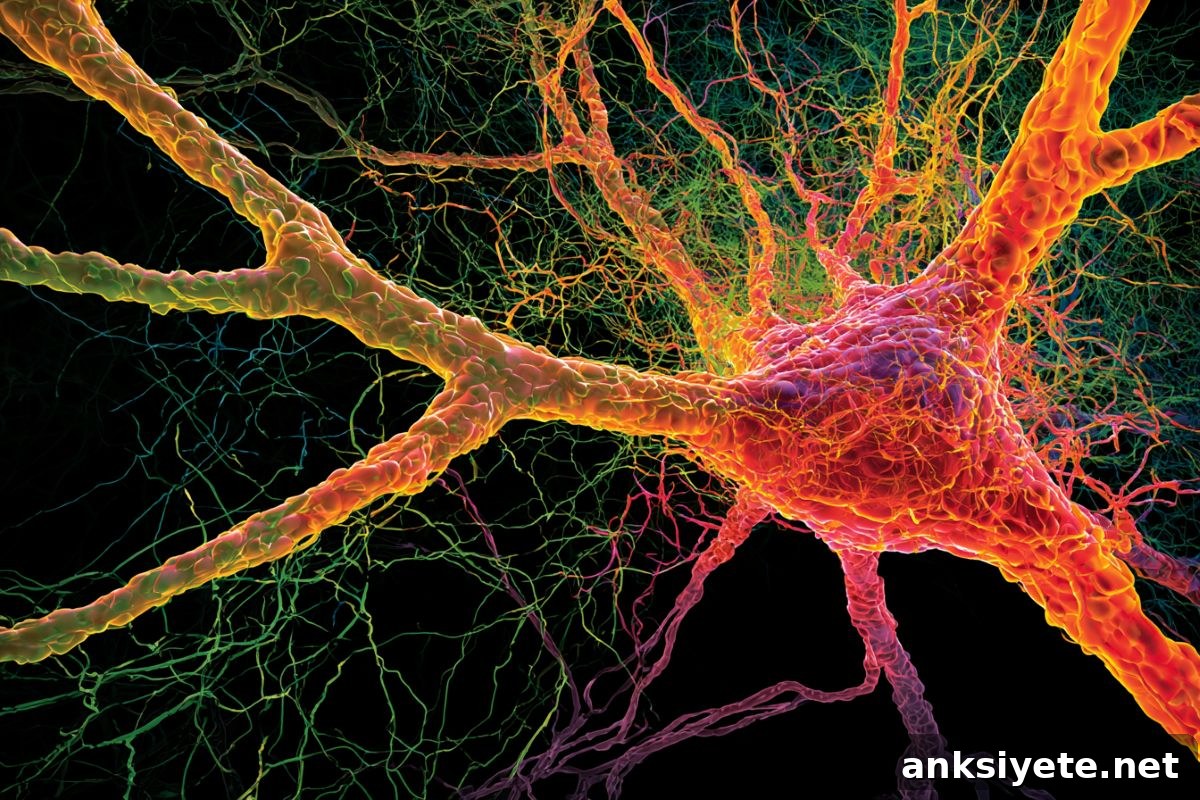
Summary: A new study from Niigata University reveals an unexpected, protective role for full-length Amyloid Precursor Protein (APP). Rather than only serving as the precursor to toxic amyloid-β (Aβ) fragments associated with Alzheimer’s disease (AD), intact APP acts as a cellular defender that helps neurons expel damaged nuclear material. This mechanism prevents buildup of nuclear debris that would otherwise trigger inflammation and neuronal death.
Under conditions such as aging, oxidative stress, or genomic instability, the nuclear envelope can rupture and release DNA fragments, chromatin, and histones into the cell cytoplasm. These nuclear components in the wrong compartment provoke strong inflammatory responses and can precipitate cell death. Using a combination of human iPSC-derived neurons, cultured cells, mouse models, and postmortem AD brain tissue, researchers show that wild-type APP binds to leaked nuclear material and directs its removal through lysosomal exocytosis: lysosomes carrying the waste fuse with the plasma membrane and release their contents into the extracellular space.
When APP levels are reduced or when familial AD-associated APP mutations are present, this clearance pathway fails, resulting in intracellular accumulation of nuclear debris, increased inflammation, and accelerated neuronal loss.
Key Facts
- Protective role of full-length APP: Full-length APP helps maintain neuronal health by managing and removing dangerous nuclear byproducts that leak into the cytoplasm.
- Nature of nuclear waste: DNA fragments, chromatin, and histones released from a compromised nucleus are highly inflammatory if they accumulate outside the nucleus.
- Lysosomal exocytosis: APP facilitates packaging of nuclear debris into lysosomes, which then travel to and fuse with the plasma membrane to expel toxic material.
- Impact of mutations or APP loss: Familial AD-associated APP mutations or reduced APP expression block this clearance route, causing intracellular blockages and heightened neuroinflammation.
- Evidence in human tissue: Postmortem AD brain samples show reduced APP per neuron, abnormal nuclear morphology, and accumulation of nuclear-derived material, consistent with failed APP-dependent clearance.
Source: Niigata University
Research overview
Researchers at Niigata University’s Brain Research Institute explored APP’s physiological role beyond its well-known processing into Aβ peptides. Their experiments indicate that full-length APP is actively involved in safeguarding neurons from internal nuclear damage by promoting lysosomal exocytosis of nuclear-derived debris. Prior work focused largely on APP as the precursor of extracellular Aβ plaques; this study adds a distinct intracellular function that preserves cellular homeostasis.
The team observed that, following nuclear injury, wild-type APP co-localizes with nuclear-derived material near lysosomal markers and facilitates its loading into lysosomes. These lysosomes then migrate to and fuse with the plasma membrane to expel the contents. In contrast, cells with depleted APP or those expressing familial AD-associated APP mutants fail to carry out this process, leading to persistent intracellular debris, elevated inflammatory markers, and cell death. Inhibiting lysosomal function or key molecules involved in exocytosis abolishes APP’s protective effect.
In vivo mouse experiments reinforced these findings: lowering APP levels increased neuronal vulnerability to nuclear damage, while restoring wild-type APP reduced markers of DNA damage. Notably, familial AD-associated mutant APP did not restore protection. Examination of postmortem human AD brains revealed neurons with abnormal nuclear shapes, cytoplasmic nuclear waste accumulation, and decreased APP levels per neuron—reflecting impaired APP-dependent clearance in disease.
Senior author Hideaki Matsui emphasizes that these results prompt a reappraisal of APP’s role: beyond being a source of Aβ, APP appears to function as a guardian that removes nuclear debris during cellular stress. Loss of this housekeeping activity may contribute to the neuroinflammation and degeneration observed in AD.
Key Questions Answered:
A: DNA and structural nuclear proteins are normally confined and organized within the nucleus. When these components enter the cytoplasm, the cell treats them as abnormal or foreign signals—similar to viral DNA—triggering strong innate immune responses. That molecular alarm can activate inflammatory pathways and programmed cell-death programs, damaging or killing the neuron.
A: Full-length APP associates with nuclear-derived debris and facilitates its packaging into lysosomes. Instead of only degrading contents internally, these lysosomes are directed to the plasma membrane, where they fuse and release their cargo outside the cell via lysosomal exocytosis. This effectively clears dangerous nuclear material from the neuron.
A: Traditionally, APP was viewed mainly as the precursor of extracellular Aβ plaques that drive AD. This study highlights an essential intracellular, protective function of full-length APP: clearing nuclear waste. If this function is lost through mutations or reduced APP levels, neurons accumulate toxic debris and die. Thus, impaired APP-mediated housekeeping may be an upstream contributor to neurodegeneration, shifting some focus from plaque toxicity to failed cellular maintenance.
Editorial Notes:
- This article was edited by a Neuroscience News editor.
- The journal paper was reviewed in full.
- Additional context was added by staff.
About this neuroscience research news
Author: Hideaki Matsui
Source: Niigata University
Contact: Hideaki Matsui – Niigata University
Image: The image is credited to Neuroscience News
Original Research: Closed access. “A protective role for APP in nuclear waste clearance via lysosomal exocytosis” by Dougnon G, Otsuka T, Nakamura Y, Sakai A, Yamanaka T, Matsui N, Nakahara A, Ito A, Hatano A, Matsumoto M, Igarashi H, Kakita A, Ueno M, Matsui H. PNAS. DOI:10.1073/pnas.2524190123
Abstract
A protective role for APP in nuclear waste clearance via lysosomal exocytosis
Amyloid precursor protein (APP) is widely known for its role in Alzheimer’s disease pathogenesis through proteolytic processing into amyloid-β peptides, yet its physiological functions are incompletely understood. This study uncovers a protective role for full-length APP in facilitating disposal of nuclear-derived debris during genotoxic stress. In cultured cells and mouse models, APP loss causes nuclear waste accumulation, increased inflammation, and cell death, while APP overexpression reduces these effects. Mechanistically, APP supports extracellular release of nuclear waste via lysosomal exocytosis; familial AD-associated APP mutants fail to mediate this process. Consistent with these findings, human AD brain tissue displays abnormal nuclear morphology, cytoplasmic accumulation of nuclear waste, and reduced APP levels per neuron. These results suggest that impaired nuclear waste clearance may be an underappreciated contributor to neurodegeneration.