
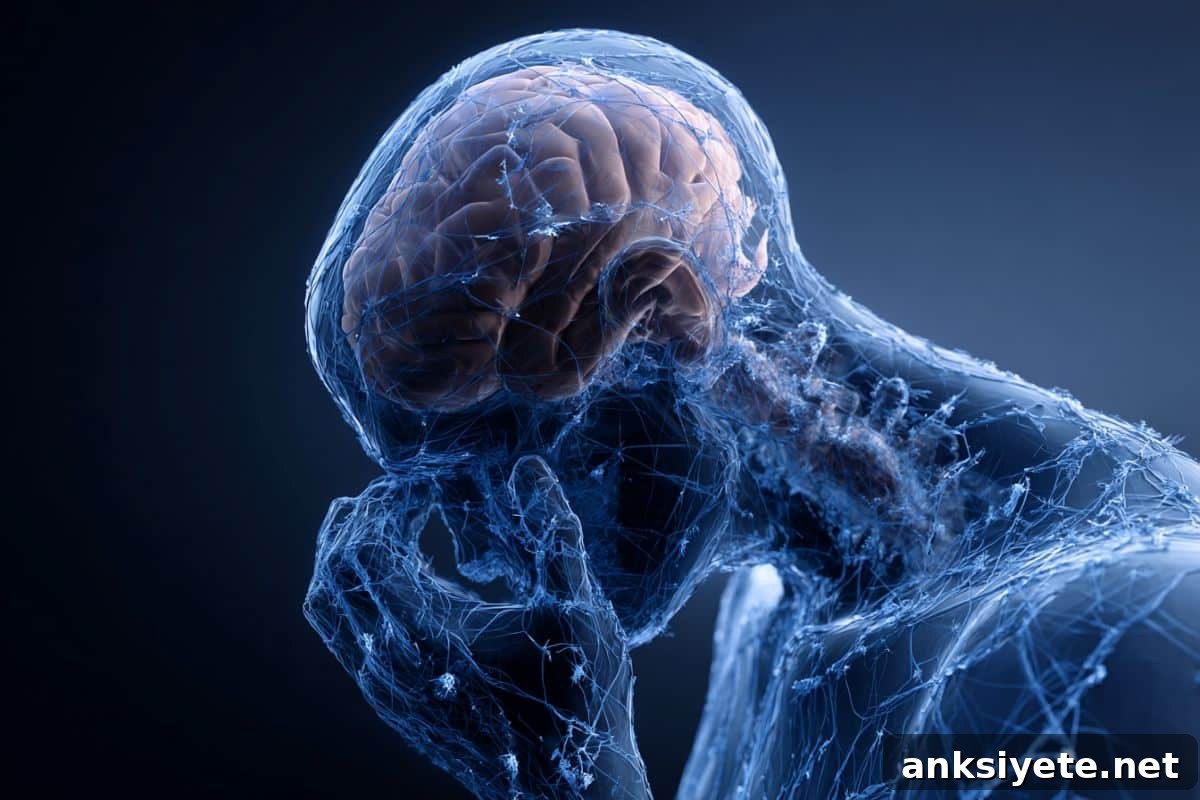
Summary: Why does a stressful day at work make a drink feel like a necessity rather than a choice? New research maps a previously unknown direct pathway in the brain that links stress centers to habit-forming circuitry, explaining how stress can trigger addictive behavior and relapse.
The study shows that under normal conditions stress signals help the brain remain flexible and make adaptive choices. Alcohol, however, disrupts that communication, pushing the brain toward rigid, automatic behaviors and increasing vulnerability to addiction.
Key Facts
- The Direct Link: Researchers identified a physical pathway from the central amygdala (CeA) and the bed nucleus of the stria terminalis (BNST)—two stress-responsive regions—directly into the dorsal striatum, the brain area that governs habits and action selection.
- The Signal (CRF): The pathway carries messages using CRF (corticotropin-releasing factor), a key neurochemical for coordinating stress responses.
- The “Traffic Controllers”: CRF targets specialized cells called cholinergic interneurons (CINs) in the dorsal striatum. These CINs act like traffic controllers, promoting pauses and flexibility that allow adaptive decision-making under stress.
- Alcohol’s Sabotage: Alcohol weakens both CIN activity and CRF’s ability to stimulate these cells, effectively silencing the brain’s pause-and-reflect system and favoring automatic, compulsive behaviors such as drinking.
Source: Texas A&M
Why do stressful moments so often push people toward habits like drinking? A new study from Texas A&M University sheds light on this, identifying a direct brain connection linking stress to addiction-related behavior.
The findings describe how alcohol interferes with the brain’s built-in stress-response circuit, reducing cognitive flexibility and making relapse more likely.
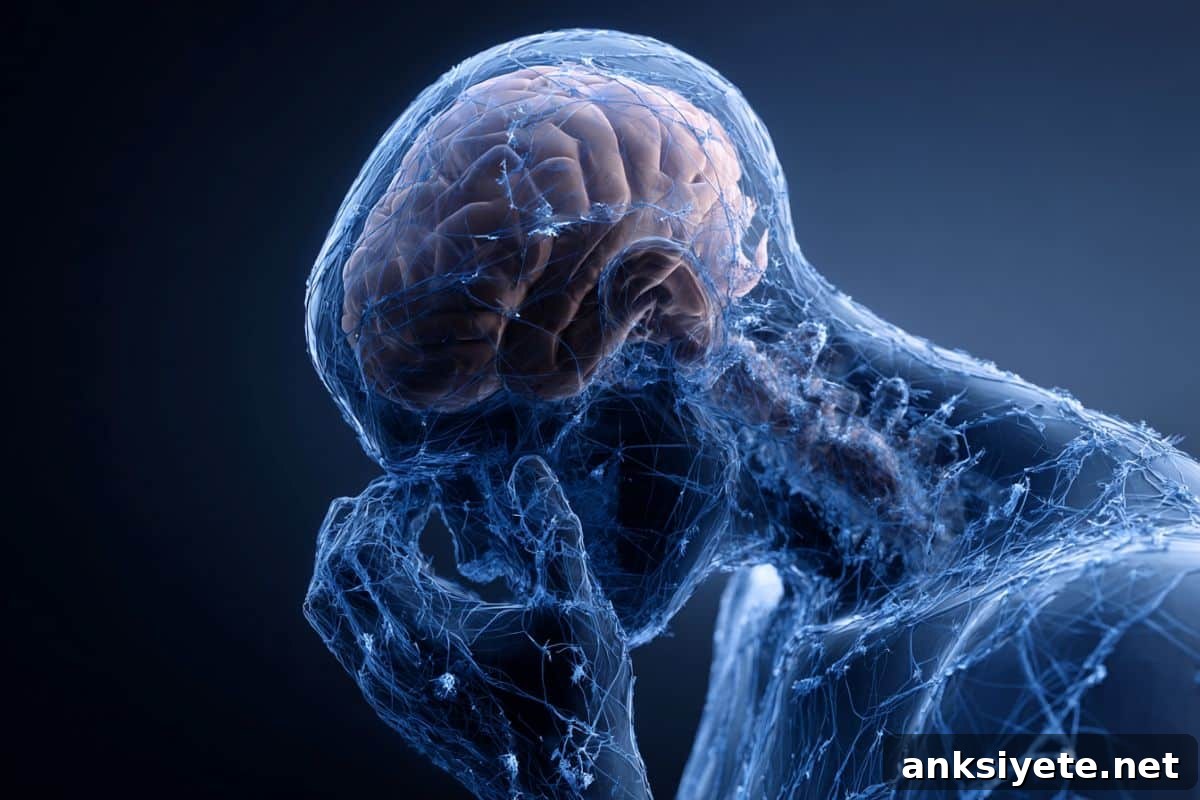
The research team was led by Dr. Jun Wang, professor in the Department of Neuroscience and Experimental Therapeutics in the Naresh K. Vashisht College of Medicine, and the results were published in eLife.
A bridge between stress centers and decision-making circuitry
Using anatomical tracing and electrophysiology in rodents, the investigators found that CRF-expressing neurons in the CeA and BNST send direct inputs into the dorsal striatum. These connections allow stress signals to reach the brain region central to habit formation and action selection.
The central amygdala and BNST are small, deep-brain structures that respond to threat, anxiety and overwhelm. Finding a direct projection from those stress centers into the dorsal striatum helps explain why stressful experiences can so powerfully shape behavior.
CRF acts as a chemical messenger along this route. When CRF reaches the dorsal striatum, it modulates the activity of the local circuitry in a way that supports flexibility and adaptive responses.
The key players: cholinergic interneurons (CINs)
Within the dorsal striatum, the primary targets of CRF are cholinergic interneurons (CINs). CINs release acetylcholine and help regulate whether behavior remains flexible or becomes habitual.
Electrophysiological recordings showed that CRF increases CIN excitability and enhances acetylcholine release. In effect, CRF activation of CINs acts as a brake or checkpoint during stress, allowing the brain to pause and choose an appropriate response rather than acting on automatic impulses.
“Under normal conditions, CRF signaling through CINs helps the brain stay adaptable,” said Wang. “It supports the ability to pause and reassess under stress rather than defaulting to a habit.”
How alcohol disrupts that braking system
A central discovery of the study is that alcohol blunts this CRF–CIN interaction. Acute alcohol exposure and early withdrawal both reduced CRF’s excitatory effects on CIN firing and slowed CIN activity even without CRF present.
In practical terms, alcohol “cuts the line” between the stress centers and the dorsal striatum. That breakdown weakens the brain’s capacity to respond to stress adaptively and shifts control toward automatic, compulsive behaviors—providing a mechanistic explanation for stress-induced relapse in alcohol use disorder.
Because the disruption occurs during early withdrawal as well, the brain may be especially vulnerable to stress at times when a person is attempting to quit, increasing the chance of relapse.
Why this matters for addiction research and treatment
Identifying a precise neural pathway that links stress signaling to habit circuits clarifies several puzzling features of addiction:
- Stress as a powerful relapse trigger: If alcohol weakens CRF-driven flexibility, stressful experiences can push someone back into habitual drinking.
- Rigid, compulsive behavior in addiction: Disruption of CIN function reduces cognitive flexibility, making harmful routines harder to break.
- Vulnerability during withdrawal: Blunted CRF signaling in early withdrawal makes stress harder to manage and relapse more likely.
Because the study pinpointed the exact neurons (CINs) and receptor systems (CRFR1) involved, it opens up potential targets for new interventions. Therapies that preserve or restore CRF–CIN signaling could strengthen resilience to stress-induced relapse.
A foundation for future therapies
Wang notes that mapping where and how the system breaks is the first step toward repair. Possible therapeutic strategies include boosting CIN activity, supporting CRF signaling during withdrawal, or protecting the CRF–CIN pathway from alcohol’s disruptive effects.
By revealing a direct biological link between stress and habit circuitry, the work provides a clearer map for researchers developing treatments aimed at preventing relapse and promoting recovery from alcohol use disorder.
“This discovery gives us a map of how stress reaches the brain’s decision-making machinery, and it shows how alcohol interferes with that map,” Wang said. “That knowledge points toward biological targets for future interventions.”
Funding: This research was supported by the National Institute on Alcohol Abuse and Alcoholism (R01AA027768).
Key Questions Answered
A: Contrary to that expectation, the healthy brain uses stress signals to promote a pause. When CRF activates cholinergic interneurons, it encourages flexibility and reassessment. Alcohol or chronic substance use breaks this pause mechanism, increasing impulsive, habitual responses.
A: During withdrawal, CRF’s effect on CINs is blunted, reducing the brain’s flexibility. Even minor stressors can feel overwhelming, and the brain defaults to automatic behavior—often the habit of drinking—making sustained abstinence challenging.
A: That is a key goal. With CINs and CRF signaling identified as central players, researchers can search for medications or interventions that enhance CIN function or protect CRF signaling from alcohol’s effects, potentially reducing stress-induced relapse.
Editorial Notes
- This article was edited by a Neuroscience News editor.
- The journal paper was reviewed in full by editorial staff.
- Additional context was added by the newsroom team.
About this addiction and stress research news
Author: Lesley Henton
Source: Texas A&M
Contact: Lesley Henton – Texas A&M
Image: Image credit: Neuroscience News
Original Research: Closed access. “Alcohol attenuates CRF-induced excitatory effects from the extended amygdala to dorsostriatal cholinergic interneurons” by Amanda Essoh et al., eLife. DOI: 10.7554/eLife.107145.3
Abstract
Alcohol attenuates CRF-induced excitatory effects from the extended amygdala to dorsostriatal cholinergic interneurons
Alcohol relapse is linked to corticotropin-releasing factor (CRF) signaling and altered reward-circuit function, but the exact mechanisms have been unclear. Using mice and rats, the study examined how CRF modulates cholinergic interneurons (CINs) in the dorsal striatum, a region critical for cognitive flexibility and action selection.
Monosynaptic and retrograde tracing revealed direct inputs from CRF-expressing neurons in the CeA and BNST to dorsal striatal CINs. CINs express CRF receptor 1 (CRFR1), and functional recordings showed CRF enhances CIN excitability and promotes acetylcholine release.
However, acute alcohol exposure and withdrawal attenuated the excitatory effects of CRF on CIN firing, suggesting a mechanism by which alcohol disrupts CRF-dependent neuromodulation. These results identify a CRF–CIN pathway linking the extended amygdala to the dorsal striatum and offer insight into how stress and alcohol interact to impair striatal function. CRF signaling may therefore be a viable target for addressing stress-induced changes to reward circuitry.