
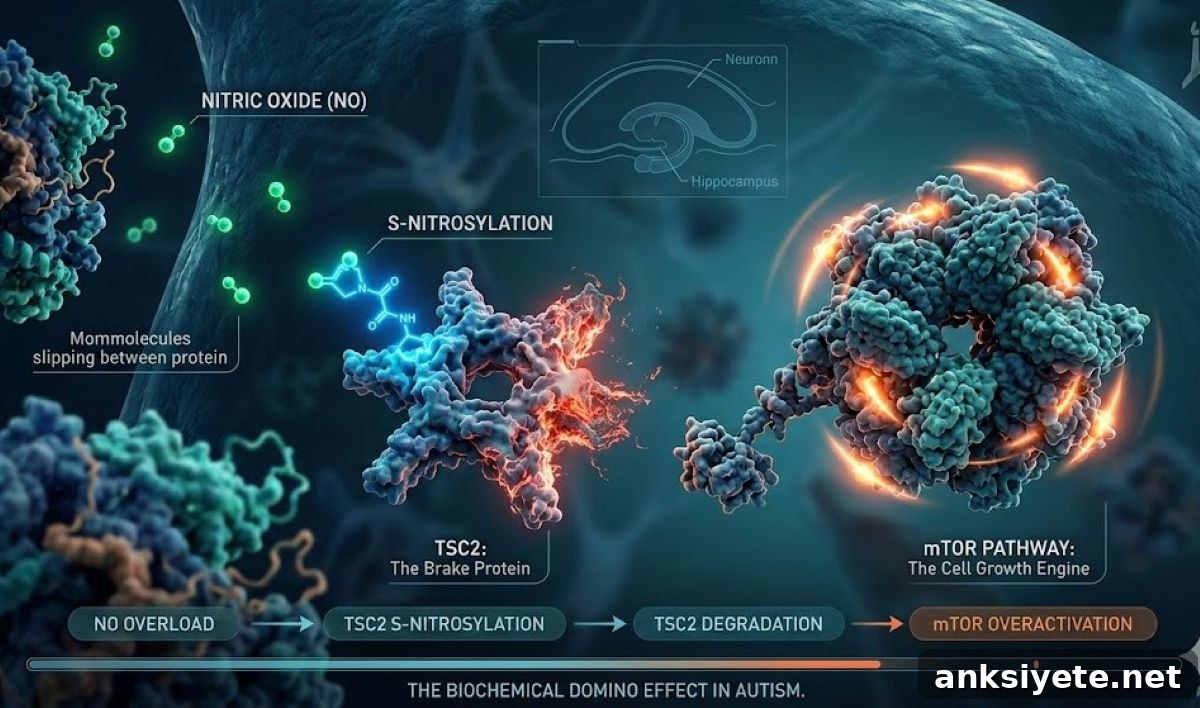
Summary: Nitric oxide (NO) is typically a subtle signaling molecule in the brain, but new research shows it can trigger a damaging cascade in some forms of autism spectrum disorder (ASD). The study describes a biochemical chain reaction in which excess nitric oxide chemically modifies a protective protein, TSC2, through S-nitrosylation, marking it for degradation and allowing the mTOR pathway to run unchecked.
TSC2 normally restrains the mTOR signaling pathway, a master regulator of cellular growth and protein synthesis. When TSC2 is removed by NO-driven modification and subsequent breakdown, mTOR activity increases, disrupting neuronal communication and pointing to a shared molecular route by which diverse autism risk factors converge on mTOR dysregulation.
Key Facts
- Brake Failure: TSC2 functions as a critical checkpoint that limits mTOR-driven protein production. Excess nitric oxide causes S-nitrosylation of TSC2, which leads to its degradation and loss of this inhibitory control.
- Engineered Resistance: Researchers created a version of TSC2 that cannot be S-nitrosylated. This resistant TSC2 preserved normal mTOR signaling, demonstrating that the chemical modification is a primary cause of the dysfunction.
- Clinical Correlation: The same molecular signature—reduced TSC2 and elevated mTOR signaling—was found in clinical brain samples from children with SHANK3 mutations and in idiopathic ASD cases, supporting the laboratory findings.
- Therapeutic Potential: Pharmacological inhibition of neuronal nitric oxide synthase (nNOS) prevented TSC2 S-nitrosylation and restored more normal cellular behavior in experimental models, suggesting a possible therapeutic approach for subsets of ASD.
Source: Hebrew University of Jerusalem
Overview
Nitric oxide normally helps neurons fine-tune communication. However, the team led by Prof. Haitham Amal at the Hebrew University of Jerusalem found that when NO levels become elevated, the molecule can initiate a damaging biochemical cascade that weakens the cell’s control over mTOR signaling. This study, first-authored by PhD student Shashank Ojha and published in Molecular Psychiatry, details how nitric oxide, TSC2, and mTOR interact and how this interaction contributes to ASD-related cellular dysfunction.
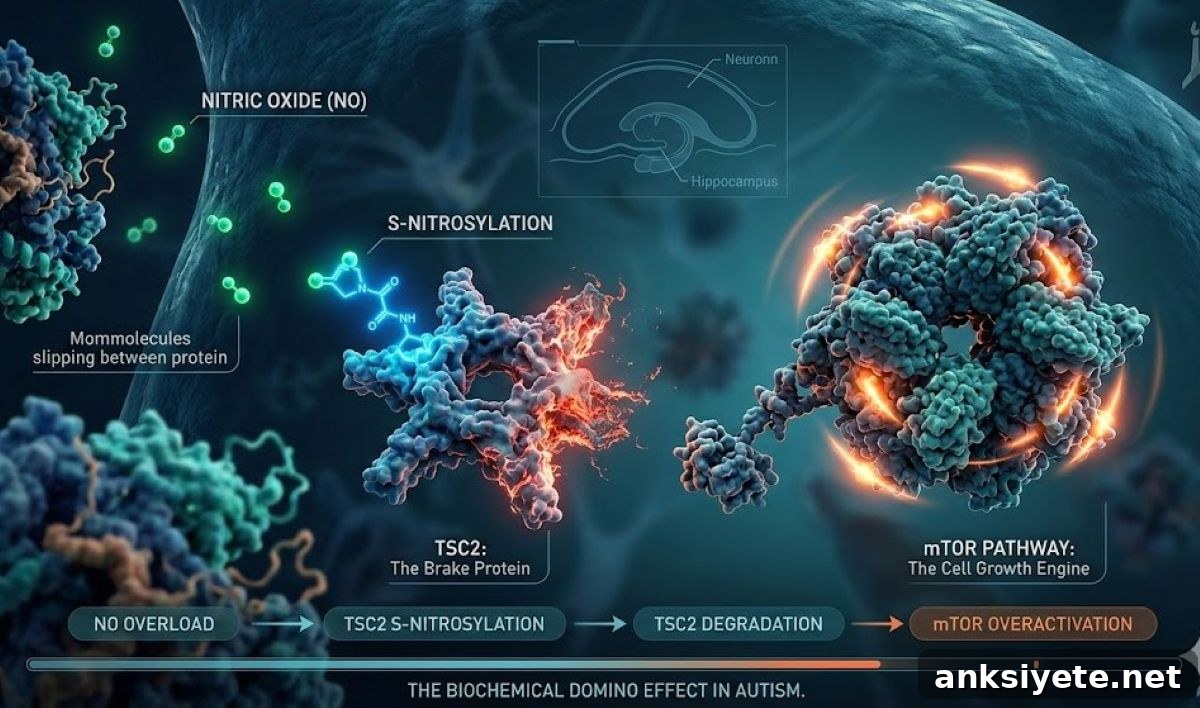
The investigators used a systems-level proteomic approach to map S-nitrosylation across proteins and found that components of the mTOR pathway were disproportionately affected. They focused on TSC2, a protein that normally inhibits mTOR activity. The data show that S-nitrosylation of TSC2 increases its ubiquitination and degradation, reducing the amount of functional TSC2 available to restrain mTOR. With mTOR dysregulated, neurons show altered protein translation and signalling patterns that can impair neuronal communication.
To test whether this mechanism could be interrupted, the team applied pharmacological methods to lower neuronal nitric oxide production. Blocking nNOS prevented TSC2 S-nitrosylation, preserved TSC2 protein levels, and normalized mTOR signaling and related cellular measures. Separately, the researchers engineered a TSC2 mutant that cannot undergo S-nitrosylation; delivering this resistant form into the prefrontal cortex of experimental animals reduced ASD-like behaviors and downstream molecular abnormalities, strengthening the causal link between S-nitrosylation and pathology.
Crucially, the group examined postmortem and clinical samples from children with ASD, including those with SHANK3 mutations and cases of idiopathic autism. These human samples mirrored the experimental findings: lower TSC2 levels and elevated mTOR signaling activity were present, lending translational relevance to the molecular mechanism described in animal and cellular models.
“Autism is heterogeneous and we do not expect a single pathway to explain every case,” said Prof. Haitham Amal. “Yet identifying this nitric oxide → TSC2 → mTOR axis gives a clearer molecular map for some forms of ASD and highlights potential targets for intervention.”
Overall, the study supports the idea that therapeutic strategies aimed at limiting excessive nitric oxide signaling or preventing TSC2 S-nitrosylation could restore proper mTOR regulation in relevant ASD subtypes, opening new avenues for targeted treatments.
About Autism Spectrum Disorder (ASD)
ASD is a neurodevelopmental condition defined by differences in social communication and behavior. It arises from many genetic and environmental risk factors. Cellular signaling pathways such as mTOR are increasingly studied because they regulate neuronal growth, protein synthesis, and synaptic function—processes that influence brain development and behavior.
Key Questions Answered:
A: No. Nitric oxide is essential for normal brain function. The problem described here is one of imbalance—too much NO leads to inappropriate chemical tagging of proteins like TSC2, which can disrupt cellular processes.
A: Autism has many causes, but different genetic or environmental insults may converge on common cellular outcomes. If diverse risk factors cause elevated nitric oxide or related changes, they could produce similar downstream effects on TSC2 and mTOR, contributing to shared features across different cases.
A: Not yet as a clinical diagnostic tool. This study identified consistent molecular patterns in ASD samples that could inform future biomarker development to identify individuals who might benefit from NO-targeted therapies.
Editorial Notes:
- This article was edited by a Neuroscience News editor.
- The journal paper was reviewed in full.
- Additional context was added by the editorial staff.
About this Autism research news
Author: Danae Marx
Source: Hebrew University of Jerusalem
Contact: Danae Marx – Hebrew University of Jerusalem
Image: The image is credited to Neuroscience News
Original Research: Open access. “Nitric Oxide-Mediated S-Nitrosylation of TSC2 Drives mTOR dysregulation across Shank3 and Cntnap2 Models of Autism Spectrum Disorder” by Shashank Kumar Ojha, Maryam Kartawy, Wajeha Hamoudi, Manish Kumar Tripathi, Adi Aran & Haitham Amal. Molecular Psychiatry. DOI: 10.1038/s41380-026-03514-6
Abstract
Nitric Oxide-Mediated S-Nitrosylation of TSC2 Drives mTOR dysregulation across Shank3 and Cntnap2 Models of Autism Spectrum Disorder
Autism spectrum disorder (ASD) is a complex neurodevelopmental condition marked by core behavioral symptoms. Prior work implicated nitric oxide (NO) in ASD mechanisms, but how NO-driven S-nitrosylation contributes to pathology was unclear. Building on evidence that mTOR signaling is central to ASD biology, the authors used SNO-proteome analysis to show enrichment of mTOR pathway components among S-nitrosylated proteins.
Using two established mouse models and clinical samples from children with ASD, they found increased S-nitrosylation of TSC2, leading to its ubiquitination and degradation and resulting in mTOR overactivation in both excitatory and inhibitory neurons. Pharmacological inhibition of neuronal nitric oxide synthase prevented TSC2 S-nitrosylation, mTOR hyperactivation, and abnormal protein translation. A TSC2 mutant (C203S) that resists S-nitrosylation prevented ASD-like behaviors when introduced into the prefrontal cortex of Shank3 mutant mice. Analysis of clinical samples showed reduced TSC2 and increased mTOR activity in children with SHANK3 mutations and idiopathic ASD, supporting the translational relevance of the findings.
This work identifies a SNO–TSC2–mTOR axis that explains how nitric oxide can drive mTOR dysregulation and ASD-like phenotypes, highlighting potential targets for therapeutic intervention in specific ASD subtypes.