
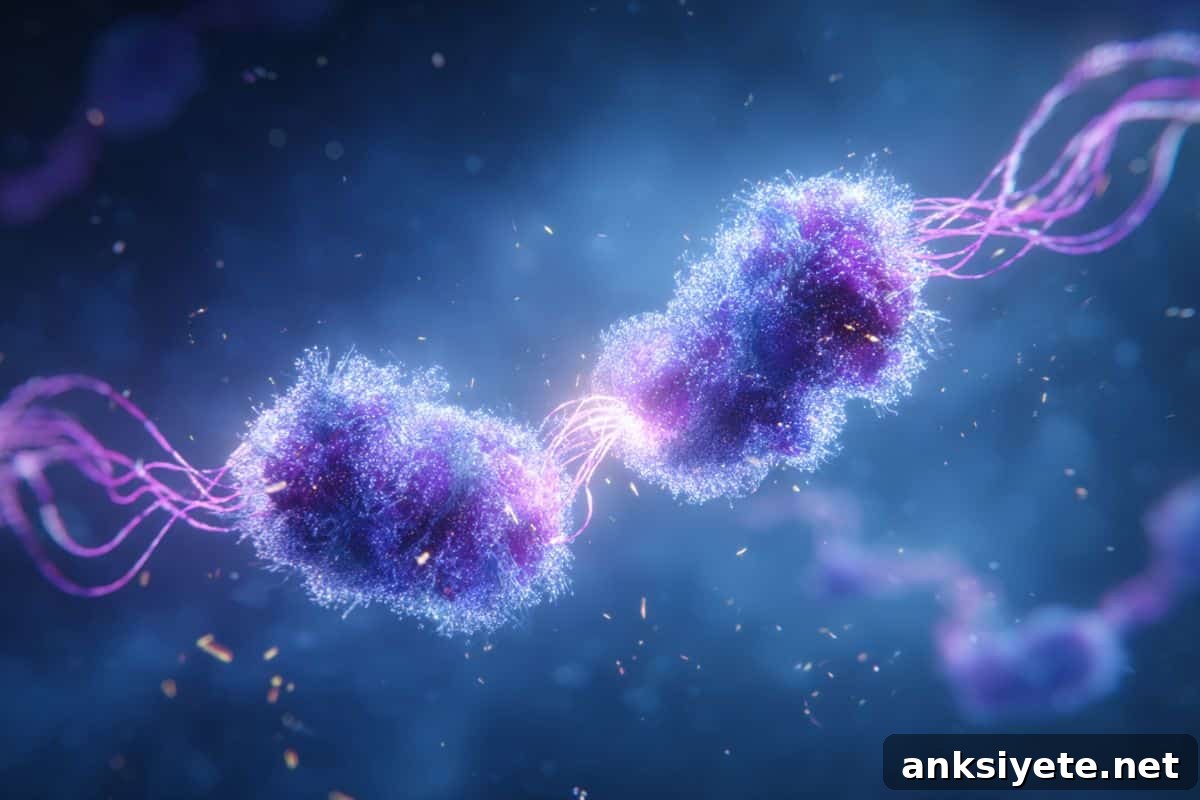
Summary: Neurons and other animal cells demand a lot of energy. New research reveals an elegant survival strategy: when nutrients or temperature conditions become unfavorable, cells pair their ribosomes—the molecular machines that make proteins—into inactive complexes called disomes to conserve energy.
Unlike bacteria, which use proteins to link ribosomes together, animal cells rely on long, flexible RNA extensions known as expansion segments. These RNA “tentacles” form a specific “kissing loop” interaction that locks two ribosomes together during stress, protecting these costly assemblies until the cell can resume normal protein production.
Key Facts
- Energy-saving disomes: Under stress (such as cold exposure or nutrient scarcity), animal cells assemble inactive ribosomes into paired disomes, pausing protein synthesis to save energy.
- RNA tentacles: The tethering is mediated by a ribosomal RNA segment named 31b, an expansion segment that protrudes from the ribosome like a flexible arm.
- Kissing loop interaction: Complementary sequences within these RNA loops bind precisely to each other, creating a reversible lock that holds ribosomes together.
- Direct visualization with Cryo-ET: Researchers used cryogenic electron tomography to image disomes inside intact, frozen cells in three dimensions for the first time.
- Evolutionary insight: Expansion segments have grown in size through evolution; this work reveals a concrete function for them in stress management in complex organisms.
Source: Max Planck Society
Ribosomes are large molecular machines made of protein and RNA that synthesize all cellular proteins.
Because translation consumes large amounts of energy, cells rapidly downregulate protein synthesis when they encounter stress. Bacteria are known to form protein-mediated hibernating dimers of ribosomes, but equivalent structures in animal cells had not been clearly identified until now.
An unexpected role for ribosomal RNA during cellular stress
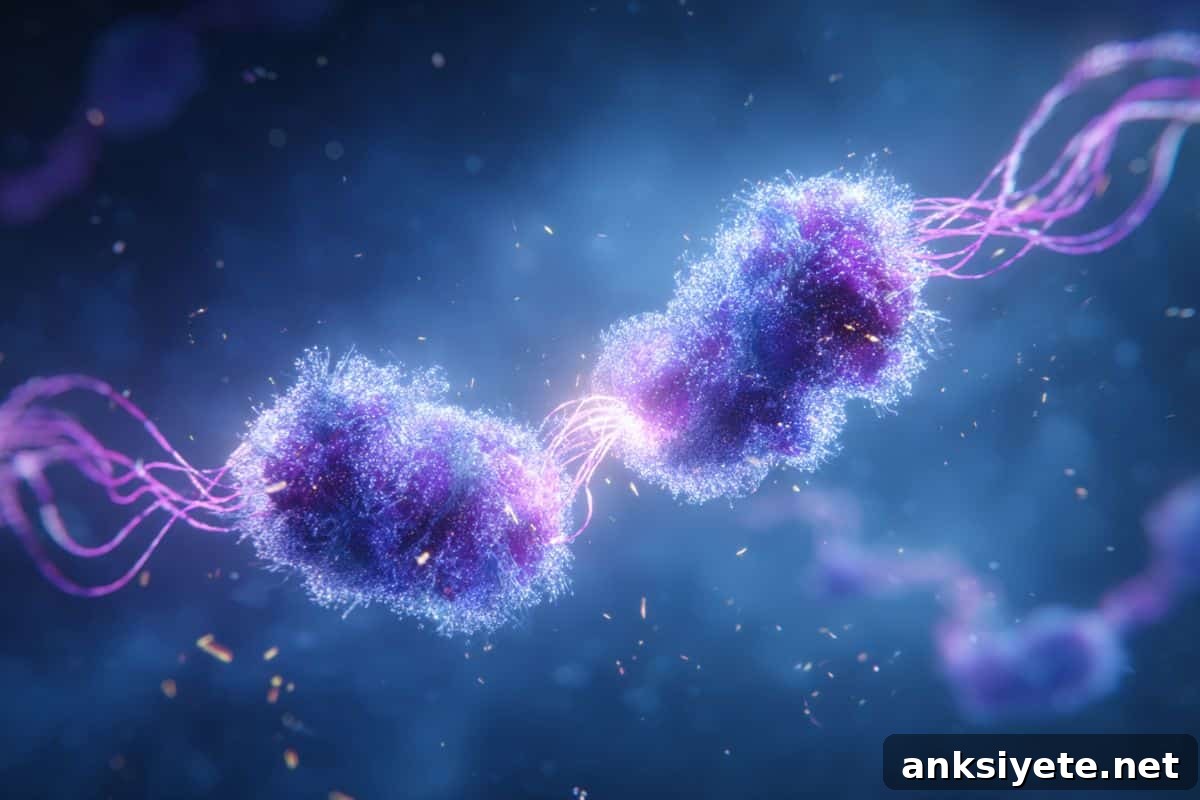
Using advanced imaging and molecular techniques, researchers led by Erin Schuman at the Department of Synaptic Plasticity, Max Planck Institute for Brain Research in Frankfurt, found that stressed animal cells—including neurons—assemble inactive ribosomes into tightly associated pairs called disomes. These ribosome pairs represent a regulated, reversible stress response rather than random collisions or experimental artifacts.
Published in Science, the study shows that, unexpectedly, the ribosomes are held together not by proteins (as in bacteria) but by a specific ribosomal RNA expansion segment. Postdoctoral researcher Andre Schwarz explains that this RNA element functions like a molecular connector.
Expansion segments are long, flexible rRNA insertions that extend from ribosomes and have expanded in size over evolutionary time. Although prominent in animal ribosomes, their roles have been largely unknown. This work demonstrates that one particular expansion segment, called 31b, is necessary and sufficient to mediate ribosome pairing under stress.
At the molecular level, two identical 31b loops bind through complementary nucleotides in a “kissing loop” arrangement. Disrupting this interaction prevents disome formation, impairs cell growth, and increases sensitivity to stress.
Seeing ribosomes inside cells
A major strength of the study is the direct visualization of ribosomes within intact cells using cryogenic electron tomography (Cryo-ET). Cryo-ET preserves cells by rapid freezing and then images them in three dimensions at high resolution, revealing how ribosomes reorganize under stress in their native cellular context.
The investigators combined cell biology, biochemistry, genetic engineering in yeast and mammalian cells, and high-resolution structural imaging to build a comprehensive picture. Manipulating ribosomal RNA posed a challenge because rRNA genes exist in hundreds to thousands of nearly identical copies in animal genomes. The team addressed this by engineering hybrid ribosomes in yeast and delivering short RNA molecules that specifically disrupted ribosome pairing in animal cells, according to Mara Mueller, a graduate student and co-first author.
A new view of translation control
The findings reveal a previously unrecognized way animal cells regulate protein synthesis during stress—one that depends on RNA structure rather than protein factors. By temporarily sequestering ribosomes in inactive pairs, cells protect these costly machines and remain ready to restart translation quickly once conditions improve. This discovery provides a fresh perspective on how ribosome organization affects cellular resilience, with implications for health and disease.
Key Questions Answered:
A: Protein synthesis is the most energy-intensive cellular activity. Under crisis conditions such as starvation, cells need to conserve resources. Pairing ribosomes into inactive disomes puts translation on hold and saves energy to support survival.
A: Disrupting the RNA kissing loop prevents effective disome formation, which impairs growth and increases vulnerability to prolonged stress.
A: They used Cryo-ET, which plunge-freezes cells to preserve their native state and then images them with an electron microscope to generate high-resolution 3D views of molecular assemblies.
Editorial Notes:
- This article was edited by a Neuroscience News editor.
- The journal paper was reviewed in full by the editorial team.
- Additional context was added by staff to clarify methods and implications.
About this genetics and neuroscience research news
Author: Irina Epstein
Source: Max Planck Institute
Contact: Irina Epstein – Max Planck Institute
Image: The image is credited to Neuroscience News
Original Research: Closed access. rRNA expansion segments mediate the oligomerization of inactive animal ribosomes by Andre Schwarz, Mara Mueller, Helene Will, Lea Dietrich, Stefano L. Giandomenico, Georgi Tushev, Ina Bartnik, Iskander Khusainov, Claudia M. Fusco, Erin M. Schuman. DOI: 10.1126/science.adr4287
Abstract
rRNA expansion segments mediate the oligomerization of inactive animal ribosomes
INTRODUCTION
Ribosomes translate mRNA into proteins and are composed of ribosomal RNA (rRNA) and proteins. The core rRNA sequence is highly conserved across life, while complex organisms possess additional insertions called expansion segments (ESs). The functions of these ESs have been largely mysterious.
RATIONALE
Although ribosomes are essential, it is not fully understood how animal cells adapt their ribosome pool to environmental changes. Bacteria sequester inactive ribosomes into hibernating dimers under stress; whether animal cells use a comparable strategy remained an open question.
RESULTS
This study examined how ribosomes respond to stress in animal cells and found stress-induced ribosome dimers (disomes) in rodent brain cells. Cryo-ET confirmed these dimers are inactive and in physical contact. At the linkage site, an expansion segment in each rRNA homodimerizes via a kissing loop interaction. This self-dimerization is necessary and sufficient for disome formation, which supports cell proliferation and enhances resistance to long-term stress. Presence or absence of the specific ES sequence across species predicts whether their cells form stress-induced dimers. Historical observations of ribosome assemblies in chicken cells are consistent with the same ES-driven mechanism.
CONCLUSION
The study reveals a new function for expansion segments: they enable the physical coupling of inactive ribosomes during stress. Animal cells use hairpin–kissing loop interactions between ESs to oligomerize ribosomes, a hibernation mechanism observed across diverse animals that provides a survival advantage.