
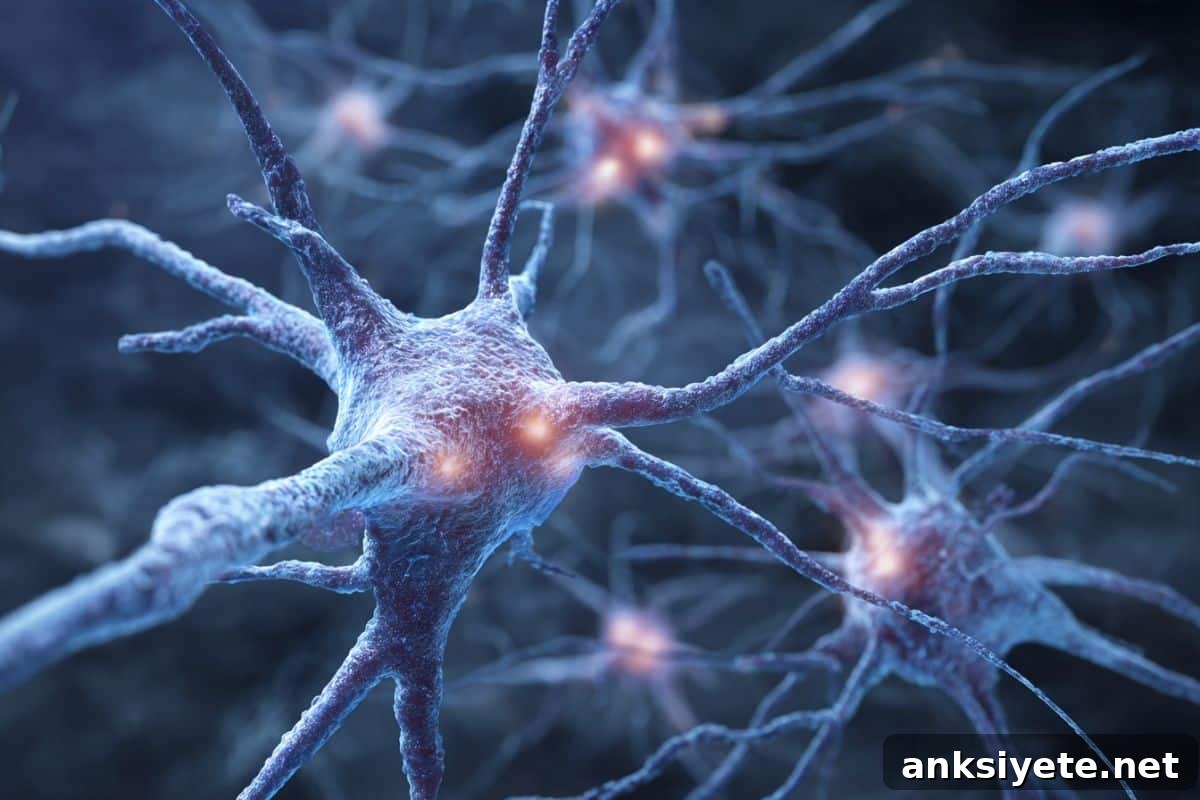
Summary: Researchers have found that chronic physical pressure on the brain — for example, the force produced by an expanding tumor — does more than physically injure neurons. That mechanical compression activates internal cellular programs that drive neurons toward programmed death, contributing to lasting neurological decline.
Using laboratory-grown neural networks and preclinical models, the team showed that sustained compression initiates a cascade of stress-adaptive and neuroinflammatory signals. Even neurons that initially survive the force continue to express molecular programs for apoptosis, producing irreversible loss that helps explain the cognitive, motor and seizure-related complications observed in patients with brain tumors or other conditions that alter intracranial pressure.
Key Facts
- Mechanical death signaling: Chronic compression activates HIF-1–related stress responses and AP-1–driven inflammatory gene expression, which together promote neuronal apoptosis.
- Damage beyond the tumor: The expanding tumor applies solid stress to adjacent healthy brain tissue; this mechanical force is a major contributor to neuronal injury, not just the tumor cells themselves.
- Disease-agnostic mechanism: Because these findings focus on mechanical forces and cellular responses, they may apply across conditions that increase pressure in the brain, such as glioblastoma, traumatic brain injury (TBI), and hydrocephalus.
- Irreversible consequences: Neurons do not readily regenerate, so preventing pressure-triggered signaling pathways is a priority for preserving sensory, motor and cognitive function.
Source: University of Notre Dame
How neurons communicate
Neurons communicate through electrical signals across the brain and spinal cord, forming a complex network of synapses supported and regulated by glial cells. When neurons are lost, this network breaks down and the resulting deficits in sensation, movement and cognition are often permanent.
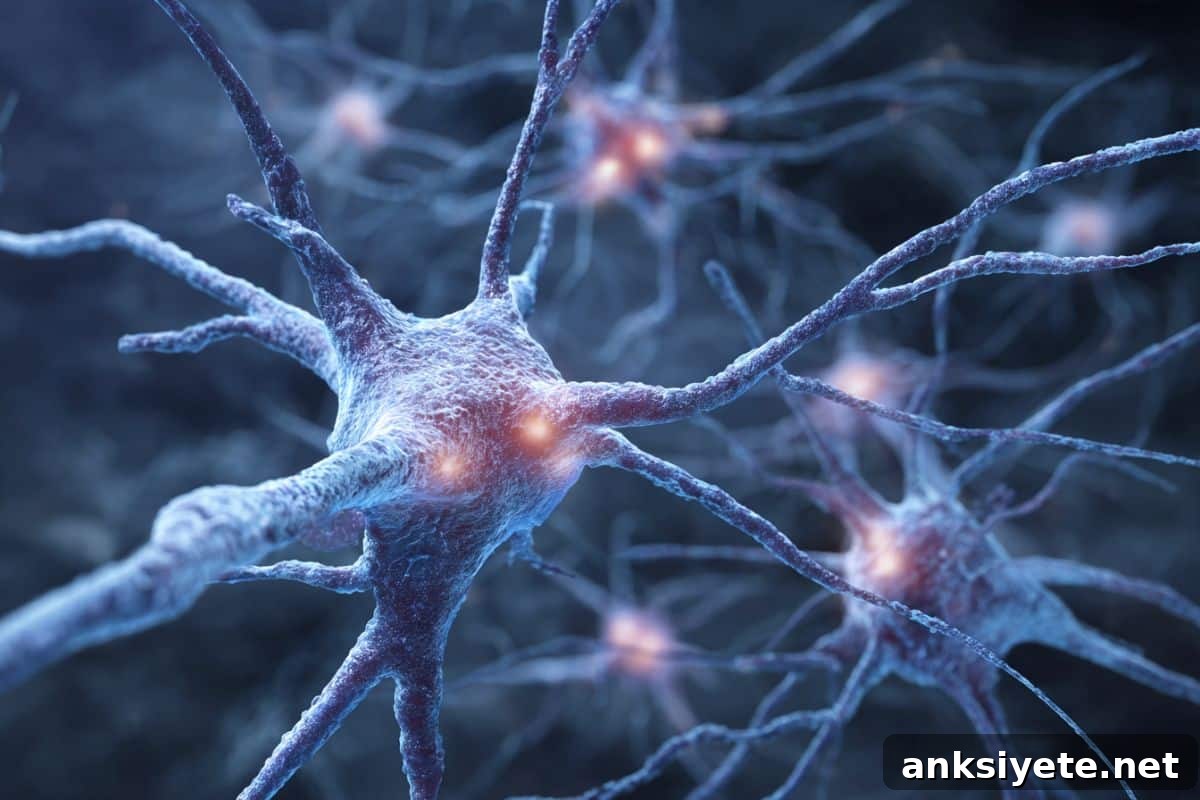
An interdisciplinary team at the University of Notre Dame investigated how chronic compression—such as the solid stress produced by a growing brain tumor—causes neuron loss. Their results, published in the Proceedings of the National Academy of Sciences (PNAS), reveal multiple mechanisms by which sustained pressure impairs neurons and promotes neuroinflammation.
“Many cancer studies concentrate on the tumor itself, but the organ that hosts the tumor is also being damaged as the tumor expands,” said Meenal Datta, Jane Scoelch DeFlorio Collegiate Professor of Aerospace and Mechanical Engineering and co-lead author. “We believe growth-induced mechanical forces are an important part of why we see injury in the brain.”
Datta, who leads the TIME Lab and studies tumor mechanics and the tumor microenvironment in glioblastoma, partnered with neuroscientist Christopher Patzke, John M. and Mary Jo Boler Assistant Professor in the Department of Biological Sciences, to probe the cellular pathways triggered by compression.
Patzke’s lab uses induced pluripotent stem cells (iPSCs), reprogrammed from donors’ blood or skin, to generate neurons and glial cells. The researchers built a physiologically relevant in vitro neural network from these iPSC-derived cells, then applied controlled compressive forces to mimic the sustained pressure of a tumor.
Graduate students Maksym Zarodniuk and Anna Wenninger quantified cell survival after compression, comparing the numbers of neurons and glia that lived or died. They found that, in many surviving neurons, programmed cell-death signaling remained active.
By sequencing messenger RNA from the surviving neural cells, the team observed elevated HIF-1 signaling, which drives stress-adaptive genes and can promote inflammation, alongside increased AP-1 expression that marks a neuroinflammatory glial response. Both pathways are established markers of ongoing neuronal damage and cell death.
To validate their in vitro observations, the researchers analyzed data from the Ivy Glioblastoma Atlas Project and used live-compression systems in preclinical brain models. Both approaches corroborated gene-expression patterns and synaptic dysfunction consistent with compressive stress.
These findings provide a mechanistic explanation for why patients with glioblastoma often suffer cognitive decline, motor deficits and elevated seizure risk. Importantly, the identified signaling pathways—HIF-1 and AP-1 among them—represent potential targets for neuroprotective therapies that could block pressure-induced neuronal death.
“Our study deliberately took a disease-agnostic approach,” Datta said. “Mechanical forces are relevant across many brain pathologies, including traumatic brain injury, and they should be considered when developing treatments.”
“Understanding why neurons are so vulnerable to compression is essential to prevent the sensory loss, motor impairment and cognitive decline patients experience,” Patzke added. “That insight will guide future strategies to protect brain function.”
Funding: The research was supported by the National Institutes of Health and the Harper Cancer Research Institute at Notre Dame, with additional support from Notre Dame’s Berthiaume Institute for Precision Health, the Genomics and Bioinformatics Core Facility, the Center for Research Computing, the Histology Core Facility, and the Integrated Imaging Facility. Both co-leads are affiliated with Notre Dame’s Boler-Parseghian Center for Rare Diseases and the Warren Center for Drug Discovery.
Datta also holds concurrent faculty status in Chemical and Biomolecular Engineering and advises graduate programs in bioengineering and materials science and engineering. She is affiliated with Harper, the Eck Institute for Global Health, Berthiaume, NDNano and the Lucy Family Institute for Data & Society. Patzke advises graduate programs in biological sciences and integrated biomedical sciences and is affiliated with the Center for Stem Cells and Regenerative Medicine.
Key Questions Answered:
A: It is not merely weight; it is compressive stress. As a tumor grows, it squeezes surrounding tissue and triggers molecular signaling that prompts healthy neurons to begin programmed cell death before direct contact or obvious injury occurs.
A: That is the long-term goal. By identifying pressure-responsive pathways such as HIF-1 and AP-1, researchers hope to develop therapies that block the self-destruct signal and preserve neuronal viability under mechanical stress.
A: Potentially, yes. Because the study focused on the mechanics of compressive stress, similar cell-death programs may be activated by sudden or chronic mechanical forces in traumatic brain injury or other conditions that alter intracranial pressure.
Editorial Notes:
- This article was edited by a Neuroscience News editor.
- The journal paper was reviewed in full.
- Additional context was provided by staff.
About this brain cancer and neuroscience research news
Author: Meenal Datta
Source: University of Notre Dame
Contact: Meenal Datta – University of Notre Dame
Image: Image credit: Neuroscience News
Original Research: Open access. “Mechanical compression induces neuronal apoptosis, reduces synaptic activity, and promotes glial neuroinflammation in mice and humans” by Maksym Zarodniuk et al., PNAS. DOI: 10.1073/pnas.2513172122
Abstract
Mechanical compression induces neuronal apoptosis, reduces synaptic activity, and promotes glial neuroinflammation in mice and humans
Mass effect—the compression and deformation of neural tissue by space-occupying lesions—can produce severe neurological symptoms and remains a major clinical challenge. In glioblastoma (GBM), compressive solid stress from tumor growth reduces cerebral blood flow, contributes to neuronal loss, increases functional impairment and worsens clinical outcomes.
The direct biophysical effects of compression on neurons were not well characterized. Using multiscale compression systems and physiologically relevant in vitro and in vivo models, the study demonstrates that chronic mechanical compression induces neuronal apoptosis, reduces synaptic puncta and disrupts network activity as measured by calcium imaging. These effects coincide with increased HIF-1 signaling and upregulation of downstream stress-adaptive genes in neurons, while glial cells exhibit AP-1–driven gene expression and a neuroinflammatory response. Together, these results show that solid stress directly contributes to neuronal dysfunction and inflammation in GBM and identify pathways for potential neuroprotective intervention.