
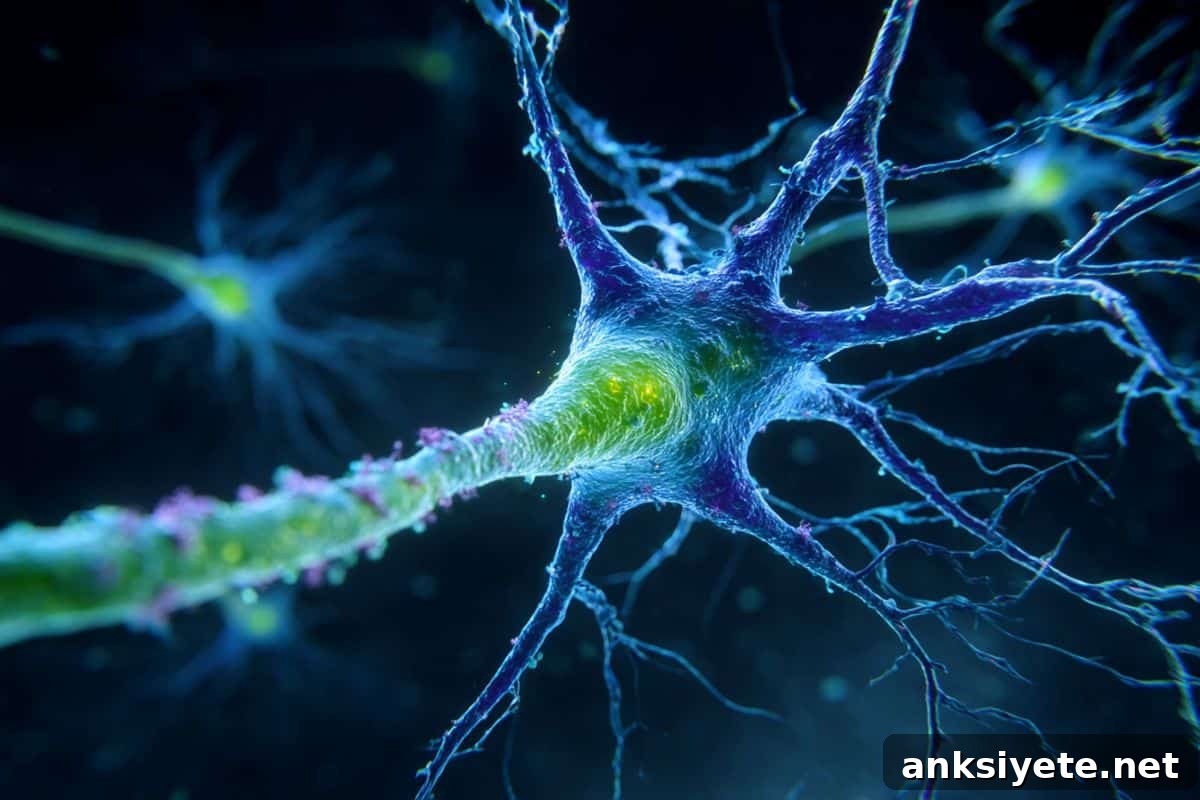
Summary: Researchers have built a next-generation glutamate sensor, iGluSnFR4, that can detect the faint incoming synaptic signals between neurons in living brain tissue. These previously nearly undetectable chemical messages are critical to how neurons combine thousands of glutamate inputs and convert them into an electrical output — the fundamental computation behind learning, memory, decision-making, and emotion.
This advance offers neuroscientists a practical way to observe synaptic input in real time, opening new opportunities to study disorders marked by altered glutamate signaling and to evaluate therapies that target synaptic communication. The development marks a major step toward decoding how neural circuits actually operate.
Key Facts
- New input detection: iGluSnFR4 is the first protein-based glutamate indicator sensitive enough to record incoming glutamate release at single synapses in real time.
- Revealing computation: The sensor shows how neurons integrate thousands of chemical inputs to produce an electrical response, exposing the patterns that underlie neural computation.
- Relevance to disease: Conditions such as Alzheimer’s disease, autism, schizophrenia, and epilepsy involve disrupted glutamate signaling; iGluSnFR4 enables direct observation of those dysfunctions within intact circuits.
Source: Allen Institute
Scientists have engineered a protein indicator that records the incoming chemical signals to neurons — not just their outgoing activity.
Those incoming messages are brief releases of the neurotransmitter glutamate. Glutamate is central to neuronal communication and to processes such as memory and learning, but its tiny, rapid signals have been extremely challenging to capture in living tissue until now.
Why this matters
- Decoding neural computation: For the first time researchers can monitor how a neuron weighs thousands of synaptic inputs and which specific input patterns cause it to fire, illuminating the mechanisms of cognition and behavior.
- New routes for disease research: Because disrupted glutamate signaling is implicated in many neurological and psychiatric disorders, the sensor provides a tool to map where and how synaptic communication breaks down.
- Improving drug evaluation: Pharmaceutical development can now assess how candidate therapies alter real synaptic events, speeding up and sharpening the testing of treatments that target circuit function.
The engineered protein, developed by teams at the Allen Institute and HHMI’s Janelia Research Campus, is a molecular glutamate indicator called iGluSnFR4 (pronounced “eye-glue-sniffer”). It reaches the sensitivity required to detect the faint incoming glutamate transients at individual synapses and to follow their timing with high fidelity.
iGluSnFR4 gives researchers a way to watch neurons communicate in real time, helping to reveal how complex patterns of synaptic activity are transformed into electrical outputs that drive thought and memory.
These results appear in Nature Methods and are likely to change how scientists measure and analyze neural activity in intact brain tissue.
The brain’s hidden language uncovered
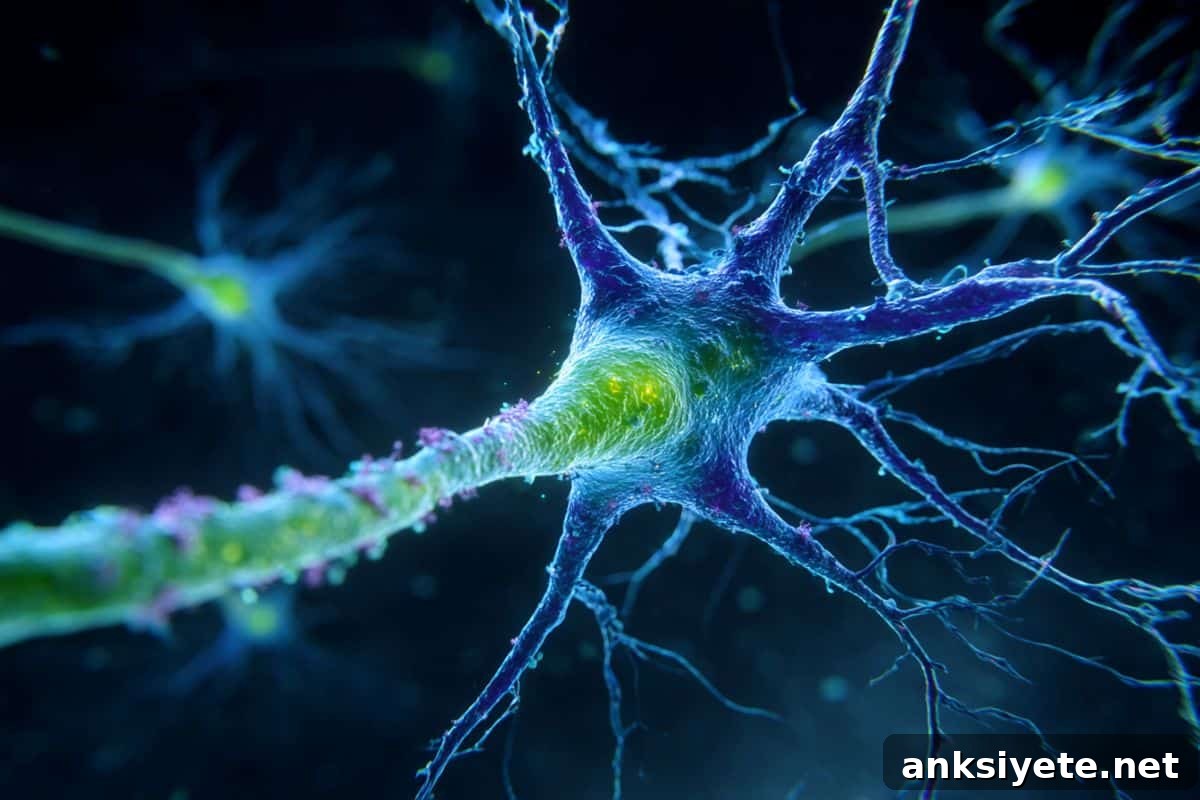
Neurons communicate via electrical impulses that travel along axons and trigger release of neurotransmitters across synapses. Glutamate is the primary excitatory neurotransmitter and is essential for synaptic transmission underlying memory, learning, and emotion. When released into the synaptic cleft, glutamate binds receptors on the receiving neuron and contributes to whether that neuron will fire an action potential.
Each neuron receives inputs from thousands of other neurons. The precise combinations and timing of these inputs determine whether the receiving neuron reaches threshold and fires. Until now, measuring those incoming chemical signals directly in living brain tissue was largely impossible: existing sensors lacked the combination of speed and sensitivity necessary to resolve single-vesicle releases at single synapses.
iGluSnFR4 changes that. It provides high spatial specificity and single-vesicle sensitivity, allowing researchers to monitor glutamate release across many synapses simultaneously and to identify the exact input patterns that drive neuronal responses.
“Previously, we could observe parts of the circuit or outgoing activity, but not the detailed inputs that tell us how neurons compute,” said Kaspar Podgorski, Ph.D., lead author and senior scientist at the Allen Institute. “This sensor helps connect those pieces so we can understand the order and meaning of neural signals.”
The iGluSnFR4 project combined expertise from the GENIE Project at Janelia and in vivo characterization by the Allen Institute’s Neural Dynamics group, demonstrating how collaboration across labs accelerates tool development in neuroscience.
With iGluSnFR4 available to the research community through distribution channels such as Addgene, scientists now have a practical method to observe synaptic inputs and to probe the flow of information through intact neural networks.
Key Questions Answered:
A: They engineered a protein sensor sensitive enough to record incoming glutamate signals at single synapses in living brain tissue in real time.
A: Incoming synaptic inputs determine how neurons integrate information and whether they fire. Access to those inputs reveals the patterns that underlie learning, memory, emotion, and decision-making.
A: Because altered glutamate signaling is implicated in disorders such as Alzheimer’s disease, autism, schizophrenia, and epilepsy, iGluSnFR4 allows direct observation of synaptic dysfunction and enables evaluation of how treatments affect real synaptic communication.
Editorial Notes:
- This article was edited by a Neuroscience News editor.
- The referenced journal paper was reviewed in full.
- Additional context was added by editorial staff.
About this neurotech and neuroscience research news
Author: Peter Kim, Allen Institute
Source: Allen Institute
Contact: Peter Kim, Allen Institute
Image: Image credited to Neuroscience News
Original Research: Open access. “Glutamate indicators with increased sensitivity and tailored deactivation rates” by Kaspar Podgorski et al., Nature Methods. DOI: 10.1038/s41592-025-02965-z
Abstract
Glutamate indicators with increased sensitivity and tailored deactivation rates
Understanding how neurons integrate signals from thousands of synapses requires tools that can monitor neurotransmission across many sites simultaneously. Existing fluorescent glutamate indicators enable visualization of synaptic signaling but have been limited in speed, sensitivity, and scale.
The authors developed two fourth-generation iGluSnFR variants with improved sensitivity and controlled deactivation kinetics: iGluSnFR4f (fast activation and deactivation for tracking rapid dynamics) and iGluSnFR4s (optimized for recording from large synapse populations). These indicators detect glutamate with high spatial precision and single-vesicle sensitivity in vivo.
They were used to record natural synaptic transmission patterns across multiple experimental contexts in mice, including two-photon imaging in cortical layers 1–4 and hippocampal CA1, and photometry in the midbrain. The iGluSnFR4 variants extend the speed, sensitivity, and scalability of glutamate imaging, enabling direct observation of information flow through intact neural networks.