
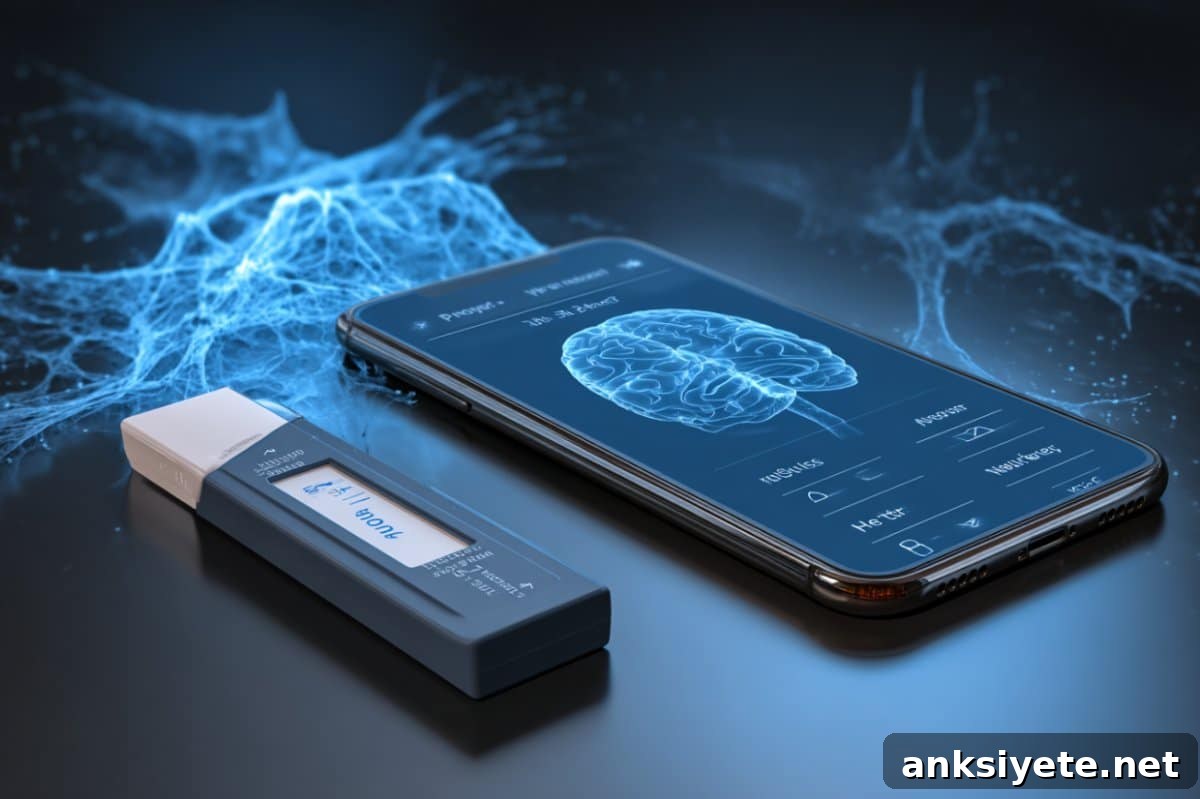
Summary: Scientists have created a portable, low-cost biosensor that rapidly measures levels of brain-derived neurotrophic factor (BDNF), a protein linked to psychiatric and neurological conditions such as depression, schizophrenia, and bipolar disorder. The flexible device analyzes a drop of saliva in under three minutes, offering a fast, affordable, and noninvasive option for early detection and monitoring of mental health conditions.
Because reduced BDNF levels are associated with depression and cognitive decline, this saliva-based test could help clinicians detect risk signs earlier and track treatment response. The device is inexpensive—estimated at about US$2.19 per disposable unit—making it promising for broader screening, including in low-resource settings.
Key Facts
- Rapid results: The saliva biosensor returns BDNF measurements in less than three minutes.
- Low cost: Each disposable strip is estimated to cost about US$2.19, enabling scalable deployment.
- Clinical relevance: Low BDNF levels are linked to depression and cognitive decline; rising BDNF can indicate recovery and treatment effectiveness.
Source: FAPESP
Overview
Researchers at the University of São Paulo (USP) and Embrapa Instrumentação (part of the Brazilian Agricultural Research Corporation) developed a flexible, disposable electrochemical biosensor strip that detects BDNF in saliva. Integrated with a portable analyzer and a smartphone interface, the system enables decentralized, point-of-care testing with results in under three minutes.
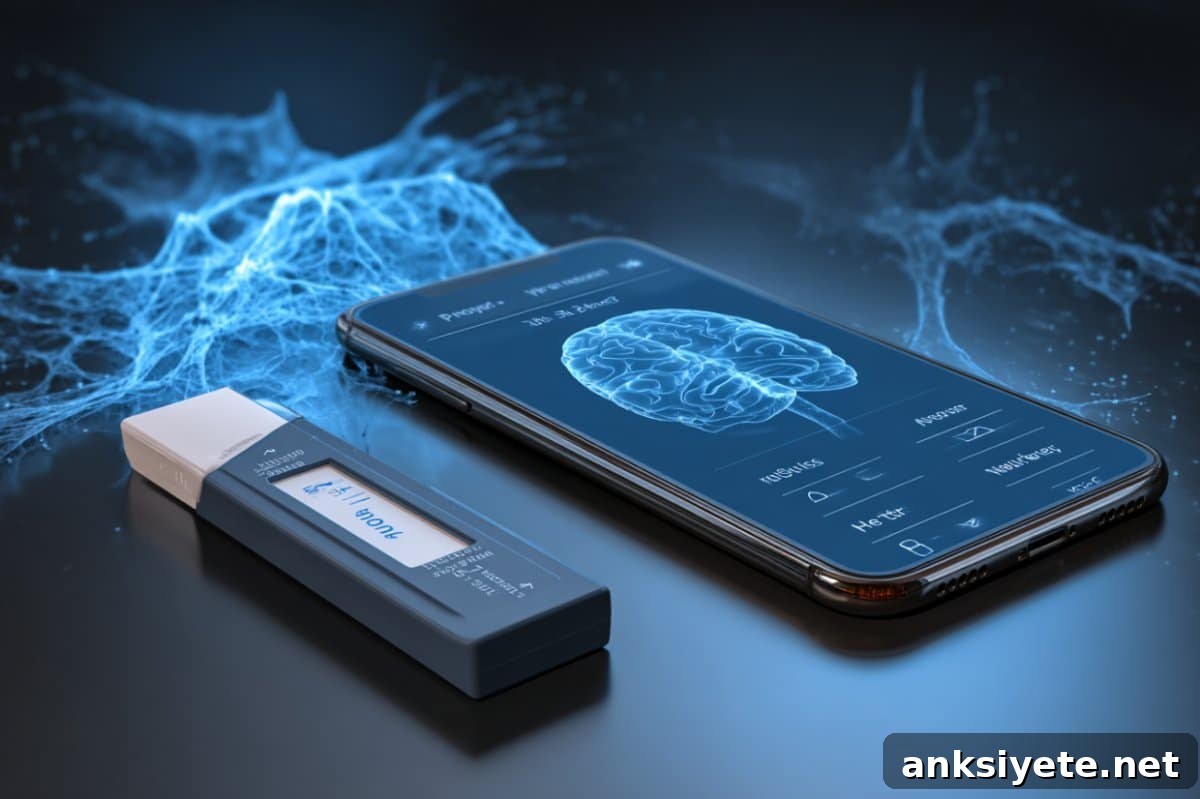
Published in ACS Polymers Au, the study demonstrates that the sensor can reliably detect extremely low BDNF concentrations across a wide salivary range (from 1.0 × 10⁻²⁰ to 1.0 × 10⁻¹⁰ g·mL−1), with an ultralow detection limit of 1.0 × 10⁻²⁰ g·mL−1. The strip is screen-printed on polyester, incorporates modified carbon electrodes, and is designed for long-term storage.
According to the researchers, the next step is securing intellectual property protection for the technology. The team estimates a unit cost of about US$2.19 (less than R$12 at current exchange rates), making the sensor suitable for large-scale, low-cost screening.
Why BDNF matters
BDNF is a critical protein for the growth, maintenance, and plasticity of neurons and plays a central role in learning and memory. Clinical evidence links reduced BDNF levels to mood disorders and cognitive impairment. Typical BDNF values in healthy individuals exceed roughly 20 ng·mL−1, while people with major depressive disorder (MDD) often exhibit levels below 10–12 ng·mL−1. Antidepressant treatment has been shown to restore BDNF levels in some patients, making BDNF a potential biomarker for diagnosis and treatment monitoring.
Global mental health burden is large: the World Health Organization estimates more than one billion people live with mental disorders, with anxiety and depression among the most common. Reports such as the Mental Health Atlas 2024 indicate rising prevalence across countries and populations. In Brazil, for example, worker absences attributed to mental health issues increased 134% between 2022 and 2024, reflecting higher incidence of depression, anxiety, and recurrent depressive episodes.
Lead researcher Paulo Augusto Raymundo Pereira from the São Carlos Institute of Physics (IFSC-USP) notes that the surge in mental health cases and medication use, especially after the COVID-19 pandemic, motivated the group to pursue accessible diagnostic tools. Pereira and collaborators have prior experience developing flexible electrochemical biosensors for noninvasive self-testing of urine-based markers.
The device and method
The disposable strip contains three screen-printed electrodes on polyester: a functionalized working electrode, a carbon auxiliary electrode, and a silver reference electrode. The working electrode is enhanced with carbon nanospheres and coated with polyethylenimine (PEI) and glutaraldehyde to increase sensitivity and provide a matrix for immobilizing a BDNF-specific capture antibody (anti-BDNF). A final ethanolamine layer reduces nonspecific interactions.
BDNF detection depends on antibody–antigen immunocomplex formation at the sensor surface, which changes the electrode’s electron-transfer resistance. This change is measured by electrochemical impedance spectroscopy and translated into a quantitative BDNF concentration. Results are transmitted wirelessly (Bluetooth) and displayed in real time on a smartphone or compatible device.
Compared with conventional laboratory techniques—such as ELISA, electrochemiluminescence, fluorescence assays, and high-performance liquid chromatography—the biosensor requires minimal sample volume, delivers results quickly, and eliminates the need for specialized laboratory infrastructure. The authors emphasize that the platform can be adapted for personalized monitoring and tailored to different clinical profiles.
Funding and team
The study received support from FAPESP through scholarships (16/01919-6, 23/09685-8, 22/02164-0) and thematic projects (23/07686-7 and 20/09587-8). The research team includes Nathalia Gomes, Marcelo Luiz Calegaro, Luiz Henrique Capparelli Mattoso, Sergio Antonio Spinola Machado, and Osvaldo de Oliveira Junior.
Key Questions Answered:
A: It quantifies brain-derived neurotrophic factor (BDNF) in saliva, a protein tied to neuron health and mental well-being.
A: Low BDNF levels are associated with depression, schizophrenia, and cognitive decline; restoring BDNF is part of how some treatments work.
A: By offering a quick, inexpensive, and noninvasive way to measure BDNF, it could help flag early warning signs and monitor treatment response outside traditional labs.
About this mental health and neurotech research news
Author: Heloisa Reinert
Source: FAPESP
Contact: Heloisa Reinert – FAPESP
Image: Credit to Neuroscience News
Original Research: Open access. “Low-Cost, Disposable Biosensor for Detection of the Brain-Derived Neurotrophic Factor Biomarker in Noninvasively Collected Saliva toward Diagnosis of Mental Disorders” by Paulo Augusto Raymundo Pereira. Published in ACS Polymers Au.
Abstract
Low-Cost, Disposable Biosensor for Detection of the Brain-Derived Neurotrophic Factor Biomarker in Noninvasively Collected Saliva toward Diagnosis of Mental Disorders
Early detection of biomarkers for neuropsychiatric and neurodegenerative conditions supports timely diagnosis, treatment, and wellness interventions. This study presents an inexpensive, disposable electrochemical immunosensing strip for rapid, decentralized detection of BDNF in human saliva.
The sensor uses a screen-printed carbon electrode functionalized with carbon spherical shells (CSSs), polyethylenimine (PEI), and glutaraldehyde to boost sensitivity. After optimization, the device achieved a wide dynamic range from 1.0 × 10⁻²⁰ to 1.0 × 10⁻¹⁰ g·mL−1, a response time under three minutes, and an ultralow detection limit of 1.0 × 10⁻²⁰ g·mL−1 for salivary BDNF.
The immunosensor demonstrated high selectivity, reproducibility, robustness, stability, and long-term storage capability. At a cost below US$2.19 per unit, it enabled rapid BDNF detection in saliva from healthy volunteers with minimal interference from other salivary components.
Environmental impact was evaluated using established green analytical metrics, confirming the device’s sustainable profile. Overall, the disposable BDNF immunosensor offers a rapid, reliable, and cost-effective tool for decentralized salivary analysis, with potential applications in mental healthcare, monitoring, and diagnostics related to neurotrophin biomarkers.