
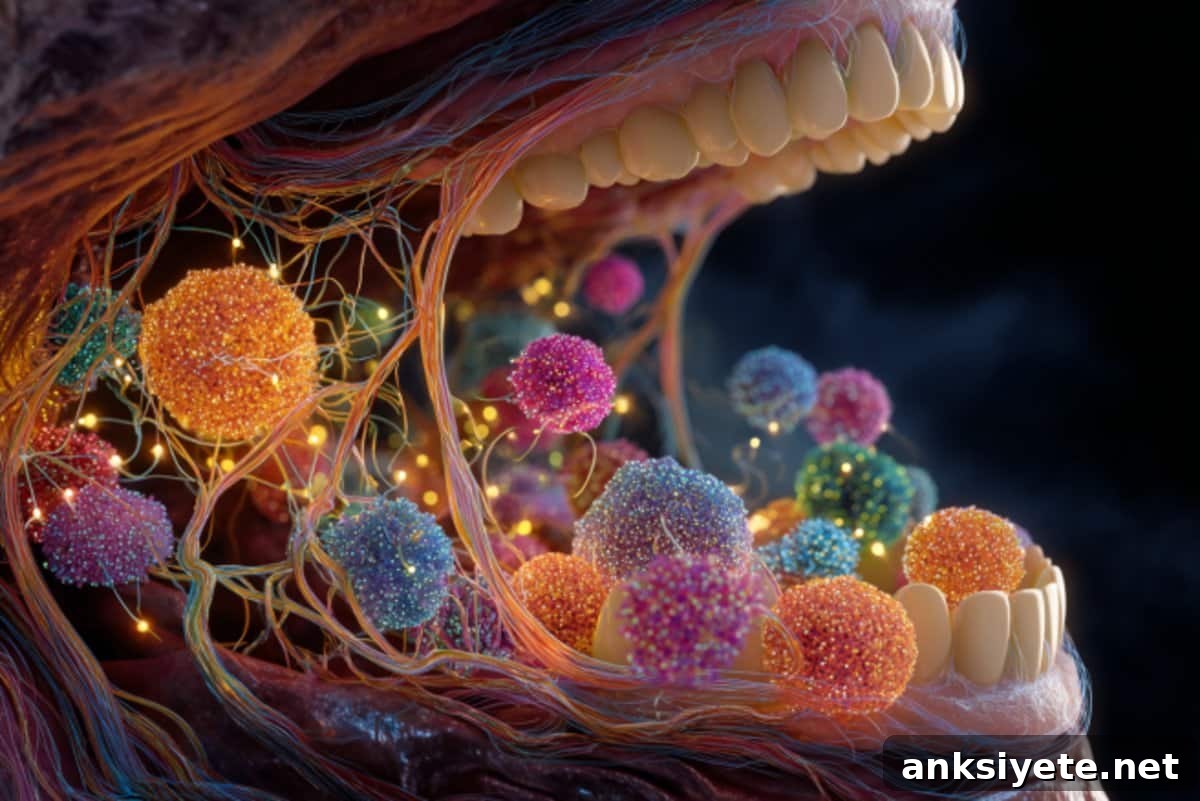
Summary: Researchers report that people with multiple sclerosis (MS) have a markedly altered oral microbiome—characterized by a loss of beneficial bacterial species alongside an increase in microbes associated with inflammation. Using comprehensive genetic and metabolic profiling, the team also found that saliva from MS patients contains lower levels of hypotaurine, a metabolite tied to antioxidant defenses and nerve protection.
These combined microbial and metabolic differences suggest the mouth’s bacterial community may influence immune activity in MS. The findings point to the potential for simple saliva-based diagnostics and new therapies that restore healthy oral microbial communities to support neurological health.
Key Facts:
- Distinct oral microbiome: People with MS showed reduced levels of beneficial early-colonizing bacteria and increased abundance of inflammation-associated microbes.
- Metabolic signature: Saliva from MS patients had lower hypotaurine levels, a metabolite linked to antioxidant protection and nerve health.
- Clinical potential: Noninvasive saliva testing could one day help detect or monitor MS, and microbiome-restoring therapies may offer a new avenue for treatment.
Source: University of Iowa
Overview: Most public discussion about microbiomes focuses on the gut, but the body contains diverse microbial ecosystems in many locations. The oral microbiome—one of the most complex after the gut—has been relatively understudied in neurological disease. New research from University of Iowa Health Care delivers the most comprehensive genetic and metabolic analysis to date of the oral microbiome in multiple sclerosis, revealing clear differences between people living with MS and healthy individuals.
“While prior work has emphasized the gut’s role in MS, the mouth is an abundant microbial environment linked to inflammatory and neurodegenerative conditions,” says Ashutosh Mangalam, PhD, professor of pathology at the University of Iowa and senior author of the study published in npj Biofilms and Microbiomes. “Our results show measurable changes in both the bacteria and small molecules in saliva from people with MS, indicating a broader disruption of the oral ecosystem.”
Although current MS treatments can slow disease activity and help manage symptoms—such as muscle weakness, balance disturbances, visual problems, and cognitive changes—there is no cure. By identifying reproducible microbial and metabolite changes in saliva, the study points to new opportunities for diagnosis and treatment that are simpler and less invasive than current approaches.
MS is associated with a loss of beneficial bacteria and enrichment of potentially harmful species
The research team combined shotgun metagenomic sequencing with untargeted metabolomics to capture both the bacterial composition and the small-molecule metabolic profile in saliva. They examined samples from 50 people with relapsing–remitting MS (RRMS), the most common MS subtype, and 50 healthy controls.
Compared with healthy participants, those with MS displayed an oral microbiome marked by a decline in beneficial “early colonizer” bacteria—such as Streptococcus and Actinomyces—which normally help establish a balanced oral community. At the same time, species with pathogenic potential were enriched, including Fusobacterium nucleatum, Porphyromonas gingivalis, and several Prevotella species.
Metabolically, saliva from people with MS showed a distinct profile, notably lower levels of hypotaurine. Hypotaurine contributes to antioxidant defenses and has roles in supporting nerve cell health; the study suggests its reduction is linked to the altered oral bacterial community in MS.
Taken together, these bacterial and metabolic shifts indicate the oral ecosystem in MS may contribute to inflammation and disease processes that affect the nervous system.
The researchers also applied a novel machine-learning method called topic modeling to identify groups of coexisting bacteria—microbial communities that work together. This approach highlighted networks present in healthy mouths that were significantly depleted in MS patients: five distinct microbial communities were lost, consistent with a breakdown in the cooperative microbial structure that supports oral health.
“By integrating microbial composition, functional capacity, and metabolite data, we identified specific taxa and metabolic signatures that could influence immune responses in MS,” Mangalam explains. “This study expands the focus beyond the gut and brain to show the mouth as an important site of immune–microbial interaction in MS.”
Opportunities for diagnostics and therapies
The findings open practical avenues for innovation. Because saliva collection is simple and noninvasive, the oral microbiome and salivary metabolome could become useful biomarkers for detecting MS, monitoring disease activity, or tracking treatment response. Microbiome profiling may yield diagnostic signatures, and measuring hypotaurine or related metabolites in saliva could provide easily obtained markers for clinical use.
Moreover, the oral microbiome is relatively accessible compared with the gut, making it a promising target for therapeutic strategies designed to restore beneficial bacteria and rebalance microbial communities—approaches that could complement existing MS treatments and improve patient outcomes.
The multidisciplinary team included investigators from the University of Iowa Carver College of Medicine, College of Dentistry, College of Public Health, College of Nursing, and Holden Comprehensive Cancer Center. Contributors included Rachel Fitzjerrells (lead author), Leeann Aguilar Meza, Meeta Yadav, Heena Olalde, Mishelle Paullus, Jemmie Hoang, Catherine Cherwin, Tracey Cho, Grant Brown, Sukirth M. Ganesan, and others, under the leadership of Ashutosh Mangalam.
Funding: The research received partial support from grants provided by the National Institutes of Health.
Key Questions Answered:
A: People with MS show a disrupted oral microbiome characterized by reduced abundance of beneficial early colonizers (for example, Streptococcus and Actinomyces) and increased levels of inflammation-associated bacteria such as Fusobacterium nucleatum, Porphyromonas gingivalis, and several Prevotella species. This dysbiosis may promote immune imbalance linked to MS progression.
A: The study identified distinct salivary biomarkers in people with MS, including decreased hypotaurine, a metabolite involved in antioxidant defense and nerve health. These metabolic changes, together with microbial signatures, suggest saliva-based tests could help detect or monitor MS in the future.
A: The oral microbiome is one of the body’s most complex microbial ecosystems and can influence systemic immune responses. Mapping how oral bacteria interact with metabolic and immune pathways reveals mechanisms by which microbial imbalances in the mouth may affect the nervous system and contribute to inflammation in MS.
About this multiple sclerosis research news
Author: Jennifer Brown
Source: University of Iowa
Contact: Jennifer Brown – University of Iowa
Image: The image is credited to Neuroscience News
Original Research: Open access. “Multiple sclerosis patients exhibit oral dysbiosis with decreased early colonizers and lower hypotaurine level” by Ashutosh Mangalam et al., published in npj Biofilms and Microbiomes.
Abstract
Multiple sclerosis patients exhibit oral dysbiosis with decreased early colonizers and lower hypotaurine level
Although dysbiosis of the gut microbiome has been implicated in multiple sclerosis, the role of the oral microbiome—the second largest human microbiome—remains incompletely understood. The salivary metabolome has been linked to other neurodegenerative conditions, but its relationship to relapsing–remitting MS (pwRRMS) has not been well characterized.
By combining shotgun metagenomics with untargeted metabolomics, the study identified reduced abundance of several early-colonizing species, including Streptococcus and Actinomyces, in pwRRMS, along with enrichment of bacteria with pathogenic potential such as Fusobacterium nucleatum, Porphyromonas gingivalis, and multiple Prevotella species. Individuals with pwRRMS also showed an altered salivary metabolite profile, notably decreased hypotaurine compared with healthy controls.
These results demonstrate altered oral microbiome and metabolome profiles in pwRRMS that may contribute to MS pathobiology. The findings support the potential for microbiome- and metabolome-based diagnostic biomarkers for MS and point toward novel therapeutic strategies aimed at restoring healthy oral microbial communities to improve disease management and patient outcomes.