
Summary: Researchers have created AI-generated “visual anagrams” — images that appear as one object in one orientation and transform into a different object when rotated — to probe how the brain processes perception. Unlike typical optical illusions, these rotating images let scientists present exactly the same visual input while changing high-level interpretation, enabling precise study of size, animacy, emotion, and other perceptual attributes.
Initial experiments show that people’s preferences and judgments still align with real-world size expectations even when observing the identical image in different orientations. This method provides a powerful new tool for perception and cognitive neuroscience, allowing researchers to separate high-level effects from low-level visual confounds in ways that were previously difficult or impossible.
Key Facts:
- AI Visual Anagrams: The team used AI-driven image synthesis to produce single pictures that read as one object upright (for example, a bear) and a different object when rotated (for example, a butterfly).
- Isolating Perception: Because the images are pixel-identical across orientations, scientists can examine how viewers interpret size, emotion, animacy, and implied motion without the usual lower-level visual differences like texture or color driving the effect.
- New Research Tool: The approach opens many possibilities for psychology and neuroscience experiments, from studying how the brain represents living versus nonliving items to testing preferences and emotional responses.
Source: JHU
AI-generated images that change identity when rotated are helping scientists study the human mind.
A research team at Johns Hopkins University developed an approach to produce “visual anagrams” — images whose interpretation switches completely with orientation. The work supplies a needed set of uniform stimuli for rigorously testing how people mentally organize visual information across a wide range of high-level categories.
“These images are important because we can use them to study effects that were previously difficult to isolate — everything from perceived size to animacy to emotion,” said Tal Boger, a PhD student and the study’s first author. Senior author Chaz Firestone, who directs the Perception & Mind Lab, added that the images are also enjoyable to view.
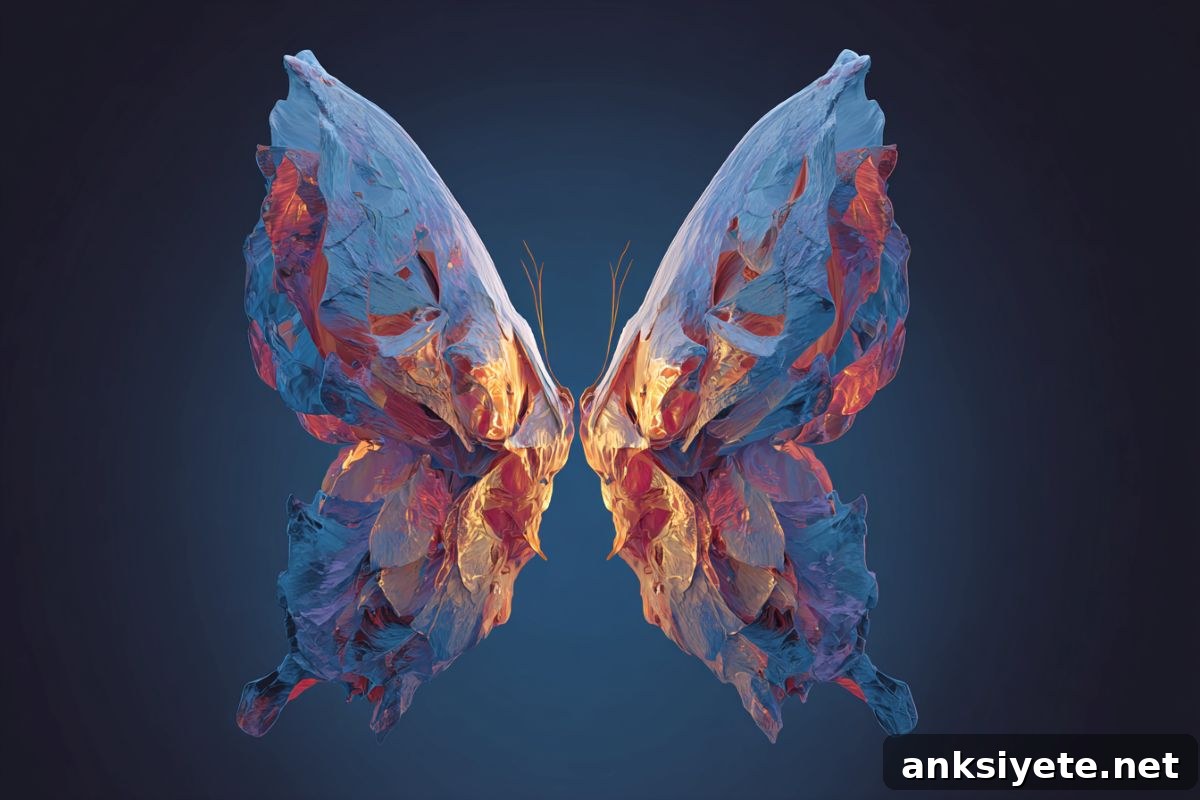
The researchers adapted recent diffusion-based image synthesis methods to generate visual anagrams. As with a verbal anagram, where the same letters form different words, a visual anagram presents the same pixels arranged so that one orientation evokes one object and another orientation evokes a different one. Examples from the study include single images that read as both a bear and a butterfly, an elephant and a rabbit, or a duck and a horse depending on rotation.
Firestone emphasized the methodological breakthrough: “If the same pixels look like a butterfly in one orientation and a bear in another, we can study how people perceive aspects of images without the usual confounds. That lets us test hypotheses about high-level representations with unprecedented precision.” The study’s results were published in Current Biology.
The team focused initial experiments on perceptions of real-world size, a long-standing challenge in perception science. Typical studies compare distinct images of big and small objects, but those images also differ along many low-level dimensions — shape, texture, color, or detail — leaving ambiguity about what drives neural or behavioral differences.
“If we want to know how the brain responds to size, showing different objects creates confounds: the items differ in many visual properties besides size,” Firestone explained. “Visual anagrams let us present a large-seeming object in one orientation and a small-seeming one in another, while the actual pixel content remains the same.”
Across multiple experiments, the researchers observed many classic real-world size effects even when the large and small interpretations came from rotated versions of the identical image. For example, prior work shows that people typically prefer images sized to match their real-world counterparts — they like pictures of big things to appear big and small things to appear small. With visual anagrams, participants consistently adjusted the same image to larger sizes when they perceived it as a large object (e.g., a bear) than when they perceived it as a small object (e.g., a butterfly).
Beyond size, the team anticipates using visual anagrams to investigate how the brain distinguishes animate from inanimate objects, and how emotional or action-related cues affect perception. Because animate and inanimate categories recruit different neural systems, anagrams that shift between, say, a truck and a dog could reveal how those systems respond to identical visual input that only differs in perceived category.
“We used visual anagrams to study size, but the approach is general,” Firestone said. “Researchers can adapt it to study animacy, emotion, implied motion, and many other aspects of visual cognition.”
Key Questions Answered:
A: Single images created with AI that look like one object in one orientation and a completely different object when rotated, enabling study of high-level perception with identical stimuli.
A: They permit researchers to isolate how people interpret attributes such as size, animacy, and emotion without confounding differences in color, texture, or other low-level features.
A: Participants preferred image sizes consistent with real-world expectations even when the two interpretations were produced by the exact same pixels rotated into different orientations.
About this AI and visual neuroscience research news
Author: Jill Rosen
Source: JHU
Contact: Jill Rosen, JHU
Image: Image credited to Neuroscience News
Original Research: Open access. “Visual anagrams reveal high-level effects with ‘identical’ stimuli” by Tal Boger et al., Current Biology.
Abstract
Visual anagrams reveal high-level effects with ‘identical’ stimuli
A central question in psychology and neuroscience asks how the mind represents not only lower-level stimulus properties like luminance, contrast, or spatial frequency, but also higher-level attributes such as animacy, emotion, and real-world size. Many findings suggest that these high-level properties are encoded automatically, steer visual attention, and shape neural responses. However, interpreting such results is challenging because high-level categories often covary with lower-level visual features, making it difficult to determine what actually drives observed effects.
To address this problem, the authors introduce a diffusion-based method for producing visual anagrams — images whose interpretation shifts dramatically with orientation (for example, a cow upright and a mouse inverted). Using real-world size as a case study, they generated anagrams that depict a canonically large object in one orientation and a canonically small object in another, then placed these stimuli in classic experimental paradigms.
Across five experiments, many established effects of real-world size persisted even when large and small interpretations came from the same underlying image. These results demonstrate that certain high-level perceptual effects can be observed with stimuli that are pixel-identical across interpretations, offering a broadly applicable tool for future work in perception and cognitive neuroscience.