
Summary: Researchers investigated how people evaluate honesty when information comes from friends versus strangers, using brain imaging to observe decision-making in contexts that involved potential gains or losses. Volunteers were more likely to accept deceptive statements when those statements promised a benefit, and the researchers identified brain networks tied to risk assessment, reward processing, and intention understanding that underlie those judgments.
Shared neural activity between friends predicted whether deception would succeed, highlighting how close social ties can influence the way the brain weighs truth and falsehood. The study suggests that friendship can bias people toward believing lies, particularly when believing could lead to a reward.
Key Facts
- Gain Bias: People are more likely to believe deceptive statements when the information implies a potential reward for the pair involved.
- Friend Effect: Neural synchrony between friends correlates with a greater susceptibility to deception compared with interactions involving strangers.
- Neural Circuits: Brain regions associated with reward evaluation, risk assessment, and theory of mind play central roles in determining whether information is judged honest or deceptive.
Source: SfN
Detecting lies depends on processing social information. But how do people evaluate honesty, and does the source of information—a friend versus a stranger—change that process?
Yingjie Liu of North China University of Science and Technology led a team that examined how individuals assess information depending on whether it comes from a friend or a stranger. The researchers designed a controlled experiment combining behavioral choices with neuroimaging to track brain responses while participants made judgments about communicated information.
Published in the Journal of Neuroscience, the study recruited 66 healthy volunteers who sat across from one another and exchanged information through computer screens. The experimental design categorized outcomes as either “gain” contexts, where accepting a message could lead to a mutual benefit for the pair, or “loss” contexts, where accepting the message could lead to a negative outcome. This allowed the team to compare how reward and punishment expectations influenced belief and deception detection.
As contributing author Rui Huang explained, choosing gain and loss contexts enabled the researchers to observe how decision-making shifts in response to potential rewards or punishments. The behavioral results showed a clear tendency: participants accepted false statements more often in gain contexts than in loss contexts.
Brain imaging revealed that this gain bias corresponded with heightened activity in regions involved in reward processing, risk evaluation, and inferring others’ intentions. In other words, when a message promised a benefit, the brain’s reward circuitry became more engaged, which made participants more inclined to believe the communicator—even when the message was deceptive.
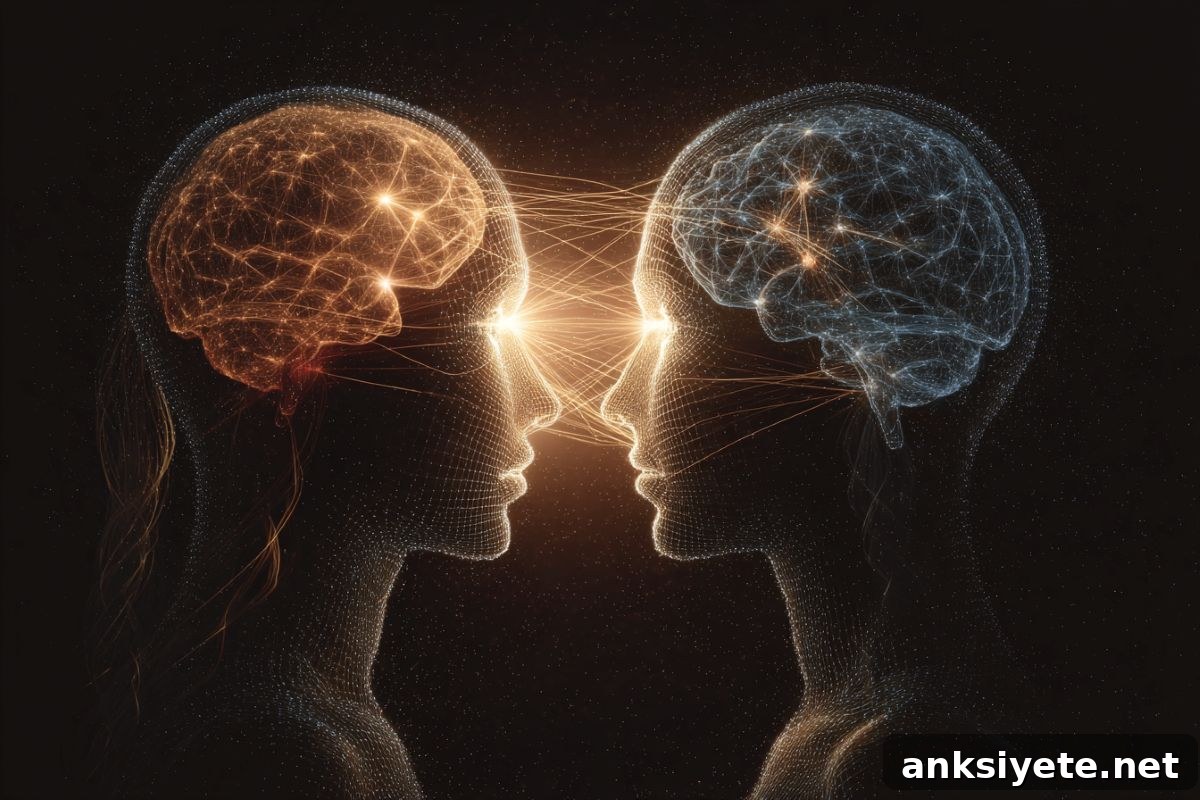
Crucially, the study found that friends displayed synchronized patterns of brain activity while communicating, and that this synchrony changed with context. During gain contexts, neural synchrony increased in reward-related areas; during loss contexts, synchrony was stronger in regions linked to evaluating risk. This dynamic alignment between friends’ brains appeared to predict whether a deceptive message would be accepted.
The ability to use shared neural signatures to forecast deception outcomes underscores how social relationships modulate cognitive processing. When people interact with friends, their brains may become attuned to one another in ways that influence judgment—sometimes increasing trust even when that trust is misplaced.
Taken together, these findings advance our understanding of social neuroscience by showing that the source of information and the potential consequences of believing it jointly shape both behavior and brain function. The research highlights that decisions about honesty are not made in isolation: they emerge from interactions among reward expectations, risk assessment, and interpersonal neural dynamics.
About this social neuroscience research news
Author: SfN Media
Source: SfN
Contact: SfN Media – SfN
Image: The image is credited to Neuroscience News
Original Research: The findings appear in the Journal of Neuroscience