
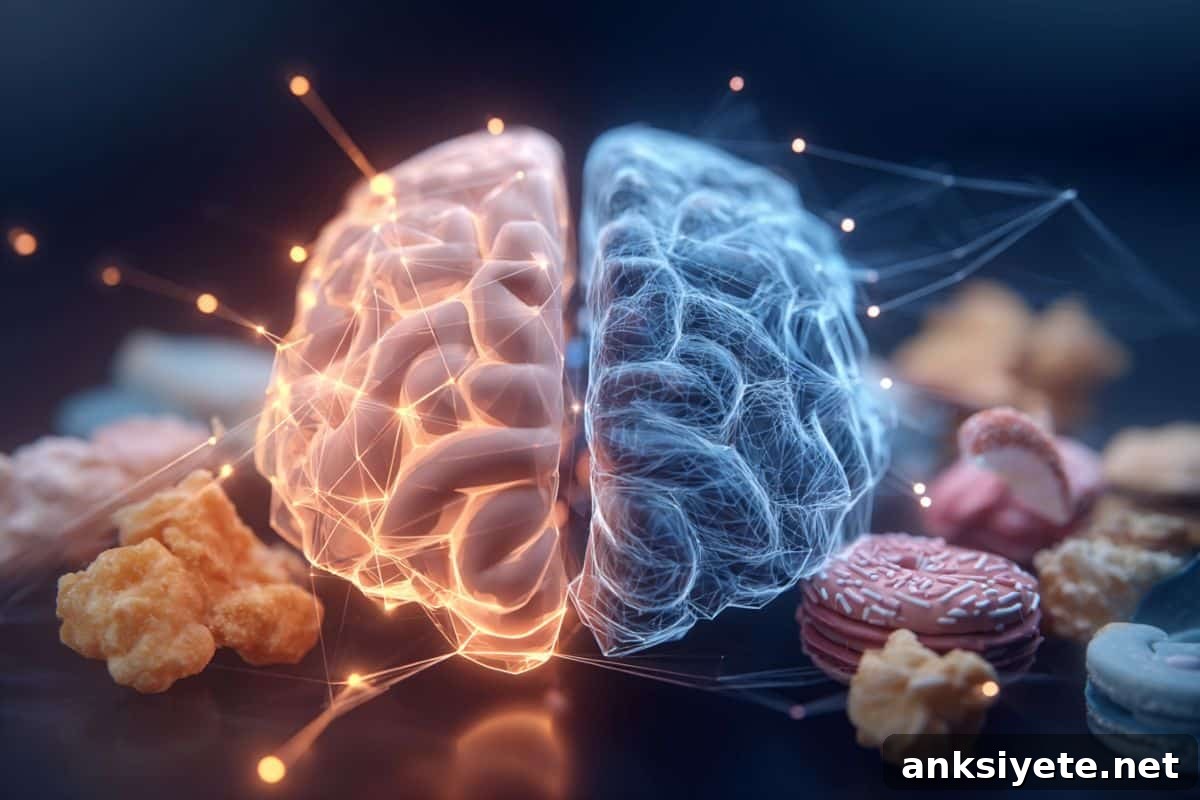
Summary: Scientists have identified a brain circuit in mice that functions like a “dial” for consumption, controlling the drive to eat sweets, fats, salt and other foods. The circuit connects sweet-responsive neurons in the amygdala to the bed nucleus of the stria terminalis (BNST), a brain region linked to feeding, reward and the regulation of appetite.
Activating this pathway drives mice to continue eating even after they are sated, while suppressing it reduces consumption even in hungry animals. These results point to a precise neural hub that calibrates consummatory behavior and could inspire targeted approaches for treating eating disorders, cancer-associated appetite loss (cachexia) and obesity.
Key Facts
- Brain Dial: The BNST acts as a central regulator of appetite for sweets, fats, salt and general food intake.
- Bidirectional Control: Stimulating BNST-connected neurons increases consumption; inhibiting them suppresses appetite.
- Clinical Potential: Insights may inform therapies for cachexia in chemotherapy patients and improve weight-loss treatments with fewer side effects.
Source: Zuckerman Institute
Overview It is common to crave sugar when tired or seeking a quick energy boost. Researchers at Columbia University’s Zuckerman Institute have now mapped a circuit in mice that links sweet sensation to a broader drive to consume food, including fats and salt. The study reveals a neural mechanism that amplifies or suppresses consummatory behavior, acting as a modulatory “dial” for eating.
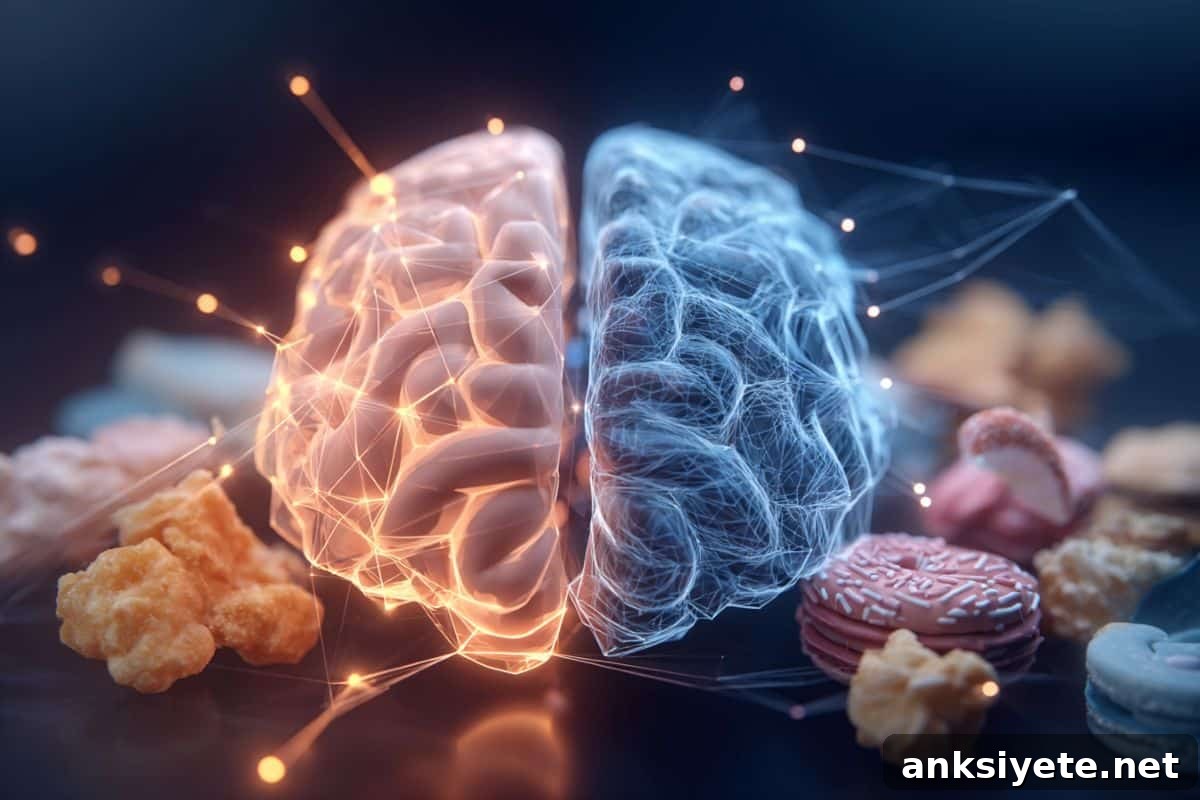
Charles S. Zuker, PhD, the study’s corresponding author and a principal investigator at the Zuckerman Institute, explained that the link between palatable stimuli and their power to drive consumption has been an open question in neuroscience. This research clarifies how a specific amygdala-to-BNST pathway converts sensory cues into motivated eating and broader consummatory responses.
The research team began by examining how neurons in the central amygdala respond to sweetness. They identified a population of amygdala neurons that activate in response to sweet tastes and traced their projections into the BNST, a structure previously associated with feeding, reward and internal state integration. By manipulating this circuit in mice, the team tested its role in driving consumption.
When BNST-projecting neurons were experimentally stimulated, mice that had recently eaten to satiety were driven to continue consuming sweets. In contrast, suppressing BNST activity strongly reduced sweet consumption even when animals were food-deprived. Further experiments showed that the BNST’s influence was not limited to sugar: it also regulated intake of salt, fatty foods and general chow.
Co-lead author Li Wang, PhD, noted that the team was surprised by the BNST’s broad role. Rather than being narrowly tuned to one taste or nutrient, the BNST appears to act as a general hub that integrates sensory input with internal physiological needs to shape appropriate consummatory behavior.
Anatomical mapping revealed connections between the BNST and other brain regions that signal internal state—such as hunger or salt deficiency—helping explain how the BNST can modulate eating according to the body’s needs. Ensemble recordings using single-cell functional imaging showed that BNST activity encodes both stimulus identity and the animal’s internal state, supporting a model in which the BNST translates appetitive signals into actual consumption.
The practical implications are noteworthy. In mouse models treated with a chemotherapy drug that induces cachexia-like symptoms, stimulating the BNST helped protect against weight loss, suggesting a potential strategy for counteracting the severe loss of appetite and muscle wasting seen in some cancer patients. Conversely, inhibiting the BNST produced substantial weight loss, highlighting the circuit’s potential as a target for reducing intake.
The study also identified that semaglutide, a GLP-1 receptor agonist used in weight-loss therapy, targets neurons in the BNST. This offers a possible explanation for how such medications reduce consumption and suggests that a deeper understanding of BNST function could guide development of appetite-suppressing therapies with fewer adverse effects like nausea.
About this neuroscience research news
Author: Zuckerman Communications
Source: Zuckerman Institute
Contact: Zuckerman Communications – Zuckerman Institute
Image: Image credit: Neuroscience News
Original Research (open access): “A Brain Center that Controls Consummatory Responses” by Charles S. Zuker et al., published in Cell. The paper details how amygdala neurons tuned to sweet connect to the BNST and how BNST activity bidirectionally regulates consumption, linking sensory signals to internal state.
Abstract
A Brain Center that Controls Consummatory Responses
The innate attraction to sweet stimuli mediates appetitive and consummatory behaviors. This work dissects the circuit driving responses to sweet taste and shows that amygdala neurons tuned to sweet connect to the BNST to promote sweet-evoked consumption.
The BNST functions as a central hub that transforms appetitive signals into consumption, linking sensory inputs with internal state not only for sweet but also for other stimuli such as salt and food, thereby flexibly regulating consummatory behaviors.
Single-cell functional imaging demonstrates that ensemble activity in the BNST encodes both stimulus identity and the animal’s internal state. Manipulating BNST activity can bidirectionally alter consummatory responses.
These findings describe how internal state modulates sensory responses, characterize a general neural “dial” for consumption, and provide insights into sites of action for GLP-1 receptor agonists as well as strategies to promote weight gain in pathological states such as cachexia.