
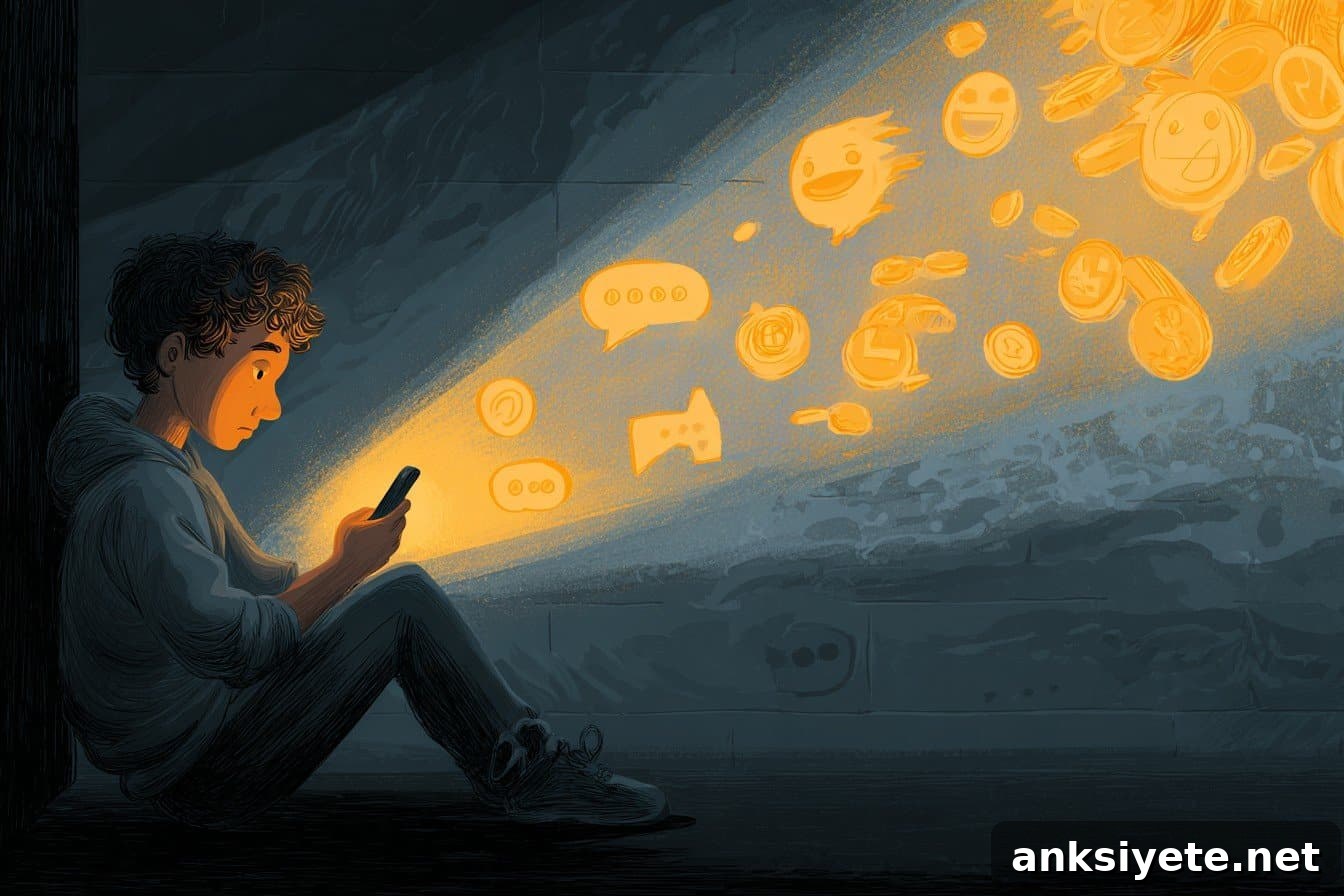
Summary: A new experimental study led by researchers at the University of Cambridge finds that adolescents are highly sensitive to even brief periods of social isolation. After only a few hours without face-to-face contact, teenagers showed a marked increase in motivation to obtain rewards. While this heightened drive can promote reconnection, it may also raise the risk of unhealthy or risky reward-seeking when social contact is unavailable.
When participants were allowed to use social media during the brief isolation period, they reported lower levels of loneliness and displayed a smaller increase in reward-seeking behavior. These results underline both the dangers of social isolation in adolescence and the more complex, potentially buffering role that virtual social interaction can play in young people’s emotional and motivational states.
Key Facts
- Isolation sensitivity: Adolescents increased their efforts to obtain rewards after only a few hours of being alone.
- Social media buffer: Access to virtual interaction reduced feelings of loneliness and tempered changes in reward-seeking.
- Dual impact: Increased reward motivation can facilitate social reconnection but may also encourage risky behaviors if social contact is not possible.
Source: University of Cambridge
Overview
Social connection is a fundamental human need, and adolescence is a period when social ties and peer relationships are especially important. This study used controlled, short-term isolation sessions to examine how brief separations from others affect adolescents’ feelings of loneliness, motivation for rewards, and learning about rewards. The findings show that even short, experimentally imposed isolation produces measurable changes in motivation and learning among 16–19-year-olds.
Researchers report that isolation for three to four hours led adolescents to work harder for rewards, including viewing positive social images and playing games where they could win money. Participants also showed faster learning in reward-based tasks. Crucially, those who felt lonelier during isolation experienced the strongest increases in reward responsiveness.
When virtual social interaction was available during isolation—primarily through messaging apps such as Snapchat, Instagram and WhatsApp—participants reported less state loneliness and were less driven to pursue external rewards compared with when they had no access to social interaction. However, access to social media did not prevent a decrease in positive mood, which was similar whether or not virtual interaction was available.
Why this matters
The study sheds light on a key mechanism linking social isolation and adolescent behavior: isolation raises reward sensitivity, which can motivate people to reconnect. That adaptive response may become maladaptive when safe social reconnection is not possible, potentially increasing the likelihood of risky behaviors such as substance use. The findings highlight why even short-term isolation deserves attention in discussions about adolescent mental health and risk prevention.
Study design and methods
Forty adolescents aged 16–19 were rigorously screened to create a sample with typical social connections and no history of mental health conditions. Each participant completed baseline assessments and then attended two experimental sessions on separate days. In each session they spent three to four hours alone in a room, followed by a set of computer-based tasks measuring reward motivation and reward learning. On one day they had no social interaction; on the other they were allowed virtual contact via phone or laptop. The order of conditions was counterbalanced across participants.
Researchers used self-report measures of state loneliness together with behavioral tasks and computational modeling to quantify changes in reward-seeking and learning. Nearly half of participants who could use social media spent more than half their isolation time engaging with friends online.
About this loneliness and neurodevelopment research news
Author: Jacqueline Garget
Source: University of Cambridge
Contact: Jacqueline Garget – University of Cambridge
Image: The image is credited to Neuroscience News
Original Research: Open access. “Acute isolation is associated with increased reward seeking and reward learning in human adolescents” by Livia Tomova et al., published in Communications Psychology (DOI available in the journal).
Abstract (summary)
This experimental study explored how acute, short-term isolation affects adolescent loneliness, reward seeking and reward learning. Using sessions with and without access to virtual social interactions, and comparing both to a baseline, the researchers found that state loneliness increased over the duration of isolation. Isolation was associated with faster decisions to exert effort for rewards and improved reward learning, with stronger effects in participants who reported higher loneliness. Access to virtual interaction reduced state loneliness and tempered these reward-related changes, indicating that isolation raises adolescents’ reward responsiveness—a key driver of motivation and decision-making.