
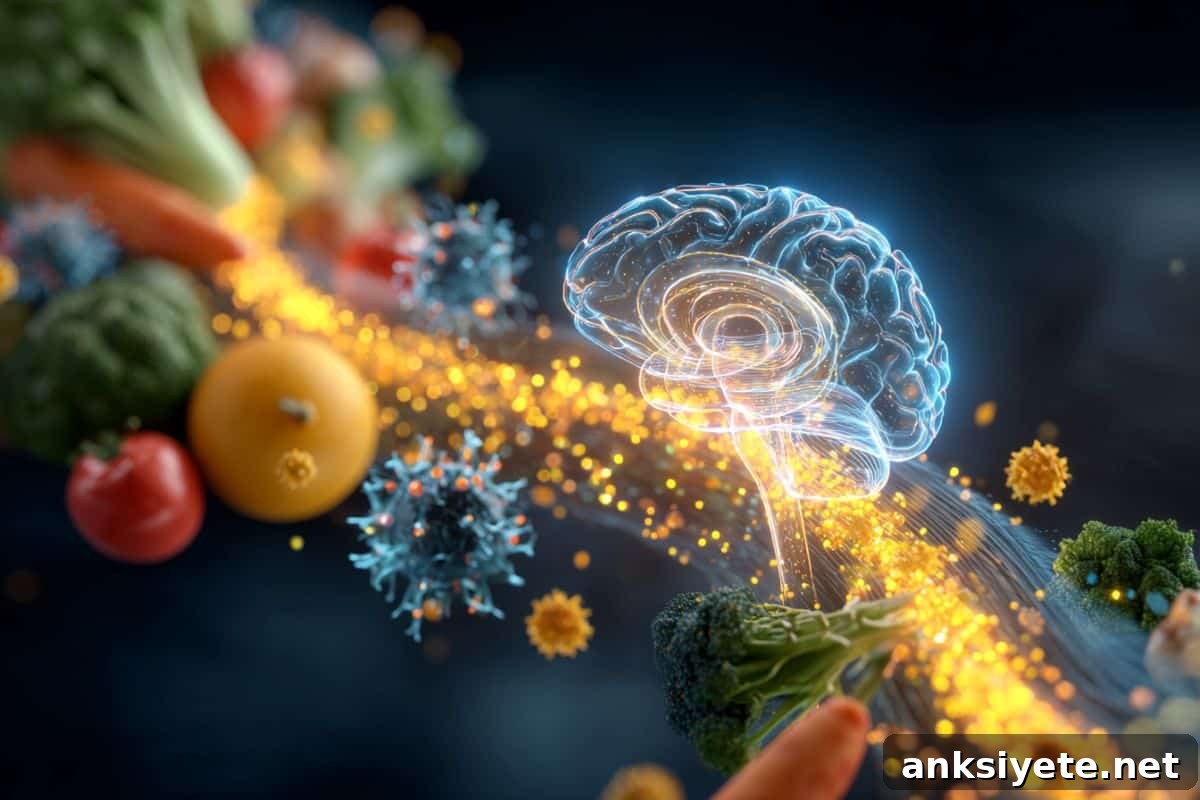
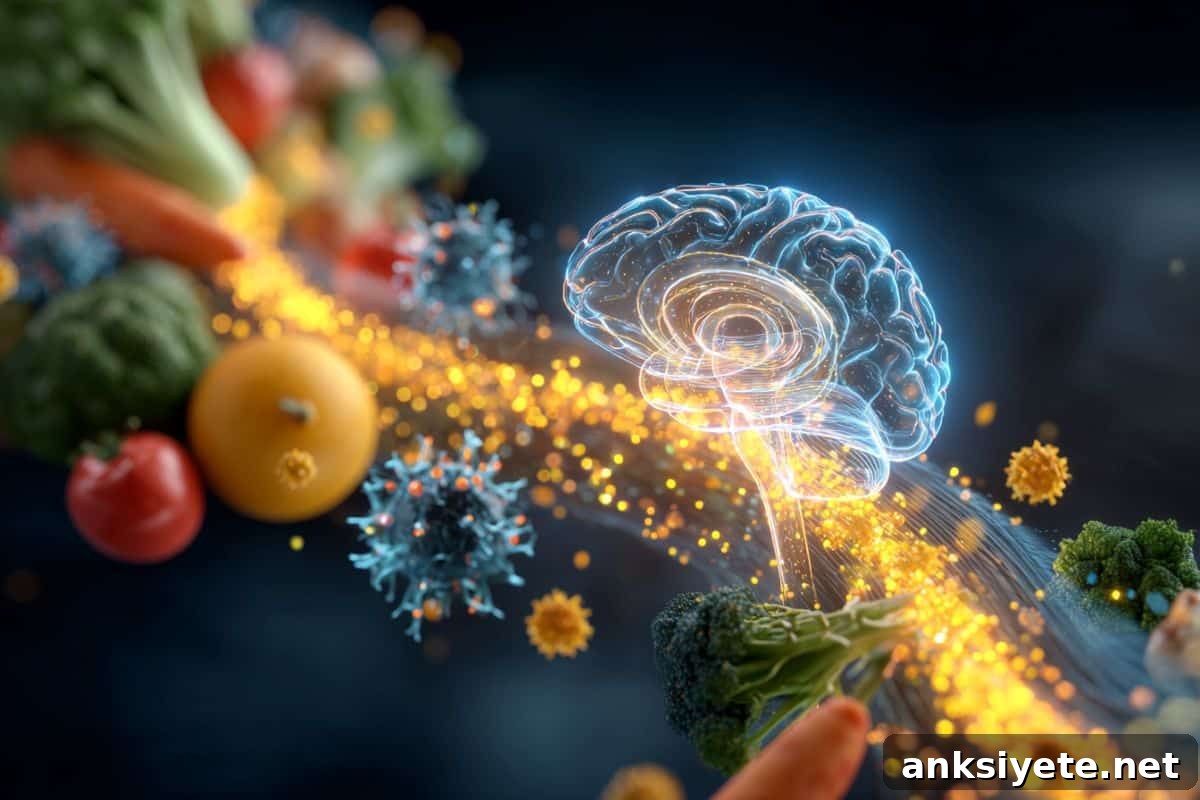
Summary: Scientists at the Buck Institute have identified an unexpected connection between gut immune cells and the brain in a mouse model of Alzheimer’s disease. Antibody-producing B cells that normally live in the gut appear to migrate into brain border regions, guided by chemokine signals produced by inflammatory brain cells.
When the mice were fed a high-fiber diet rich in the prebiotic inulin, gut immune balance was restored and measures of AD-related frailty improved, even though the diet did not consistently reduce amyloid plaque burden. These results point to a gut–immune–brain axis as a promising target for new therapies and interventions that aim to preserve cognitive health and extend healthspan.
Key facts
- Immune migration: Gut-derived B cells with a migratory signature were found in brain border regions of Alzheimer’s model mice, apparently attracted by chemokines from reactive glial cells.
- Dietary effect: Feeding mice the prebiotic fiber inulin restored gut immune cell populations and reduced frailty symptoms, including tremor.
- Healthspan improvement: Although plaque levels were not consistently lowered, mice on the high-fiber diet showed measurable gains in overall health and quality of life.
Source: Buck Institute
The gut holds the body’s largest collection of immune cells.
A new study from the Buck Institute provides a detailed look at how gut-resident immune cells interact with the brain during neurodegeneration. The team’s findings, published in the August 29, 2025 issue of Cell Reports, describe gut B cells that normally help maintain microbiome balance shifting toward the brain’s border spaces in a mouse model of Alzheimer’s disease (AD).
“This paper brings the gut immune system to the forefront of neurodegenerative disease pathology,” says Daniel Winer, MD, associate professor at the Buck Institute and co-senior author. “Given how large the gut immune compartment is and the cells’ capacity to travel, it makes biological sense that these cells could influence systemic and brain physiology.”
Julie Andersen, PhD, professor and co-senior author, adds: “To our knowledge, this is the most in-depth investigation of the gut immune system in a neurodegenerative disease model to date. The approach opens new avenues to study related conditions such as Parkinson’s disease and multiple sclerosis.”
Lead author Priya Makhijani, PhD, a postdoctoral fellow with appointments in the Winer and Andersen laboratories, identified a specific subset of antibody-producing B cells that are normally important for maintaining harmony between the microbiome and gut immunity. In the Alzheimer’s model mice, this B cell population was depleted in the gut.
Makhijani and colleagues also detected a migratory molecular signature on those B cells. They found gut-specific B cells and their migratory receptors not only in the brain but particularly in its border layer, the meningeal dura mater.
“Remarkably, we observed immune cells in the brain borders that recognize gut bacteria accumulating in the AD brain,” Makhijani says.
To understand why gut B cells were lost, the team examined chemokine signaling. They found that a chemokine known to mediate immune cell migration was produced at higher levels by reactive glia in the Alzheimer’s brain. Data mining of previously published human AD datasets revealed a similar migratory signature, suggesting relevance beyond the mouse model.
Collaborators at the University Health Network in Toronto contributed blocking experiments that used a small-molecule inhibitor to interfere with the chemokine axis, supporting the idea of a long-range mechanism connecting brain inflammation and gut immune recruitment.
Benefits of a high-fiber diet
When mice were given the prebiotic fiber inulin, the gut immune imbalance improved: the migrating B cell population was replenished in the gut, and AD-related frailty—measured across a range of behavioral and physiological traits, including tremor—was reduced.
Inulin fermentation produces short-chain fatty acids and other metabolites that concentrate in the gut and can reach the circulation. The researchers report that the diet improved gut health and reduced chemokine signaling from the brain, illustrating a bi-directional relationship between gut and brain.
Winer notes that although the high-fiber regimen did not reliably lower amyloid plaque levels in the brain, it did improve overall wellbeing. “Using an assay that evaluated 31 aging-related metrics, the diet extended healthspan and gave the animals a better quality of life,” he says. “These results reinforce general dietary guidance to increase fruit, vegetable and fiber consumption.”
The big picture
This study maps comprehensive changes in gut immunity during neurodegeneration, but the authors emphasize that more research is needed to determine causality: are gut immune changes triggered by brain pathology, or can they actively promote disease progression?
One proposed scenario is that age-related insults initiate inflammation in the brain, prompting chemokine signals that recruit gut immune resources. Initially protective, this response may eventually compromise gut ecosystems, allowing opportunistic bacteria to flourish and fueling systemic inflammation that worsens neural decline.
Makhijani is optimistic about the translational potential: “We may be able to identify microbiome signatures or specific bacteria that increase neurological risk. Intervening by modulating the microbiome, inhibiting chemokine signaling at the right stage, or restoring beneficial gut immunity could offer protective strategies against neurodegenerative disease.”
Collaborators Taylor R. Valentino, Max Manwaring-Mueller, Rohini Emani, Wei-Chieh Mu, Carlos Galicia Aguirre, Anand Rane, Kenneth A. Wilson, Alexander Kifle, Huixun Du, Fei Wu, Jenny Hong Yu Ng, Benjamin D. Ambrose, Prasanna Vadhana Ashok Kumaar, David Furman, Birgit Schilling, and Lisa M. Ellerby. Additional coauthors: Christopher Ryan Tan, Saad Khan, Chao Wang, Arthur Mortha, and Olga L. Rojas, Department of Immunology, University of Toronto; Nan Chen, Division of Cellular & Molecular Biology, Toronto General Hospital Research Institute; Shawn Winer, Department of Laboratory Medicine & Pathology, University of Toronto.
Funding: The work was supported by NIH grants 3RF! AG062280-01S1, NIA T32 AG000266, AG066591, PO1AG06659.
COI disclosure: Daniel Winer is co-founder of Proprion Inc., a company focused on gut immune and metabolite-based interventions for aging and related diseases.
About this Alzheimer’s disease research news
Author: Kris Rebillot
Source: Buck Institute
Contact: Kris Rebillot – Buck Institute
Image: The image is credited to Neuroscience News
Original Research: The findings are reported in Cell Reports (August 29, 2025).