
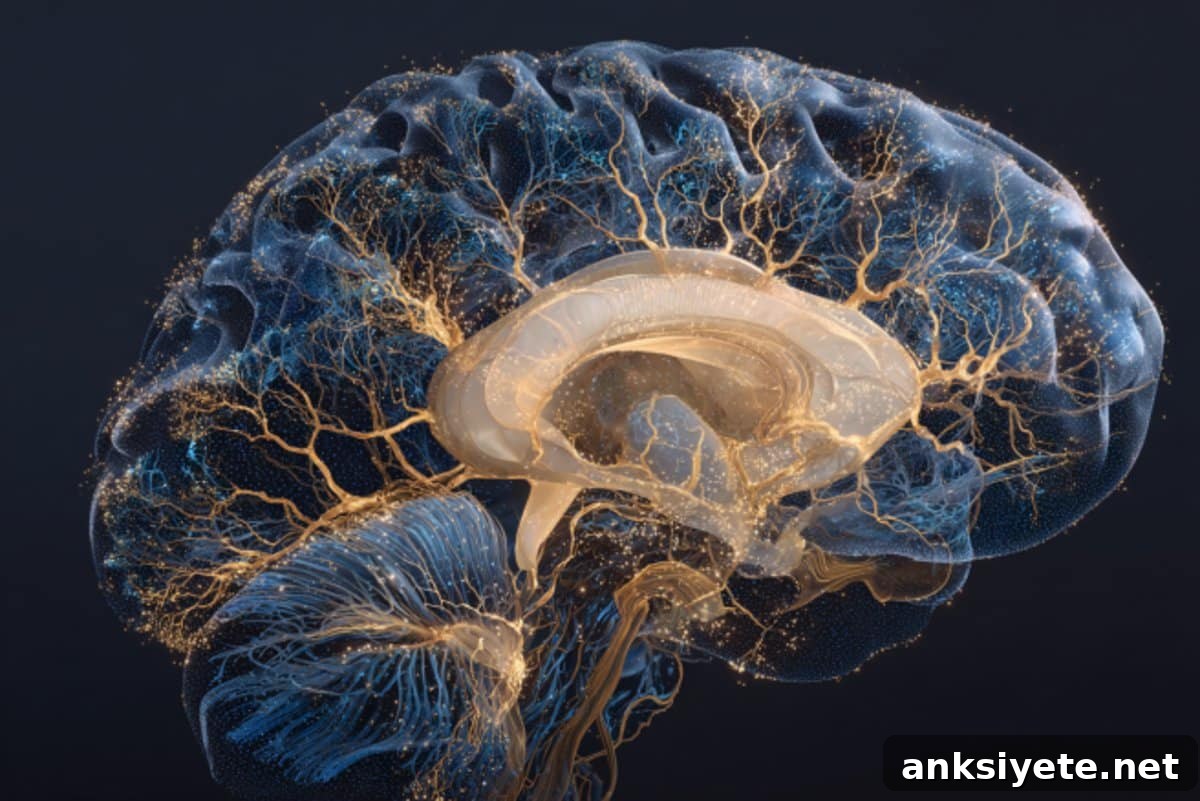
Summary: Researchers have identified a central hub in the medial prefrontal cortex (mPFC) that helps regulate stress responses and social behavior. Using advanced anatomical tracing, 3D brain imaging, and AI-assisted circuit mapping in mice, the team uncovered how this region integrates sensory inputs and internal bodily signals to preserve emotional stability—findings that clarify long-standing questions about personality change and point toward new treatments for psychiatric disorders.
This discovery, reported in the journal Nature, provides a cellular- and circuit-level map of the mPFC—particularly the dorsal peduncular area (DP) and the infralimbic area (ILA)—showing how these areas coordinate physiological and behavioral reactions to stress. The results yield a clearer explanation for historical cases of personality alteration after frontal-lobe injuries and offer a translational blueprint relevant to the human ventromedial prefrontal cortex (vmPFC).
Key Facts:
- Central Brain Hub: The medial prefrontal cortex integrates external sensory data and internal bodily signals to control stress responses and social behaviors.
- Advanced Techniques: The study combined genetic labeling, whole-brain 3D imaging, and AI-driven mapping to reveal precise neural circuits.
- Clinical Relevance: These circuit maps create opportunities for targeted diagnostics and therapies for conditions such as PTSD, depression, and anxiety.
Source: UCLA
A UCLA research team has produced a comprehensive wiring diagram of a crucial medial prefrontal cortical hub in mice that regulates stress and social behavior, with implications for neuropsychiatric illness.
The study explains how specific mPFC subregions coordinate autonomic, neuroendocrine and behavioral responses to internal and external stimuli. By mapping connections from the mPFC to hypothalamic and brainstem targets, the research clarifies how the brain routes information that governs sympathetic and parasympathetic outputs and shapes goal-directed actions like attention, decision-making and social interaction.
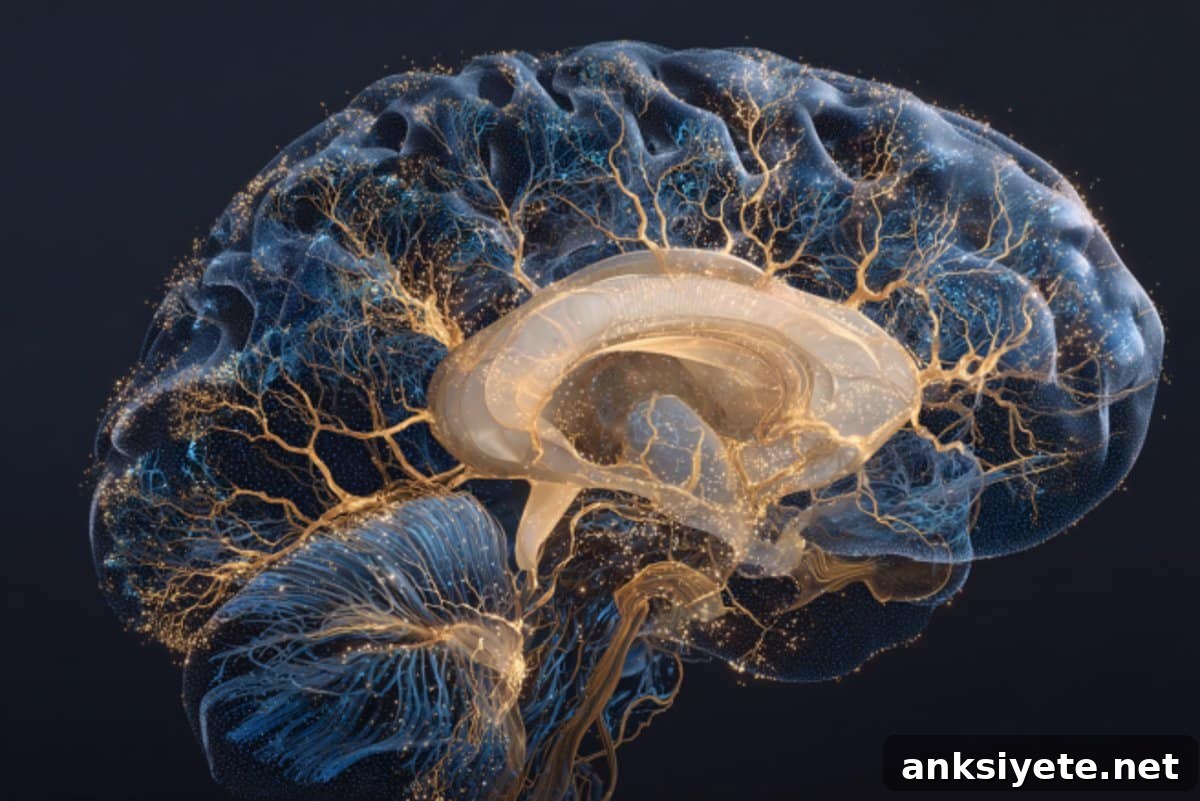
Lead author Dr. Hong Wei Dong, professor of neurobiology at UCLA Health and director of the UCLA Brain Research & Artificial Intelligence Nexus, described the map as a “wiring diagram” for a key control center in the brain. The detailed circuit characterization identifies deep and superficial layers of the DP (DPd and DPs) and highlights their roles as visceromotor cortex components that send direct projections to subcortical structures involved in stress regulation.
For more than a century, the case of Phineas Gage—whose frontal-lobe injury produced dramatic personality changes—has exemplified the link between prefrontal damage and altered social behavior. While that connection suggested the prefrontal cortex’s role in personality and emotion, the precise circuits and mechanisms were previously unclear. This study fills a major gap by outlining how distinct mPFC areas act together as network hubs that integrate diverse cortical inputs and produce largely unidirectional information flow to modulate behavior.
The researchers used integrated neuroanatomical, physiological and behavioral methods to generate a mesoscale connectome of the mPFC. This connectome supports a unified network model in which discrete mPFC regions coordinate physiological states and goal-directed behaviors in response to both internal bodily signals and external sensory cues.
According to the authors, the circuit-level map has broad implications for public health. By pinpointing the neural pathways that control stress reactivity and social functioning, the work lays the groundwork for improved diagnostic tools and for developing therapies that more precisely target the circuits underlying PTSD, depression, anxiety and related disorders.
“Identifying these circuits gives us new targets for interventions aimed at restoring emotional balance and social function,” said Dong. The translational potential stems from the conserved organization between the mouse visceromotor cortex and the human vmPFC, suggesting that insights from this mouse connectome could guide human-focused research and treatment strategies.
About this brain mapping and mental health research news
Author: Will Houston
Source: UCLA
Contact: Will Houston – UCLA
Image: The image is credited to Neuroscience News
Original Research: Open access. “Neural networks of the mouse visceromotor cortex” by Hong Wei Dong et al., published in Nature.
Abstract
Neural networks of the mouse visceromotor cortex
The medial prefrontal cortex (MPF) coordinates autonomic and neuroendocrine responses to stress while guiding goal-directed behaviors such as attention, decision-making and social interaction. Incomplete circuit-level characterization has limited mechanistic understanding. Using combined neuroanatomical, physiological and behavioral approaches, the study constructs a detailed wiring diagram of the MPF, emphasizing the dorsal peduncular area (DP). The work identifies DP deep and superficial layers and the infralimbic area as primary visceromotor components that directly connect to hypothalamic and brainstem structures to control neuroendocrine and autonomic outputs. The DP emerges as a network hub that integrates varied cortical inputs and influences behavior via predominantly unidirectional cortical information flow. Based on this mesoscale connectome, the authors propose a unified network model in which specific MPF areas orchestrate physiological and behavioral responses to internal and external stimuli.