
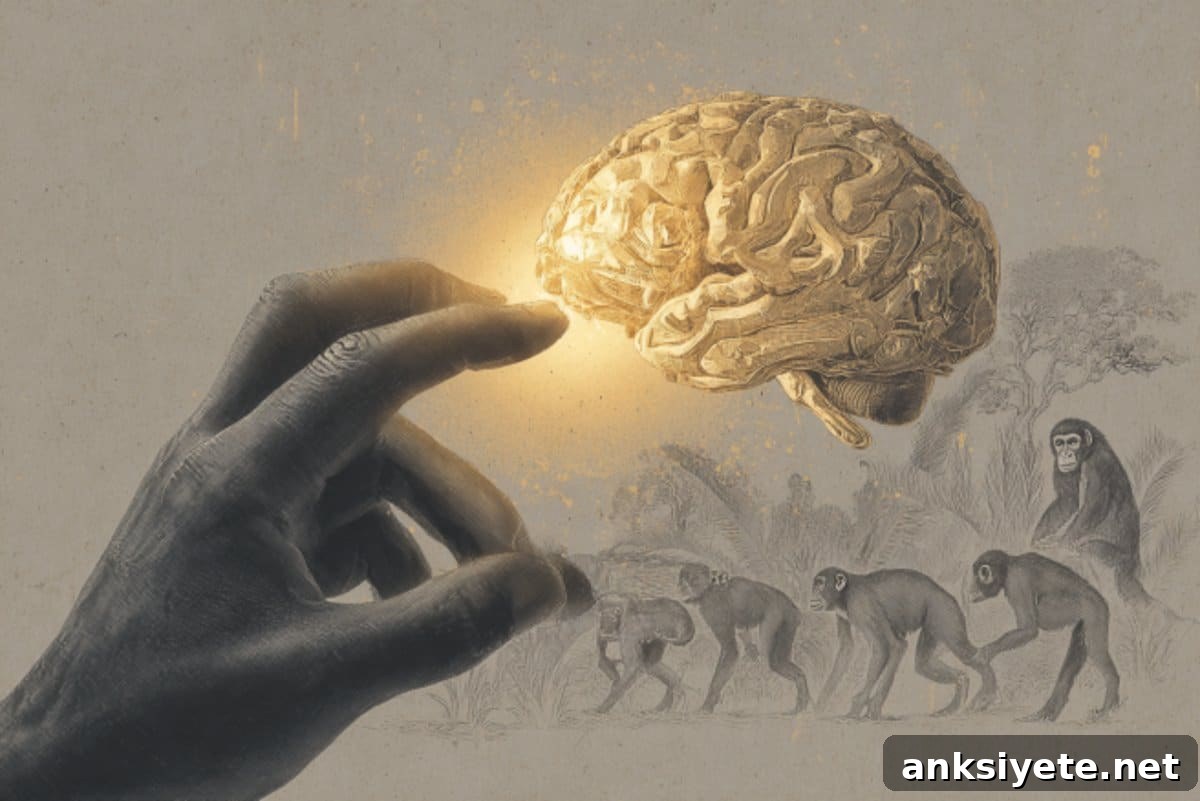
Summary: New research shows a clear relationship between thumb length and brain size across primates, indicating that the evolution of precise hand use and enhanced cognition developed in tandem. The analysis, which included both living species and fossils, demonstrates a consistent link between relatively longer thumbs and larger brains across the primate lineage.
The study’s most striking finding is that thumb length tracks with growth in the neocortex—the brain region associated with higher-order perception, sensory integration and complex thinking—rather than the cerebellum, which is primarily tied to basic movement coordination. These results provide direct evidence that manual dexterity and cognitive evolution were closely interconnected through primate history.
Key Facts:
- Thumb–Brain Relationship: Primates with relatively longer thumbs tend to have larger overall brain volumes.
- Neocortex Connection: Thumb length is associated with expansion of the neocortex, implicating sensory processing and cognition rather than motor-only regions.
- Evolutionary Implication: Dexterous hand function and increased cognitive capacity appear to have coevolved, helping shape traits characteristic of humans and other primates.
Source: University of Reading
Longer thumbs associate with larger brains, revealing how hands and minds evolved together.
Researchers examined a broad sample of primates—incorporating both fossil specimens and living species—to trace how hand morphology and brain structure changed over evolutionary time. The consistent pattern found across the sample indicates that species with thumbs adapted for precise, small-object grips also tended to possess relatively larger brains.
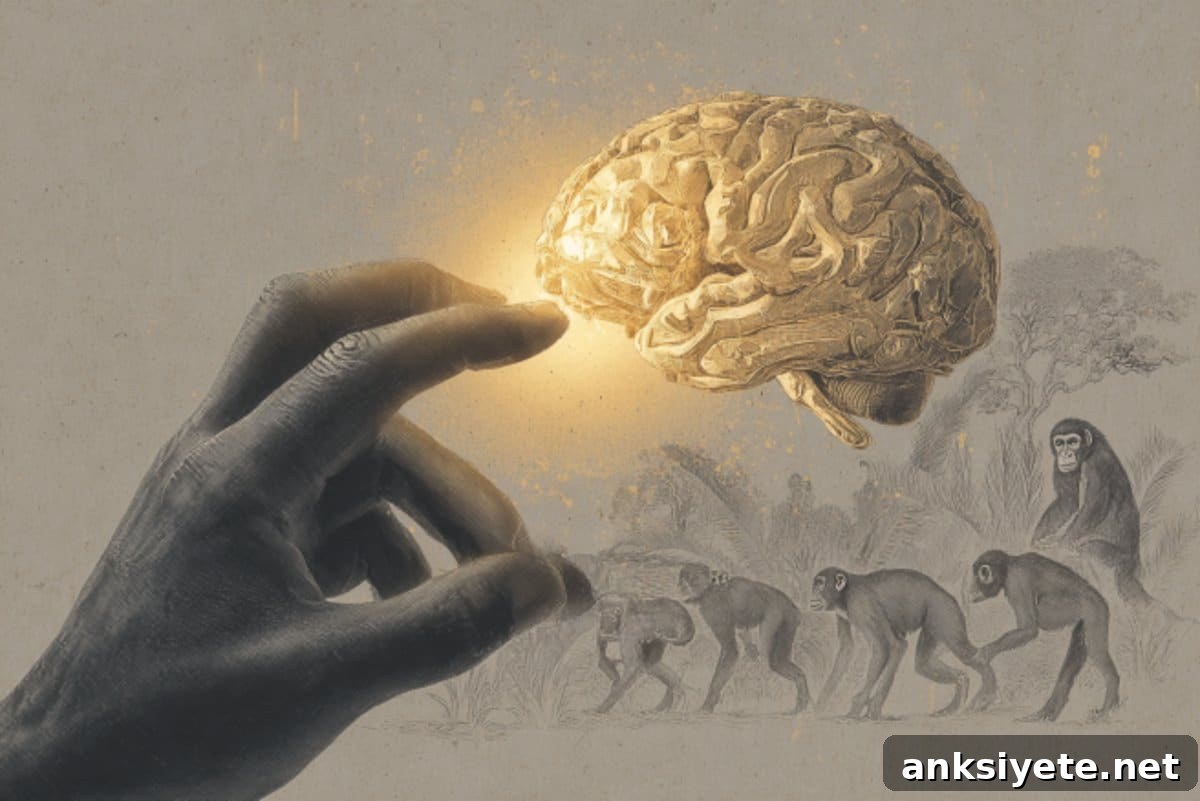
Published in Communications Biology, the study provides the first direct, wide-ranging evidence that manual skill and brain enlargement are linked across the primate family—from lemurs to modern humans. While humans and several extinct relatives display both exceptionally long thumbs and very large brains, the reported pattern holds across the sample even when human data are excluded, suggesting a general evolutionary relationship rather than a human-specific anomaly.
Lead author Dr Joanna Baker of the University of Reading explains that manual dexterity and cognitive capacity appear to have evolved together: as primates developed more refined ability to manipulate objects, neural systems expanded to process sensory inputs and to coordinate increasingly complex actions. Over millions of years, these mutually reinforcing changes shaped the unique combination of fine motor skill and cognition seen in humans.
Thumbs linked to thinking, not just movement
A notable and somewhat unexpected result is the anatomical focus of brain expansion associated with thumb length. The research team had anticipated a relationship with the cerebellum because it plays a central role in coordinating movement. Instead, the strongest association was with the neocortex—a layered region involved in sensory processing, attention, planning and higher cognitive functions.
This suggests that improvements in hand use demanded more advanced sensory and cognitive processing—functions localized in parts of the neocortex such as motor and parietal cortical areas—rather than only greater capacity for motor control provided by the cerebellum. The study prompts new questions about how specific neocortical circuits support precision gripping and object manipulation, and highlights the need for further research into neural mechanisms underlying fine motor skills.
About this neuroscience and evolution research news
Author: Ollie Sirrell
Source: University of Reading
Contact: Ollie Sirrell – University of Reading
Image: The image is credited to Neuroscience News
Original Research: Open access.
“Human dexterity and brains evolved hand in hand” by Joanna Baker et al. Communications Biology
Abstract
Human dexterity and brains evolved hand in hand
Large brains and dexterous hands are widely regarded as central to human evolution, enabling tool use, technological development, cultural complexity and the ability to thrive in diverse environments. Until now, direct evidence linking hand morphology and brain size across the primate tree has been limited.
Using comparative phylogenetic methods, the researchers identify a significant association between relatively longer thumbs—a signature trait for precision grasping—and larger brains across a broad sample of fossil and living primates. Many hominins, including Homo sapiens, have unusually long thumbs, yet they align with the general primate trend relating thumb proportion to brain size.
Within the brain, the analysis reveals no clear relationship with cerebellum volume but does show a marked link with neocortex size, suggesting that sensorimotor integration and cortical processing areas important for fine manipulation were especially implicated. These results underscore how manipulative abilities and neural architecture have evolved together, demonstrating the close integration of bodily and neural adaptations during primate evolution.