
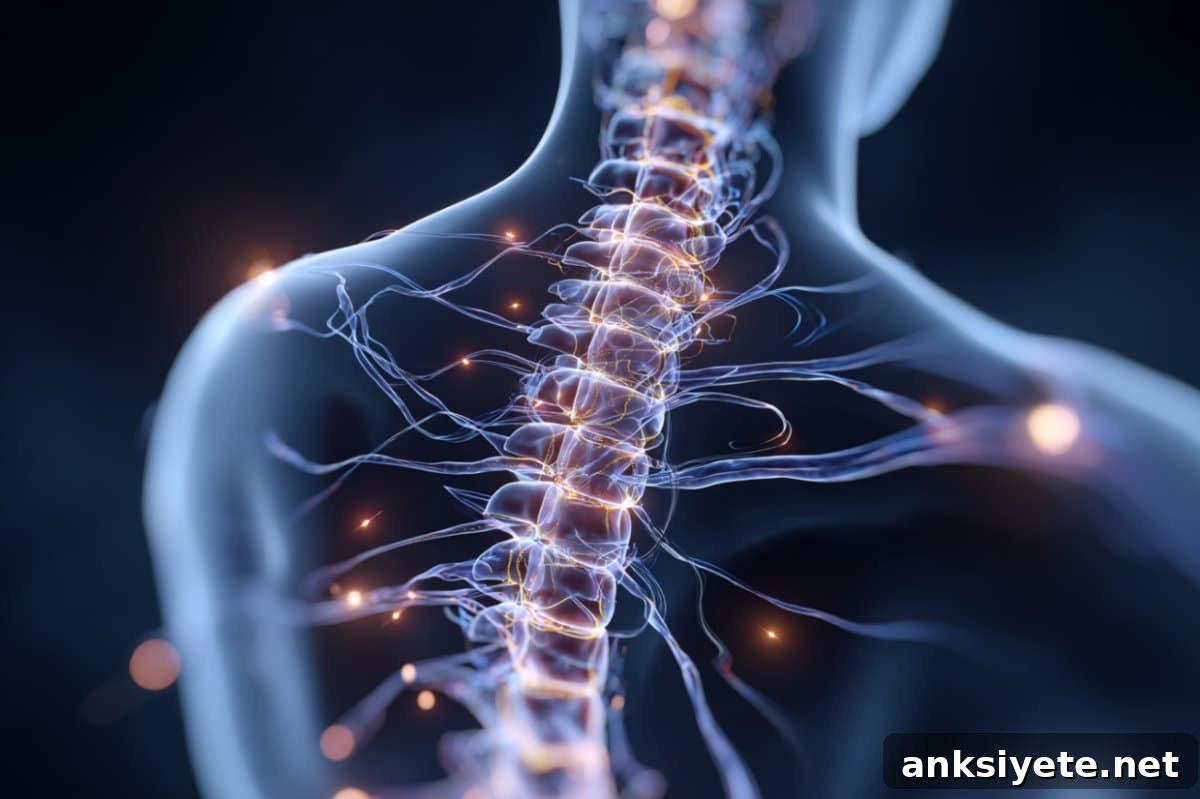
Summary: Researchers have identified a specialized group of spinal cord interneurons that help regulate breathing when the body faces physiological stress such as elevated carbon dioxide (CO₂) levels. When these cells were blocked in experimental models, the ability to adapt breathing to high CO₂ was impaired, indicating these neurons play an essential role in respiratory control and represent a promising therapeutic target.
This advance could inform new treatments for people with spinal cord injuries or neurodegenerative diseases who struggle to breathe independently. Targeting these spinal interneurons may provide a more accessible route to improve respiratory function and resilience under stress.
Key Facts
- New target: A genetically defined subset of spinal cord interneurons that modulate breathing in response to physiological challenges.
- Therapeutic potential: Possible pathway for interventions to improve breathing after spinal cord injury or in neurodegenerative disease.
- Critical function: Silencing these neurons reduced the compensatory breathing response to elevated CO₂ (hypercapnia), a potentially life-threatening condition.
Source: Case Western Reserve University
Context: The late actor Christopher Reeve, widely known for his role as Superman, became a major advocate for spinal cord injury research after a horseback-riding accident left him paralyzed and dependent on ventilatory support. Respiratory complications remain a leading cause of illness and death among the roughly 300,000 people living with spinal cord injury in the United States.
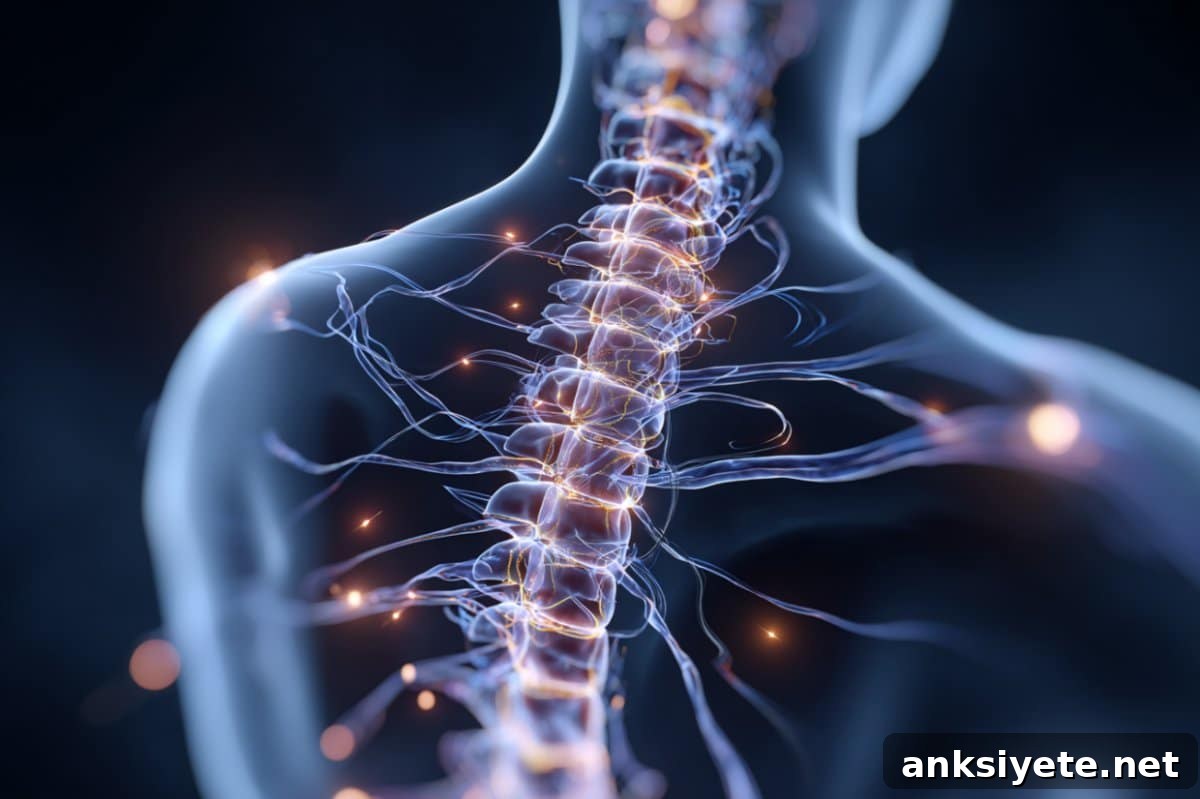
A research team led by Polyxeni Philippidou at Case Western Reserve University School of Medicine reports that a distinct population of spinal interneurons amplifies respiratory motor output when the body needs to adapt breathing—during exercise, environmental stress such as high altitude, or challenges that raise CO₂. Their results, published in Cell Reports, identify these interneurons as a spinal pathway that boosts diaphragm activity by increasing phrenic motor neuron output.
“While the brainstem generates the basic breathing rhythm, the pathways that raise respiratory motor neuron output were not well defined—until now,” said Polyxeni Philippidou, associate professor of neurosciences and lead author of the study. The team worked with collaborators at the University of St. Andrews, the University of Calgary and the Biomedical Research Foundation Academy of Athens.
Legacy of spinal cord research at CWRU
Case Western Reserve’s Department of Neurosciences has a long history of spinal cord and motor circuit research. The department’s work spans decades and includes contributions from prominent scientists who advanced understanding of repair and recovery after spinal injury. These efforts laid the foundation for current studies that translate basic neurobiology into potential clinical strategies to restore breathing and motor function.
The study
The investigators mapped first-order inputs to phrenic motor neurons (PMNs), the key motor neurons that drive diaphragm contractions and control breathing. They discovered a predominant spinal input from a genetically defined subset of V0c cholinergic interneurons. These interneurons receive phasic excitation from brainstem respiratory centers and augment phrenic output through M2 muscarinic receptors.
Using genetically modified mouse models, the team traced neuron connections, recorded electrical activity, visualized neuronal structure with microscopy, and observed respiratory behavior. When cholinergic interneuron neurotransmission was selectively silenced, animals showed an impaired ventilatory response to hypercapnia—evidence that these cells are essential for amplifying breathing when CO₂ rises.
CO₂ is produced as a byproduct of cellular metabolism and is transported by the blood to the lungs for exhalation. If CO₂ cannot be eliminated efficiently, it accumulates in the blood causing hypercapnia, which can make breathing difficult and, in severe cases, lead to respiratory failure. The newly identified spinal pathway helps the respiratory system ramp up output to prevent such outcomes.
Because these interneurons lie within the spinal cord and have distinct genetic markers, the researchers argue they may be an accessible therapeutic target. The team is now testing whether manipulating this pathway can restore or strengthen breathing in models of neurodegenerative disease, including amyotrophic lateral sclerosis (ALS) and Alzheimer’s disease, as well as after spinal cord injury.
About this spinal cord injury and neurology research news
Author: Polyxeni Philippidou
Source: Case Western Reserve University
Contact: Polyxeni Philippidou – Case Western Reserve
Image: The image is credited to Neuroscience News
Original research (open access): “A cholinergic spinal pathway for the adaptive control of breathing” by Polyxeni Philippidou et al., Cell Reports. DOI: 10.1016/j.celrep.2025.116078
Abstract
A cholinergic spinal pathway for the adaptive control of breathing
Generating high-intensity motor actions requires the capacity to amplify motor neuron output, a feature that is essential when breathing must rapidly adjust to changing metabolic demands. Brainstem circuits set the respiratory rhythm, but the pathways that directly enhance respiratory motor neuron (MN) output have been poorly characterized.
This study maps first-order inputs to phrenic motor neurons, identifies a dominant spinal input from a genetically defined subset of V0c cholinergic interneurons, and shows that these interneurons receive phasic excitatory drive from brainstem respiratory centers. They augment phrenic output via M2 muscarinic receptors and are strongly activated during hypercapnia. Selective silencing of their neurotransmission impairs the ventilatory response to high CO₂.
Together, these findings define a spinal pathway that amplifies breathing and highlight a potential therapeutic target for promoting recovery of respiratory function after spinal cord injury or in breathing-related neurodegenerative disease.