
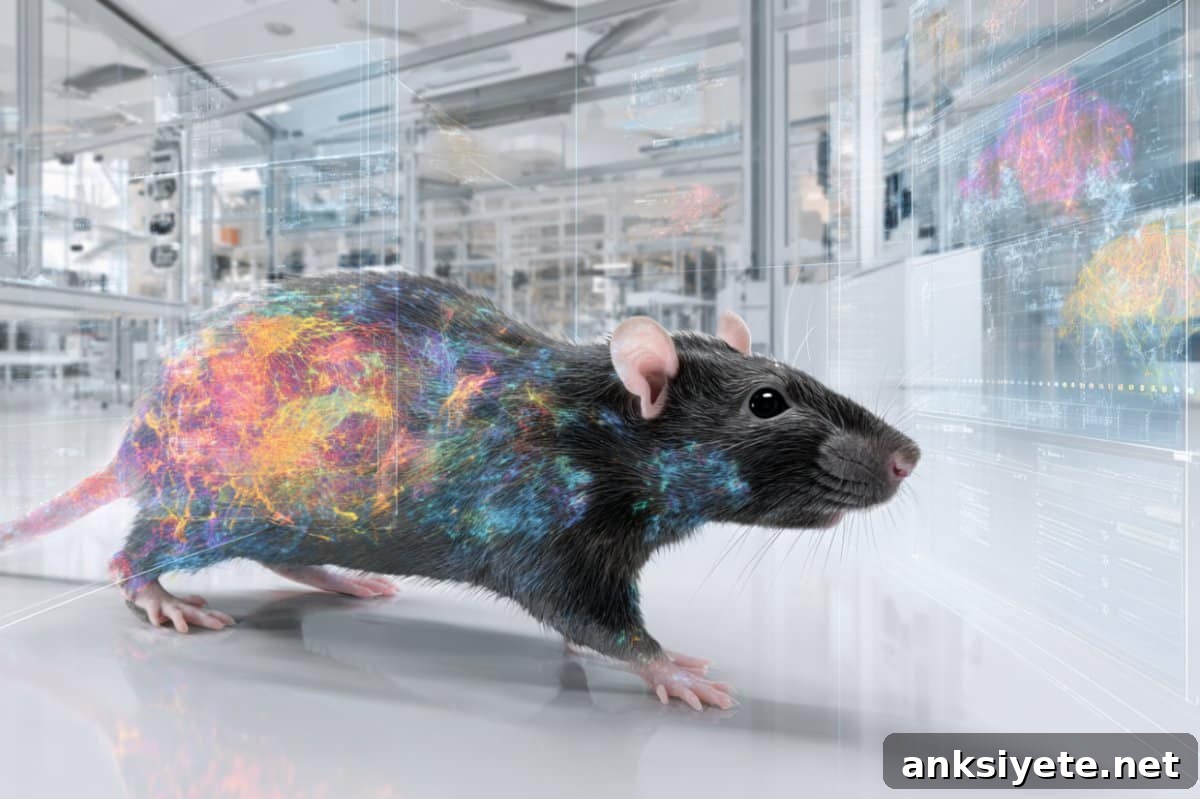
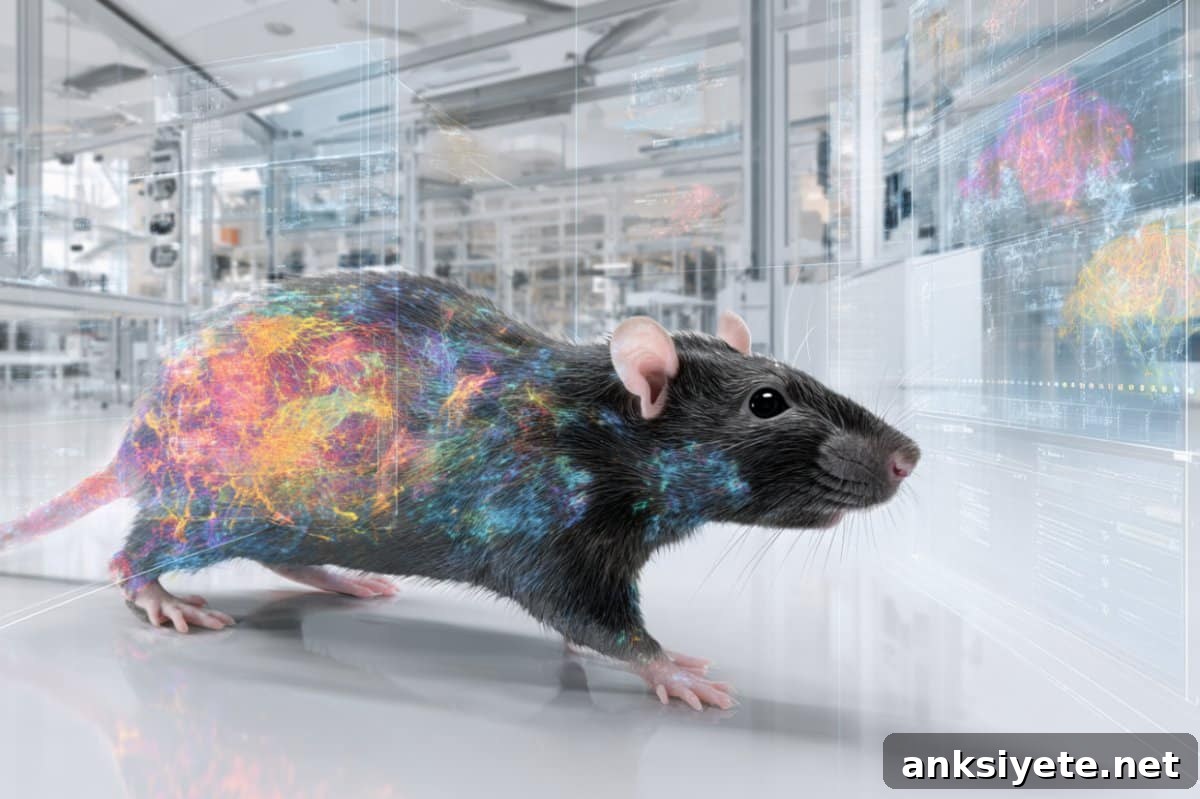
Summary: A new study shows that the brain’s basal ganglia use two distinct neural “languages” to control movement: one code for acquired, learned skills and a different code for innate, natural behaviors. In experiments with rats, researchers found that the dorsolateral striatum (DLS) is critical for executing trained tasks but is not required for everyday actions like walking, grooming, or exploring.
Neural recordings revealed strikingly different patterns of electrical activity depending on the behavioral context, suggesting the basal ganglia can switch between actively directing movements and adopting a passive or null role. These results provide new clues about how abnormal signals from the basal ganglia might contribute to movement disorders such as Parkinson’s disease.
Key Facts
- Dual coding: The basal ganglia encode learned and innate movements using distinct kinematic codes.
- Learning-specific role: Lesions to the dorsolateral striatum disrupt learned behaviors while leaving natural behaviors intact.
- Clinical insight: The findings offer a framework for understanding how pathological basal ganglia activity can interfere with motor control in disease.
Source: Harvard
The brain’s ability to refine and automate learned movements—like a dance sequence, a piano passage, or tying shoelaces—relies on practice and repetition.
For many years neuroscientists have pointed to the basal ganglia as a central hub for acquiring and executing these practiced skills. The new study, led by researchers at Harvard and published in Nature Neuroscience, reveals that this “learning machine” does not use a single, uniform signal for all actions. Instead, it employs one pattern of neural activity for learned, task-specific movements and a very different pattern for spontaneous, natural behaviors.
“When we compared the codes across these two behavioral domains, we found that they were very different,” said Bence Ölveczky, Professor of Organismic and Evolutionary Biology. “They had nothing to do with each other. They were both faithfully reflecting the animal’s movements, but the language was profoundly different.”
The basal ganglia sit beneath the cerebral cortex and contribute to motor control, reward processing, and emotion. Dysfunction in this region underlies several human movement disorders—Parkinson’s disease, Huntington’s disease, and Tourette syndrome among them—making it essential to understand how these circuits shape behavior.
Debate has persisted about whether the basal ganglia are necessary for all movements or primarily for movements learned through practice. To address this, the team focused on the dorsolateral striatum (DLS), a component of the sensorimotor basal ganglia implicated in learned behaviors.
Rats were observed in two contexts: free exploration, where they moved naturally, and during a trained task that required pressing a lever twice within a specific interval to receive a reward. Movement tracking combined six cameras around the enclosure with behavioral classification software to capture detailed kinematics.
Previous work from the same lab showed that removing the DLS had no measurable effect on spontaneous behaviors such as walking or grooming, yet eliminated the animals’ ability to produce highly practiced, stereotyped task movements. “There was a massive change, like night and day,” said Kiah Hardcastle, lead author and postdoctoral fellow in the Ölveczky lab. “The animal could perform that learned movement thousands of times, then after lesioning the DLS it never performed it again.”
In the new study, tiny electrodes recorded neuronal firing in the DLS as rats explored and performed the trained task. Although neural activity in both contexts reflected movement kinematics, the specific patterns—or kinematic codes—were markedly different. The researchers interpret this as the basal ganglia switching between an active, motor-potent mode during learned behaviors and a passive, null-like mode during natural actions.
“It’s as if the basal ganglia ‘speak’ different languages when the animal performs learned versus innate movements,” Ölveczky explained. “Brain areas downstream that actually drive movement recognize only the language used for learned behaviors.”
Hardcastle suggested the basal ganglia may not be able to completely silence activity when it is not directing behavior, so instead the circuitry shifts into a harmless, non-disruptive signaling state. Ölveczky added that because these subcortical structures are evolutionarily conserved across mammals, the findings likely have relevance for human motor control and disease.
He proposed that certain symptoms of Parkinson’s disease might be understood as the basal ganglia producing inappropriate, noisy signals that intrude on behaviors they would normally not control. In other words, pathological activity could be akin to the system speaking garbled or excessively strong signals that disrupt coordinated movement.
About this neuroscience research news
Author: Kermit Pattison
Source: Harvard
Contact: Kermit Pattison – Harvard
Image: The image is credited to Neuroscience News
Original Research: Open access. “Differential kinematic coding in sensorimotor striatum across behavioral domains reflects different contributions to movement” by Kiah Hardcastle et al., Nature Neuroscience. DOI: 10.1038/s41593-025-02026-w
Abstract
Differential kinematic coding in sensorimotor striatum across behavioral domains reflects different contributions to movement
The sensorimotor arm of the basal ganglia is a major component of mammalian motor control networks, but whether it supports all movements or is specialized for task-oriented behaviors has been uncertain. The authors examined the rat dorsolateral striatum (DLS) during free exploration and during a trained motor task. Lesions of the DLS disrupted task-specific learned movements but did not alter natural behaviors such as rearing, grooming, or walking. Neural recordings showed that while DLS activity reflected movement kinematics in both settings, the kinematic codes were qualitatively different across domains. These findings indicate that the sensorimotor basal ganglia are not uniformly required for all motor acts; rather, they shift into a motor-potent coding state to shape learned, task-specific behaviors.