
Key Questions Answered
Q: What does the system do?
A: The system combines artificial intelligence with non-invasive brain stimulation to improve sustained attention during mentally demanding tasks performed at home.
Q: How is it personalised?
A: The AI tailors stimulation intensity to individual traits such as head size and current attention level, removing the need for expensive MRI scans while delivering personalised dosing.
Q: What kind of stimulation is used?
A: The device uses transcranial random noise stimulation (tRNS), a gentle and non-invasive electrical stimulation method.
Q: Is it safe and effective?
A: Yes. In a double-blind, sham-controlled study, participants who received AI-personalised stimulation showed significant improvements in sustained attention, with the largest gains among those who began with lower baseline focus. No serious side effects were reported.
Summary: Researchers from the University of Surrey, the University of Oxford and Cognitive Neurotechnology have developed an AI-driven, home-based neurostimulation system that safely enhances concentration. The platform uses adaptive algorithms and transcranial random noise stimulation (tRNS) to personalise stimulation intensity based on measurable individual characteristics like head anatomy and real-time attention levels.
In controlled trials, participants using the AI-guided system outperformed those receiving standard or placebo stimulation on sustained attention tasks. The personalised approach avoided stimulation intensities that might impair performance, and it proved scalable because it does not require MRI or other costly clinical imaging.
Key Facts:
- Home-Based Focus Boost: A wearable, AI-driven headset enables users to enhance sustained attention from home during study, work, or training sessions.
- Personalisation Without MRI: The AI optimises stimulation using easy-to-measure features such as head size and baseline attention, bypassing the need for expensive scans.
- Greater Benefit for Low Focus: Individuals with lower baseline attention experienced the largest improvements, suggesting targeted benefit where it is most needed.
Source: University of Surrey
Overview
The system combines CE-marked wearable headgear with an AI optimisation algorithm and a tablet-based sustained attention task. Transcranial random noise stimulation (tRNS) provides the electrical input; the AI uses participant features and performance data to find effective, safe stimulation intensities. This personalised strategy aims to maximise cognitive benefit while minimising risks and unwanted effects.
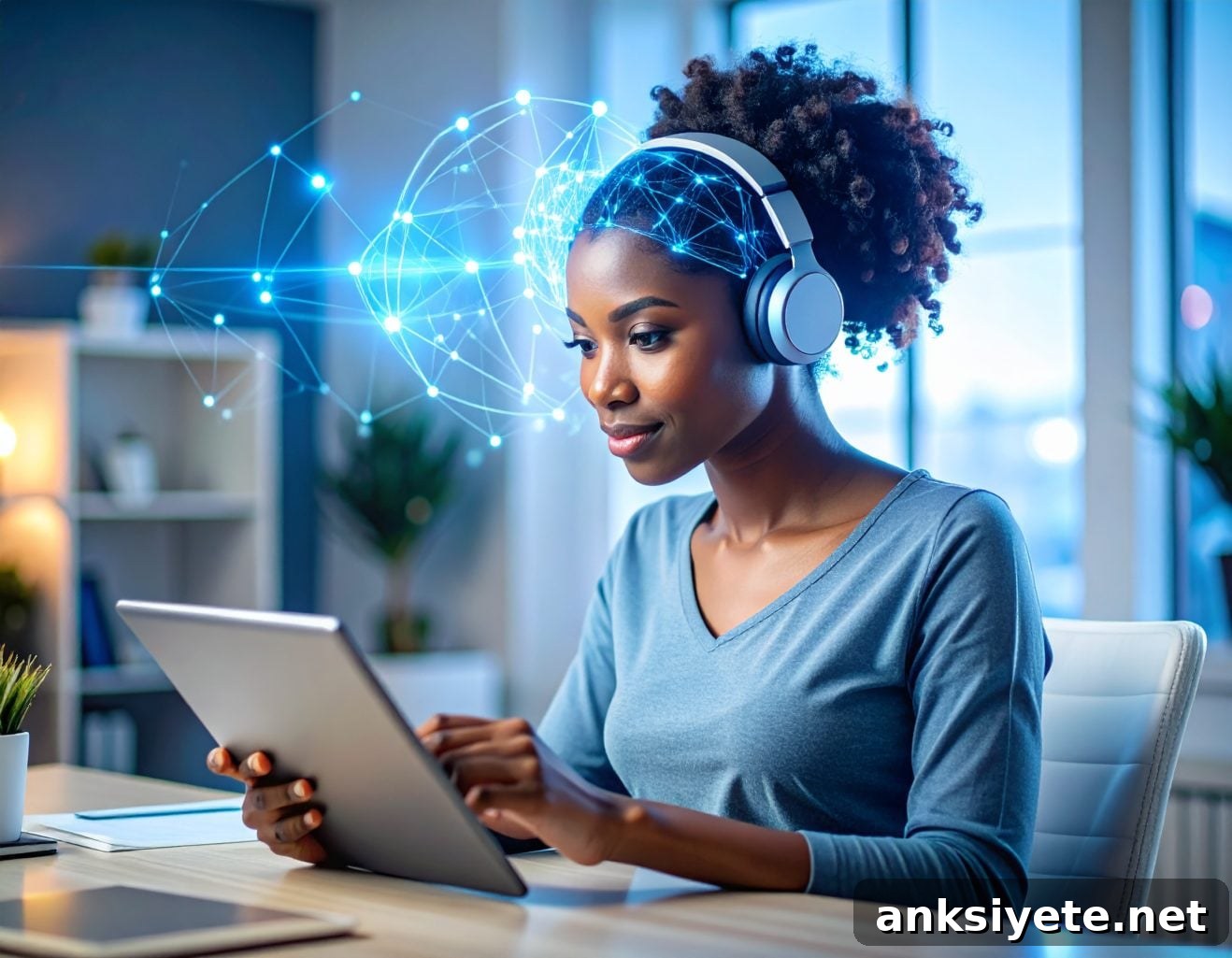
The research, published in npj Digital Medicine, is built on a patented method that integrates adaptive AI with non-invasive neurostimulation. The AI was trained on data collected from 103 adults aged 18–35 who completed a total of 290 home-based sessions. Following this training phase, the system was evaluated in a double-blind study with 37 new participants to assess efficacy and tolerability.
Participants receiving AI-optimised stimulation demonstrated clear improvements in sustained attention compared with both standard stimulation and sham (placebo) conditions. Improvements were most pronounced among individuals who initially exhibited lower attention, indicating the potential for targeted enhancement in those who need it most.
Lead author Professor Roi Cohen Kadosh, Head of Psychology at the University of Surrey and founder of Cognitive Neurotechnology Ltd, commented that the approach illustrates how AI and wearable neurotechnology can deliver adaptive, accessible cognitive enhancement in real-world settings. The system’s home-based design and avoidance of MRI-based personalization make it cost-effective and scalable for wider use.
Safety findings were encouraging: no serious adverse events were reported, and the frequency and intensity of sensations during active stimulation were comparable to placebo. Importantly, the AI prevented selection of stimulation levels that could worsen performance — a limitation of earlier non-personalised methods.
About this research and contact
Author: Dalitso Njolinjo
Source: University of Surrey
Contact: Dalitso Njolinjo – University of Surrey
Image credit: Neuroscience News
Original research: Open access. “Personalized home based neurostimulation via AI optimization augments sustained attention” by Roi Cohen Kadosh et al., published in npj Digital Medicine.
Abstract
Personalized home-based neurostimulation via AI optimization augments sustained attention
Personalised brain technologies face challenges when translating from lab to real-world use, particularly around tailoring treatment to individual anatomy and baseline ability. This work introduces an AI-driven Bayesian optimisation algorithm that remotely adjusts neurostimulation settings based on baseline attention and head anatomy to enhance sustained attention at home.
Validated using computational modelling and a double-blind, sham-controlled human study, the approach aligns with MRI-derived models and relevant neurobiological theories. By maximising efficacy while keeping personalisation scalable and cost-effective, this method supports real-world deployment of personalised cognitive enhancement and potential therapeutic applications.