
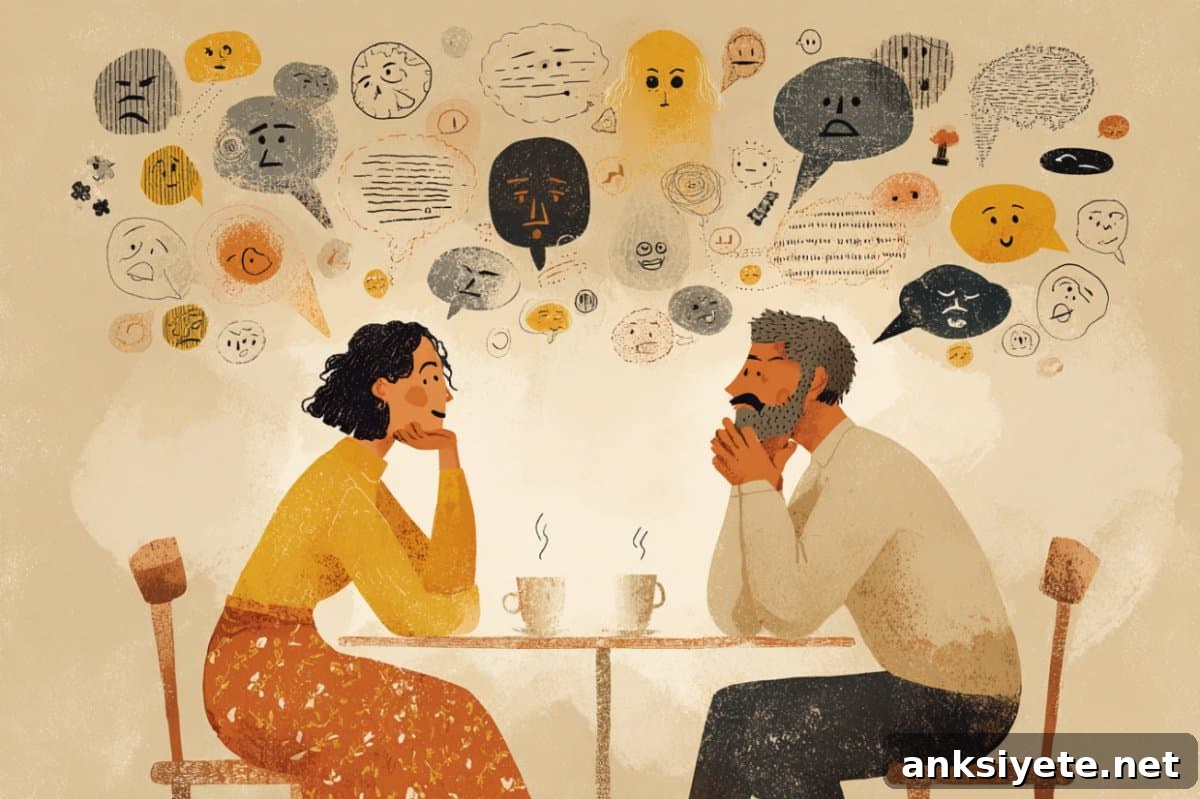
Autistic adults describe nonverbal communication as an exhausting “unwritten language”
Summary: A recent study finds that many autistic adults experience nonverbal communication as a mentally demanding, real-time task. Researchers who reviewed hundreds of firsthand accounts report that decoding facial expressions, gestures, tone and eye contact while also producing expected cues is exhausting and can lead to frequent misunderstandings.
The research highlights how this effort contributes to social anxiety and the so-called Double Empathy Problem — a two-way mismatch in understanding between autistic and non-autistic people. The authors call for more inclusive communication practices that reduce the pressure on autistic people to mimic neurotypical cues and allow authentic expression.
Key facts
- Many autistic adults report that interpreting and producing nonverbal cues requires significant mental effort.
- Communication breakdowns are often mutual, not solely the responsibility of autistic individuals.
- Clear language, patience, and respecting communication preferences improve interactions.
Source: University of Portsmouth
Imagine a conversation where each glance, gesture and change in tone must be monitored like a moving puzzle. That is the experience described by many autistic adults in a new study published in PLOS One. Researchers analyzed 362 first-person excerpts from the discussion forum WrongPlanet.net to understand how autistic adults experience and manage nonverbal communication in daily life.
Participants described nonverbal communication (NVC) — including eye contact, facial expressions, gestures and prosody — as an “unwritten language” they must decode in the moment. For some, speaking while also tracking eye contact and body signals felt like “just too much going on.” Others said nonverbal cues are “too open to misinterpretation” and wished people would simply state their meaning instead of leaving so much unsaid.
The study found that autistic adults often need extra time and cognitive effort to process body language and subtle social signals. A smile or a tonal shift may not register immediately, or may carry non-literal meaning that requires extra interpretation. At the same time, many people feel pressured to “perform” expected nonverbal behaviors, a process that can be exhausting and inauthentic.
These difficulties can produce mutual misunderstanding. The Double Empathy Problem — the idea that miscommunication flows both ways between autistic and non-autistic people — emerged strongly from the forum discussions. Contributors described being misread, judged unfairly, ignored, or seen as untrustworthy because their nonverbal style did not match social expectations.
To cope, autistic adults adopt a variety of strategies. Some try to learn and mimic neurotypical gestures through observation, acting classes or media models. Others avoid face-to-face pressure by using written communication, where meaning can be clearer and less reliant on body language. Many participants, however, emphasized the value of authenticity and rejected the idea of constantly “passing” as neurotypical, calling this unrealistic and harmful to wellbeing.
The research team included autistic and non-autistic scholars. PhD researcher Holly Radford from the University of Portsmouth, who is autistic herself, says the study confirms how demanding nonverbal communication can be in everyday interactions. “As both a researcher and an autistic person, I hope this work helps people understand the genuine effort involved in these daily interactions,” she said.
Co-authors included autistic researcher Dr Steven Kapp (University of Portsmouth), Bronte Reidinger (Rowan University), and Dr Ashley de Marchena (Drexel University). The collaboration was coordinated through the Academic Autism Spectrum Partnership in Research and Education (AASPIRE), emphasizing inclusive research practices that center autistic perspectives.
Dr Kapp highlighted the study’s challenge to one-sided views of communication difficulties: misunderstandings occur in both directions, and many autistic adults bring deep insight and resourcefulness to navigating social environments that were not built for their communication styles. The authors argue that responsibility for clearer communication should be shared by everyone, not placed only on autistic people.
Practical tips for communicating with autistic people
The study offers straightforward recommendations for family members, educators, clinicians, coworkers and friends who want to communicate more effectively:
- Be patient: Allow extra time for processing and response. Don’t interrupt or rush someone who may need a moment to interpret nonverbal cues.
- Use clear language: Augment gestures with explicit words. For example, say “I’m happy” if your face looks neutral, or check understanding directly: “Did that make sense?”
- Ask about preferences: Some people prefer written, direct, or text-based communication. When possible, ask which mode works best.
- Check assumptions: Avoid inferring thoughts or emotions from facial expressions or posture alone. Ask for clarification rather than assuming meaning.
- Encourage authenticity: Do not force eye contact or rehearsed smiling. Valuing genuine expression reduces stress and supports trust.
About this ASD and communication research news
Author: Robyn Montague
Source: University of Portsmouth
Contact: Robyn Montague, University of Portsmouth
Image credit: Neuroscience News
Original Research (open access): “There is just too much going on there”: Nonverbal communication experiences of autistic adults — Holly Radford et al., PLOS ONE.
Abstract summary
Background
Atypical nonverbal communication is a recognized feature of autism, but adult perspectives on how gestures, facial expressions and other nonverbal behaviors function in everyday interactions are less well documented. The study aimed to describe autistic adults’ experiences of using NVC, explore its impact on daily life, and identify strategies people use to manage these differences.
Methods
Researchers qualitatively analyzed forum discussions on WrongPlanet.net, extracting and coding 362 excerpts from threads focused on nonverbal communication. Analysis combined inductive and deductive approaches to identify themes related to miscommunication, strengths, and compensatory strategies.
Results
Key themes included cognitive differences that increase time and effort needed for NVC, bilateral miscommunication (the Double Empathy Problem), negative impacts on wellbeing when nonverbal differences are misunderstood, a range of adaptive strategies used by autistic adults, and variability in how nonverbal cues are produced and interpreted.
Conclusion
The findings reinforce prior work showing that atypical nonverbal communication affects autistic adults’ lives and highlight the cognitive processes involved. The authors recommend shifting responsibility for effective communication onto everyone, promoting shared awareness of preferred communication modes, and checking understanding rather than relying on assumed cues.